 Dineator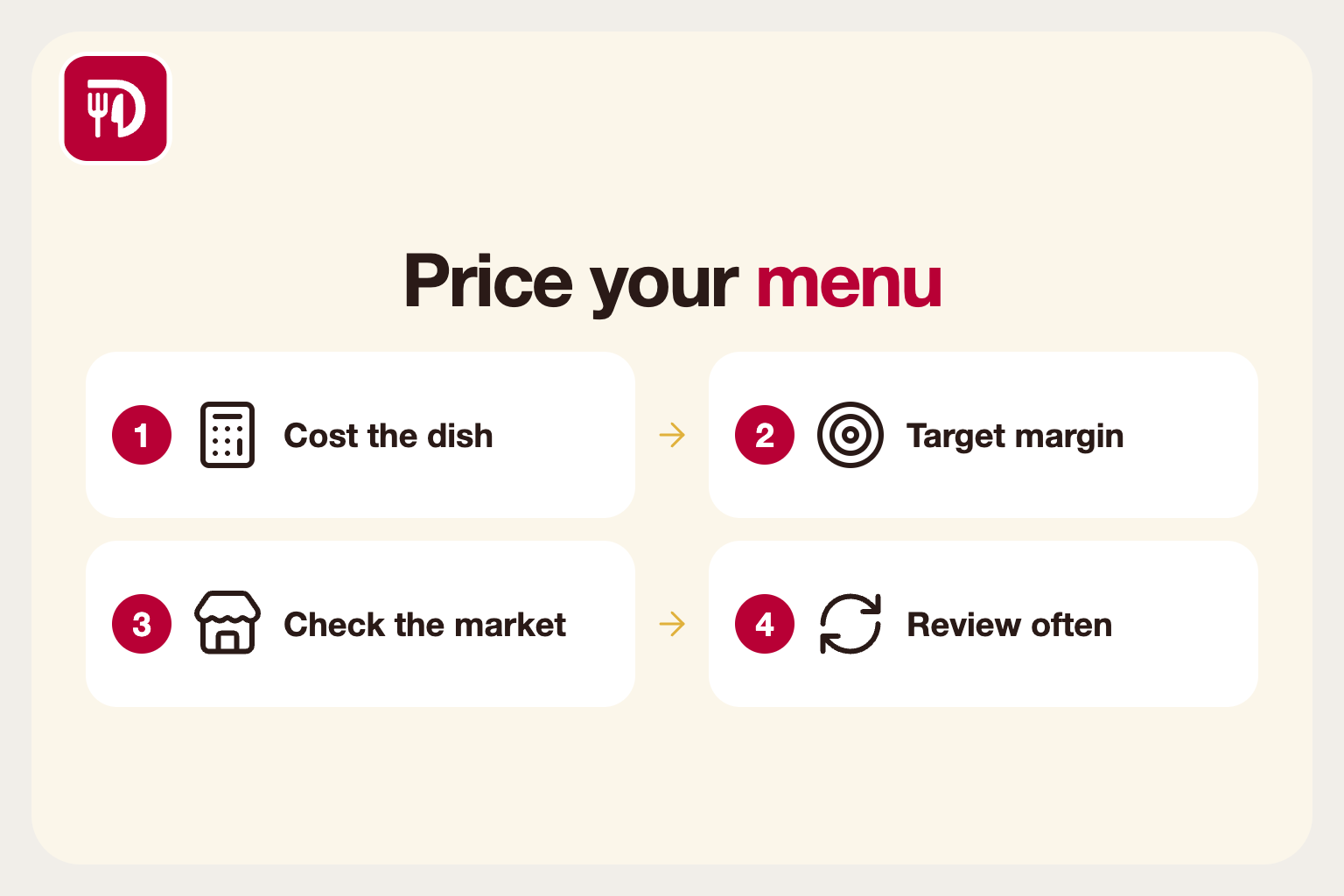
Price from your costs, then check the market
Many restaurants price by looking at what the place down the road charges. That is a useful check, but it is a poor starting point because your costs are not theirs. Start with what each dish costs you to make, then decide what margin you need, then see whether the market will bear it.
If the number you need is far above what guests will pay, the answer is usually a change to the dish, the portion or the sourcing, not a hopeful price.
Know the cost of every dish
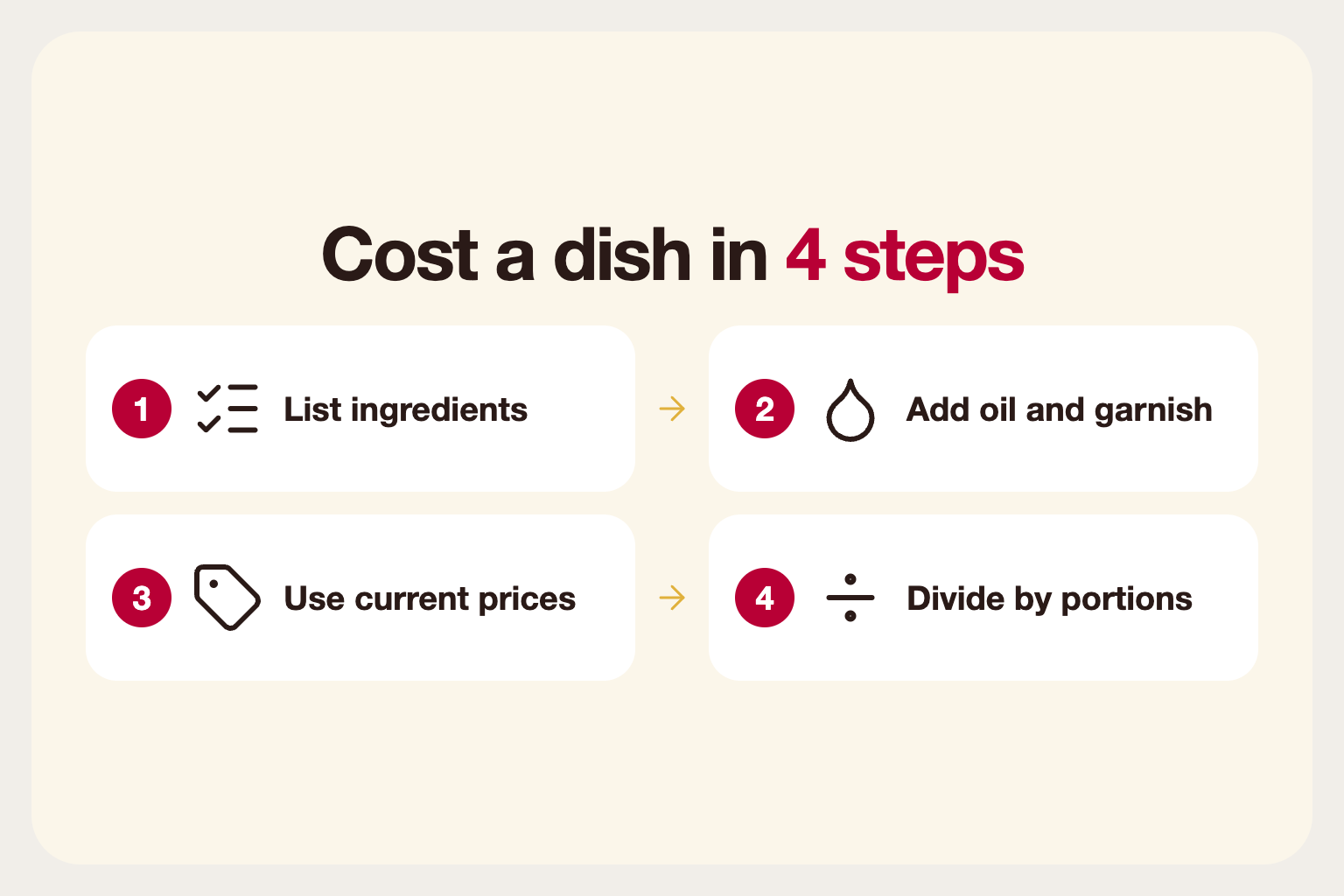
Cost a dish by adding up the ingredients in a single portion at current purchase prices. Include the small things that add up: oil, garnish, sauces, bread on the table. Update the figures when supplier prices change, because last year's cost sheet quietly eats margin.
Do this for the dishes that sell most first. A popular dish that is slightly under-priced costs far more than an obscure one.
Choose a target food cost
Food cost percentage is the cost of a dish divided by its menu price. Many restaurants aim for somewhere around the high twenties to mid thirties, but the right figure depends on your concept, labour and rent. A steakhouse and a pasta place will not look alike.
Use the target as a guide, not a law. A dish can run higher if it brings guests in, as long as the menu as a whole averages out to a healthy margin.
Look at contribution, not just percentage
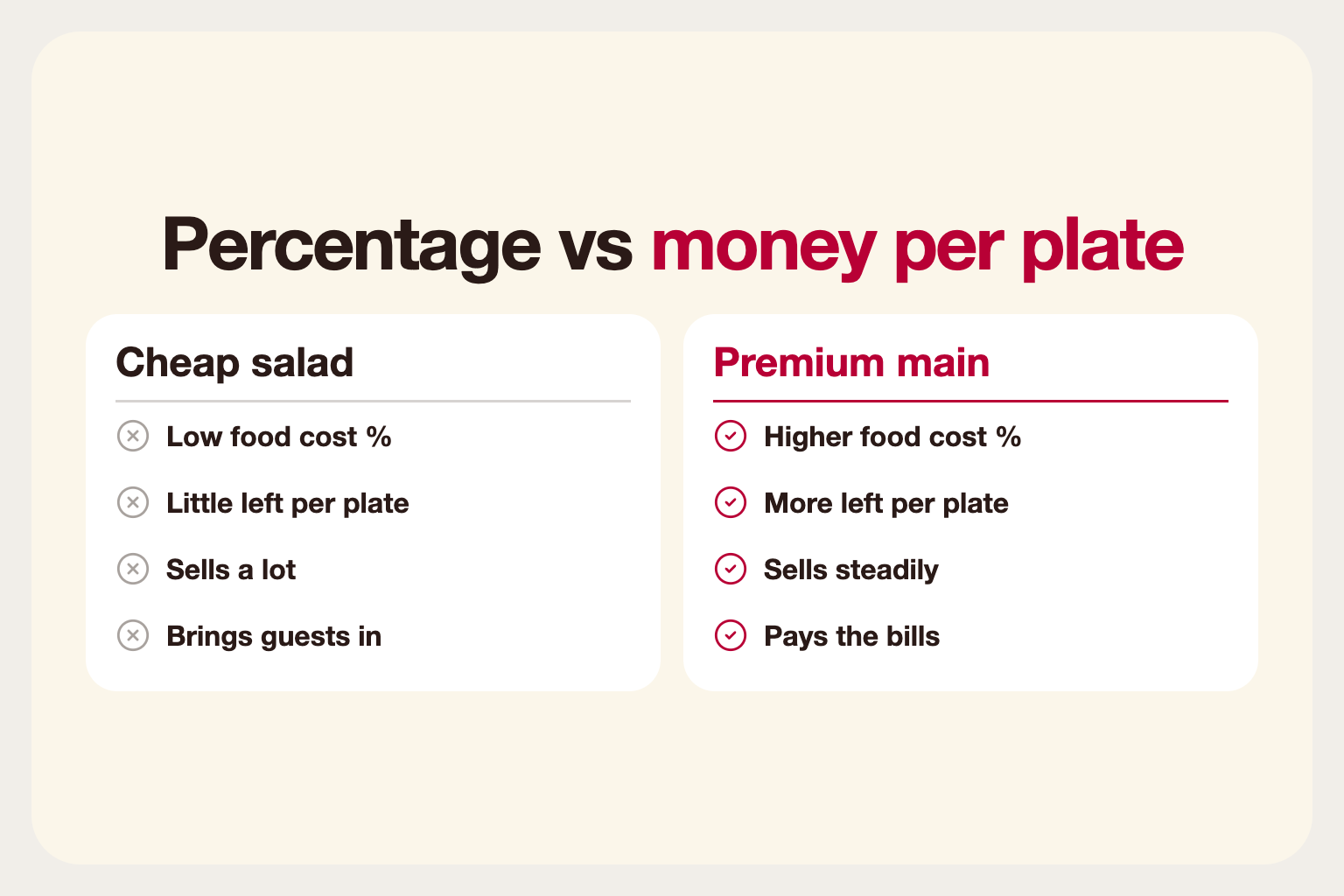
A cheap dish with a great percentage can still earn little money per plate. What matters in the end is the money left after the ingredients, often called the contribution margin. A higher-priced main with a slightly worse percentage may put far more in the till.
Look at both numbers together, and at how often each dish sells. The best items earn well and sell well. The worst do neither and are candidates for change or removal.
Present prices carefully
How a price looks changes how it feels. Menus that drop currency symbols, avoid a column of prices aligned down the right edge and let the description do the selling tend to make guests focus less on cost. Test small changes and watch what sells.
Be honest, though. Guests notice when descriptions promise more than the plate delivers, and that costs far more in lost goodwill than any price tweak earns.
Account for labour and overheads
Food cost is only part of what a dish costs you. A dish that takes twenty minutes of skilled prep costs more to produce than one that comes together in two, even if the ingredients are the same price. Rent, utilities and staff all have to be paid from what is left after the ingredients.
You do not need to allocate every cost to every plate, but be aware that a low food cost percentage on a labour-heavy dish can still be a poor earner.
Use menu engineering lightly
Sort your dishes into four groups: popular and profitable, popular but low profit, profitable but unpopular, and neither. Keep and promote the first group, rework the second, give the third a better position or description, and consider dropping the fourth.
This is a guide to where to look, not a formula. Always check it against what your guests tell you and what your kitchen can deliver well.
Mind the details guests notice
Consistent rounding, clear portion descriptions and sensible price steps all make a menu feel considered. Guests notice a price that looks arbitrary, and they notice a big gap between a starter and a main.
Think about the whole table: drinks, sides and desserts are often where margin is best, so make them easy to see and easy to add.
Review regularly and change gently
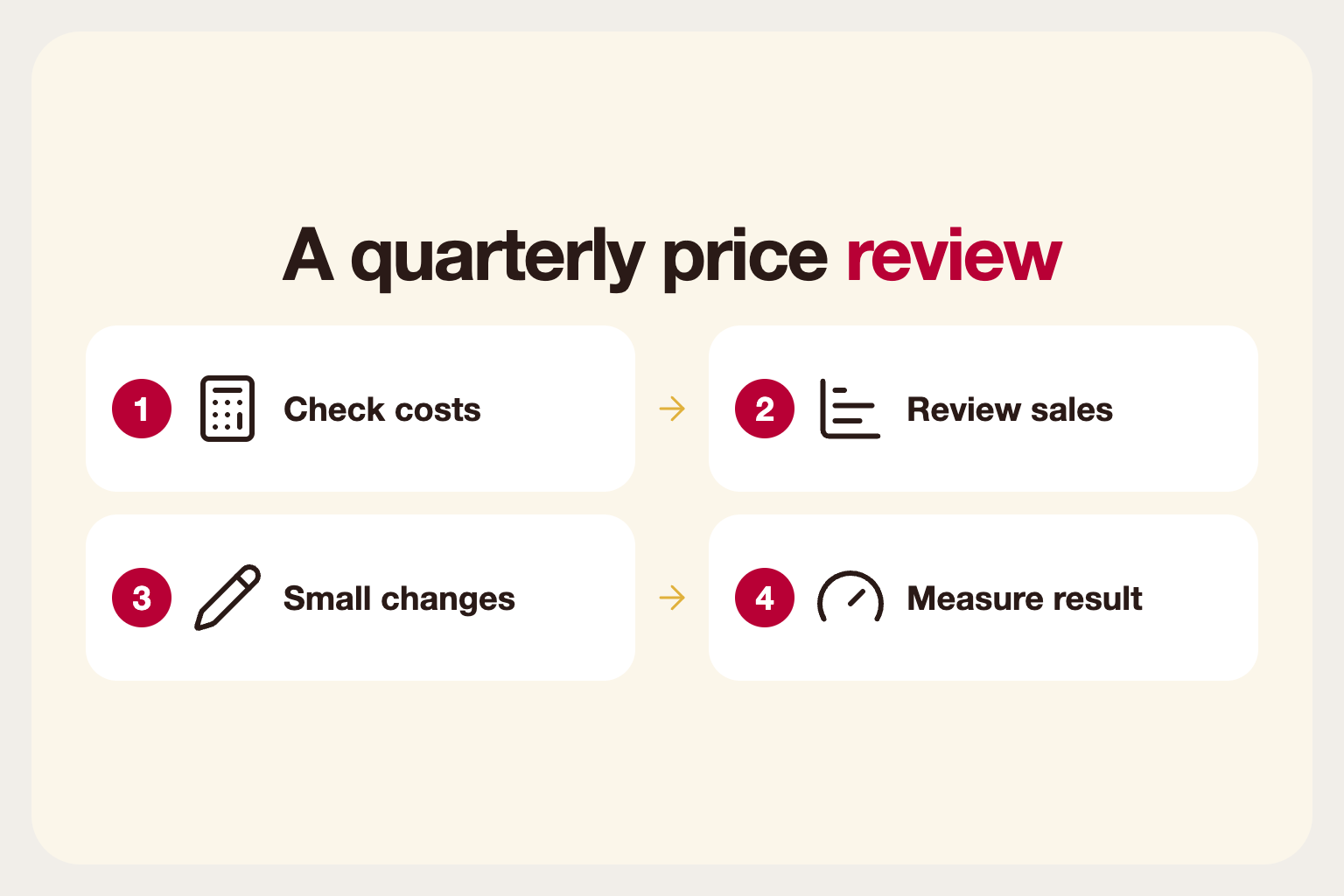
Costs move, so prices should too. Review the menu every quarter against your latest ingredient prices and sales. Small, regular adjustments on selected items are easier on guests than a big jump once a year.
When a price must rise, look for a way to keep value visible: a better garnish, a tweak to the description, or a portion you can stand behind. Guests accept fair prices more readily than surprises.