 Dineator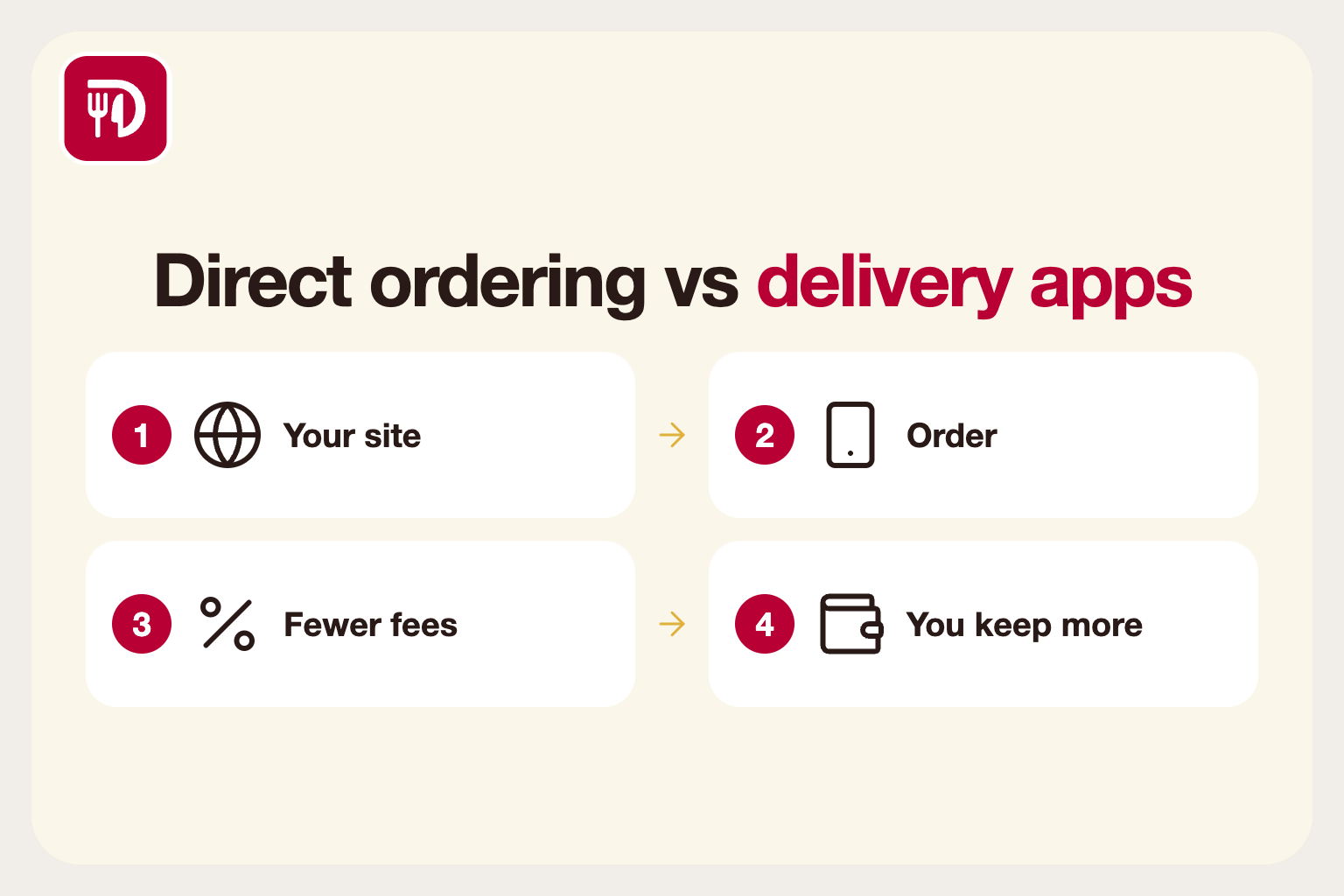
The trade-off in one sentence
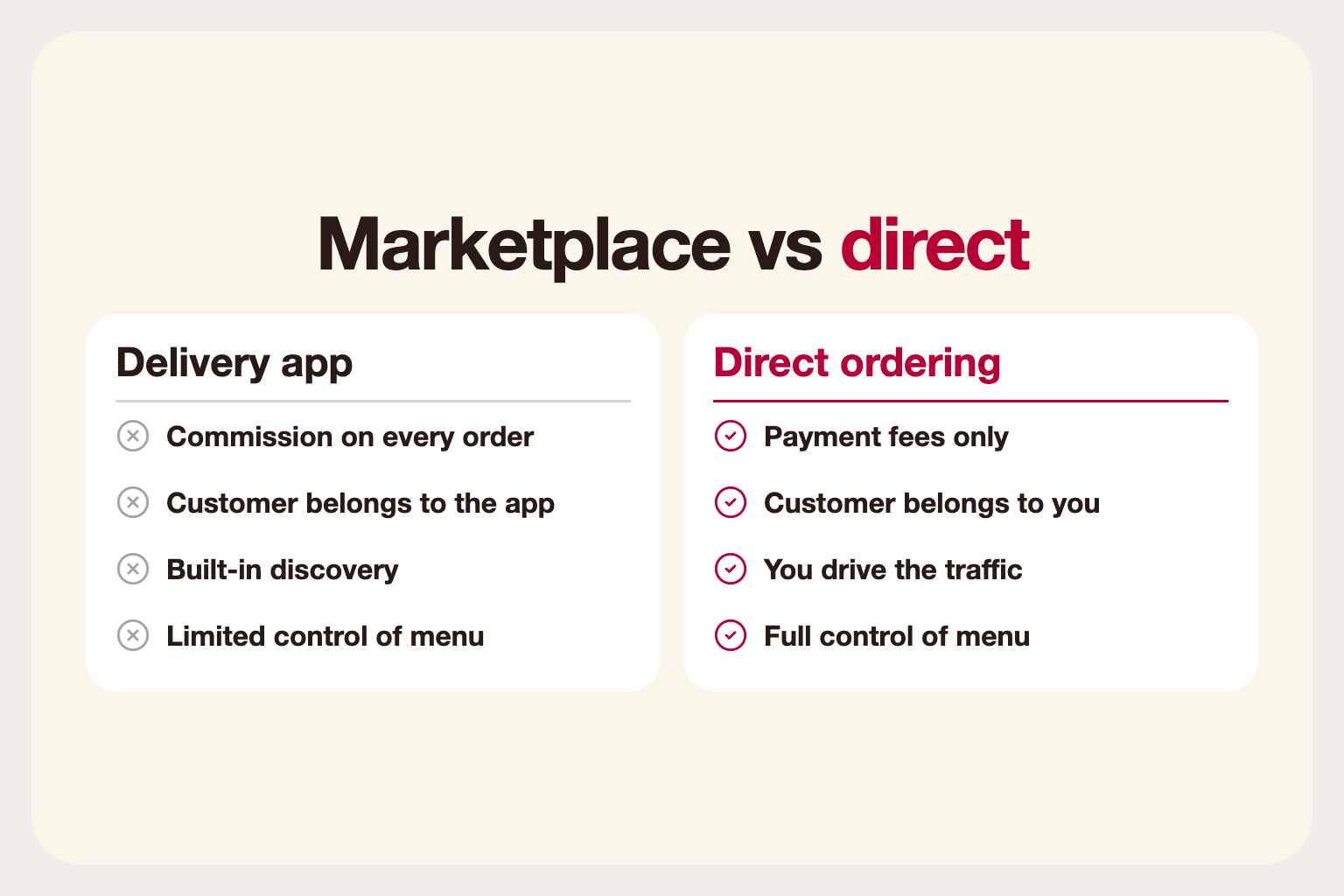
Delivery marketplaces bring you new customers but take a commission on every order and own the customer relationship. Your own online ordering page earns you less discovery but lets you keep the whole order value and the guest's details.
Neither is simply good or bad. The right mix depends on your margins, your location and how much effort you can put into driving your own traffic.
What commissions do to a single order
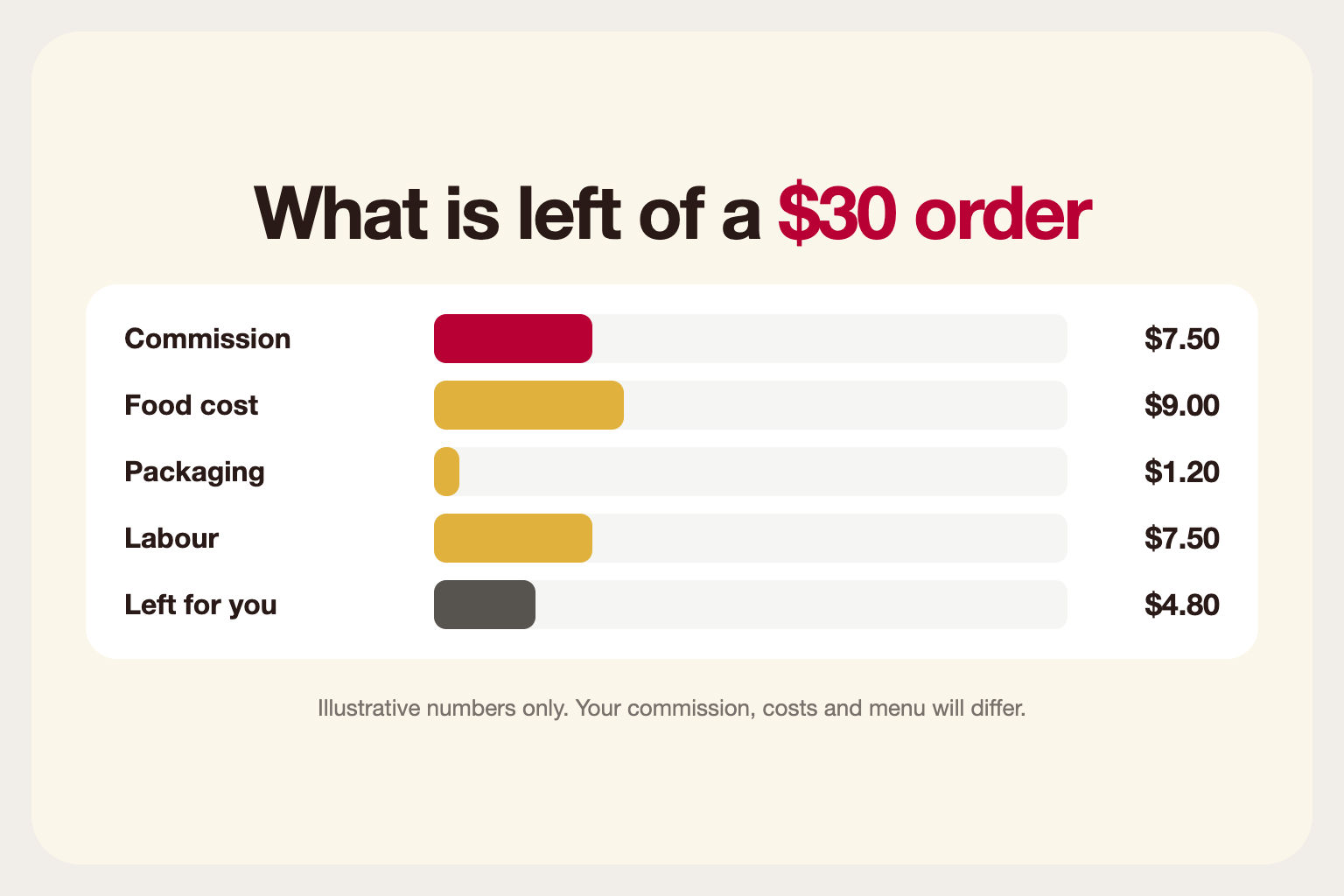
Marketplace commissions vary by plan and market, but they are often a significant percentage of the order value. On a restaurant that already runs on thin margins, a large commission on a low-priced order can leave very little, or nothing, after food and packaging costs.
Work it out for your own menu. Take a typical order, subtract the commission, food cost, packaging and the labour to prepare it, and see what is left. Do the same for an order placed on your own site, where you pay payment-processing fees but no marketplace commission. The gap is what you are paying for the marketplace's customers.
Some dishes survive a commission better than others. High-margin items such as drinks, sides and desserts can carry it; low-margin mains often cannot. Some restaurants adjust marketplace prices or menus to reflect this.
Who owns the customer?
On a marketplace, the guest belongs to the platform. You usually cannot email them, thank them by name or invite them back. The platform can also show them your competitors on the next search.
With direct ordering, you have the relationship. You know what they ordered and when, you can offer a reward for coming back and you can tell them about a new menu. Over time, repeat customers are the cheapest revenue you will ever earn, and only direct ordering lets you build that list.
What you give up by going direct
Marketplaces send traffic. Someone searching for "pizza near me" finds you without ever having heard of you. A direct ordering page does not have that built in, so you need to point guests to it yourself through your website, social profiles and in-store signage.
You also take on more work: your own delivery or pickup process, payments and customer support. For a restaurant without drivers, pickup and dine-in ordering may be a better starting point than delivery.
A sensible hybrid
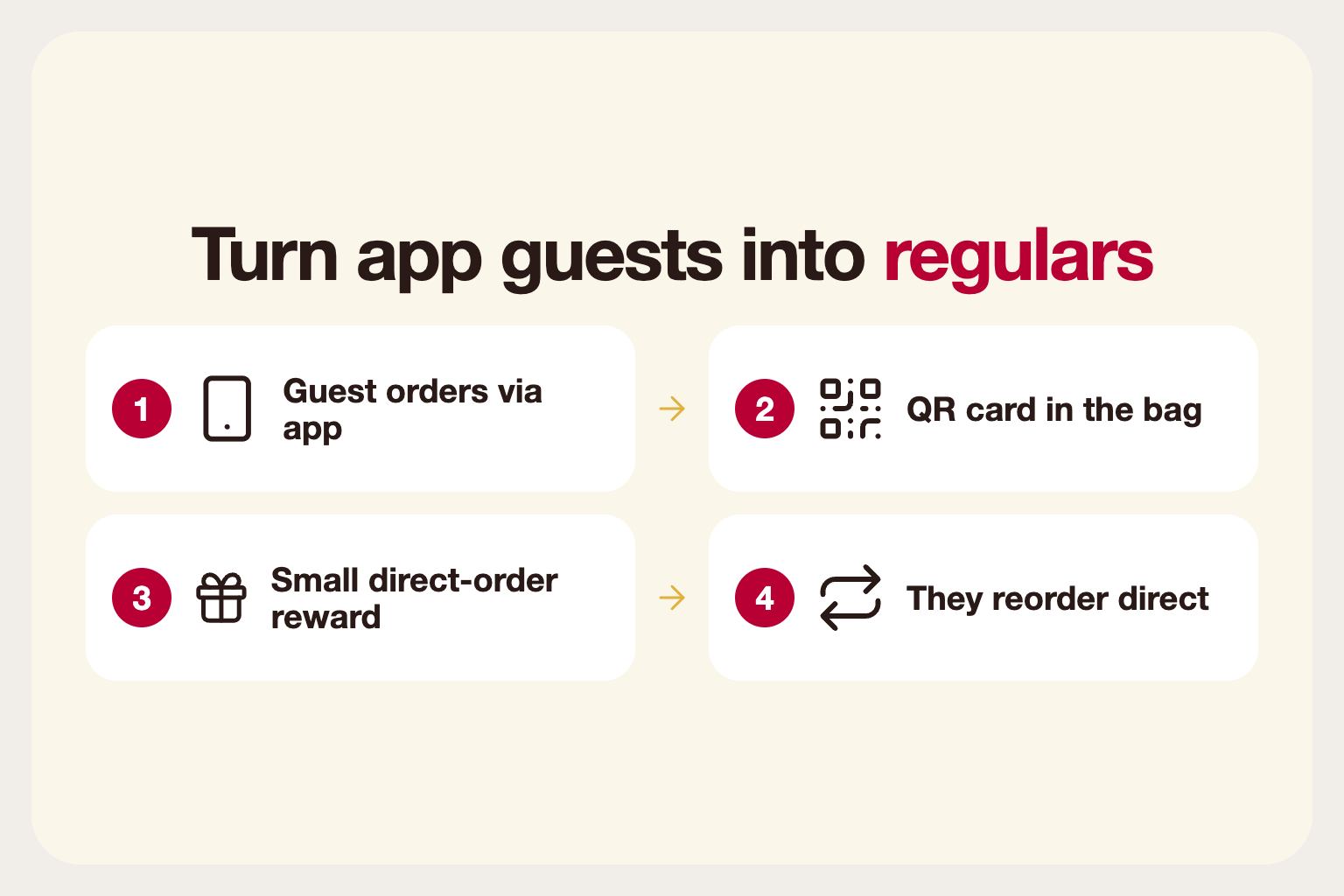
Most restaurants do not need to pick one. Use marketplaces as a discovery channel for new customers, and give those customers a reason to order direct next time. Put a card with the direct ordering link or QR code in every delivery bag, and mention it on the receipt.
Offer something real for ordering direct: a small discount, a free side or loyalty rewards. Even a modest incentive can move repeat customers off the high-commission channel. Measure how many orders move, and adjust the offer if they do not.
Pickup is the easiest place to start
If you do not have your own drivers, start with pickup and dine-in ordering. There is no delivery cost, guests collect at a time they choose and the kitchen can plan around ready times. Many restaurants find pickup orders are also the highest-margin online orders.
Make pickup clear: show an accurate ready time, tell guests where to collect and make the handover quick with a dedicated shelf or window.
Promote it where guests already look
Your Google Business Profile can link directly to an ordering page. Add the link to your social profiles, your website header and any email signature. Inside the restaurant, put a QR code on receipts, takeaway bags and table cards.
Tell guests why it helps: a better price, a loyalty reward or faster service. People will switch for a reason, not out of loyalty to your margins.
Measure what is working
Track where your orders come from: marketplace, direct page, phone and walk-in. Compare the average order value and the margin you keep on each channel, not just the sales total. A channel that looks big on revenue can look small on profit.
Review the numbers monthly. If direct orders are growing, you can afford to reduce reliance on marketplaces. If they are flat, change the offer or the way you promote it before drawing conclusions.
Make your own page easy
A direct page only works if it is easy. It should load fast on mobile, show clear photos and prices, and make checkout quick. Link it from your Google Business Profile, your social profiles and your website, and print the QR code on receipts and packaging.
Own the channel you can control, and treat the rest as marketing spend you measure.