 Dineator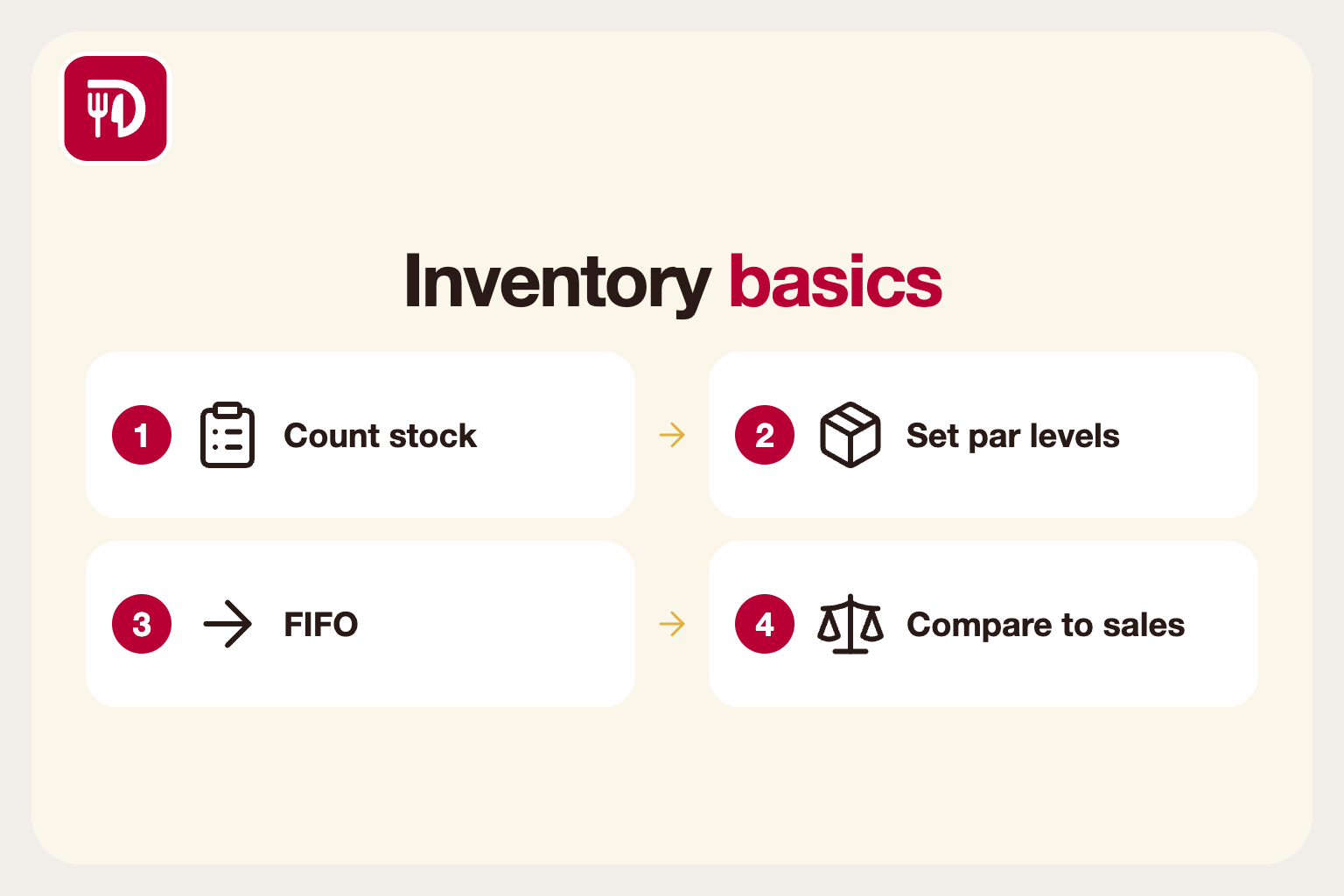
Why inventory is a profit problem
Inventory is cash sitting on shelves. Every box in the walk-in was paid for, and every box that spoils or walks out the back door is money gone. Because food is one of the biggest costs in a restaurant, a few percentage points of control here can matter more than a price rise on the menu.
You do not need a complicated system to start. You need a regular count, a list of what you should have, and the habit of comparing the two.
Start with a simple stock count
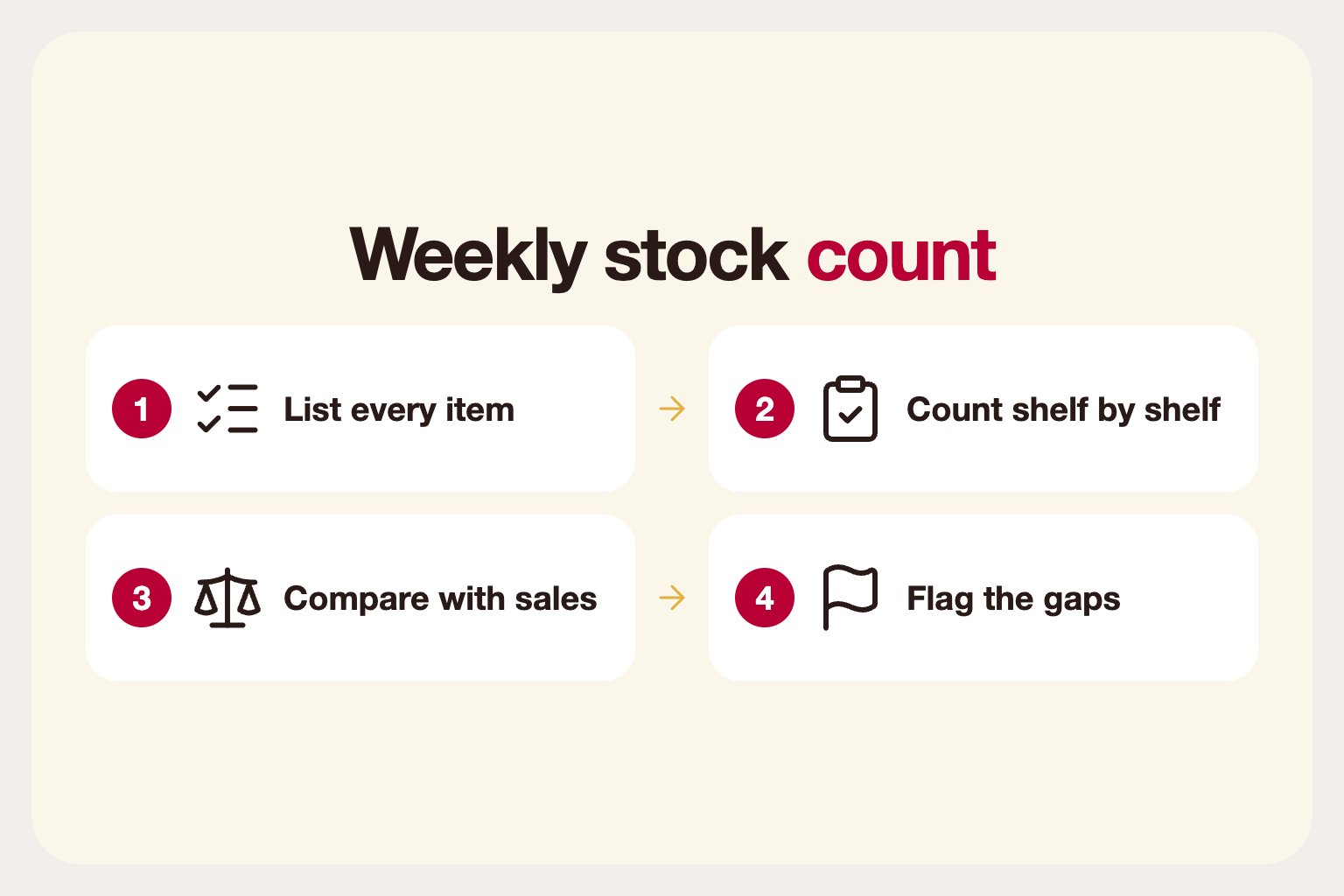
Pick a day and a time, ideally after close or before the first prep, and count everything you hold: dry goods, fridge, freezer, bar and packaging. Write quantities against a fixed list, in the same order as your shelves, so the count is quick and repeatable.
Count weekly for expensive items such as proteins, seafood and spirits, and monthly for slow-moving dry goods. The point is not perfect accuracy; it is spotting a gap early enough to do something about it.
Set par levels from real sales
A par level is the amount of an item you want on hand after a delivery, enough to cover until the next one. Set pars from what you actually sold, not what you hope to sell. Look at the last few weeks, note the busy and quiet days, and add a small buffer.
Review pars every month or two. Menus change, seasons change and a par that never moves is a quiet source of over-ordering and spoilage.
Use first in, first out
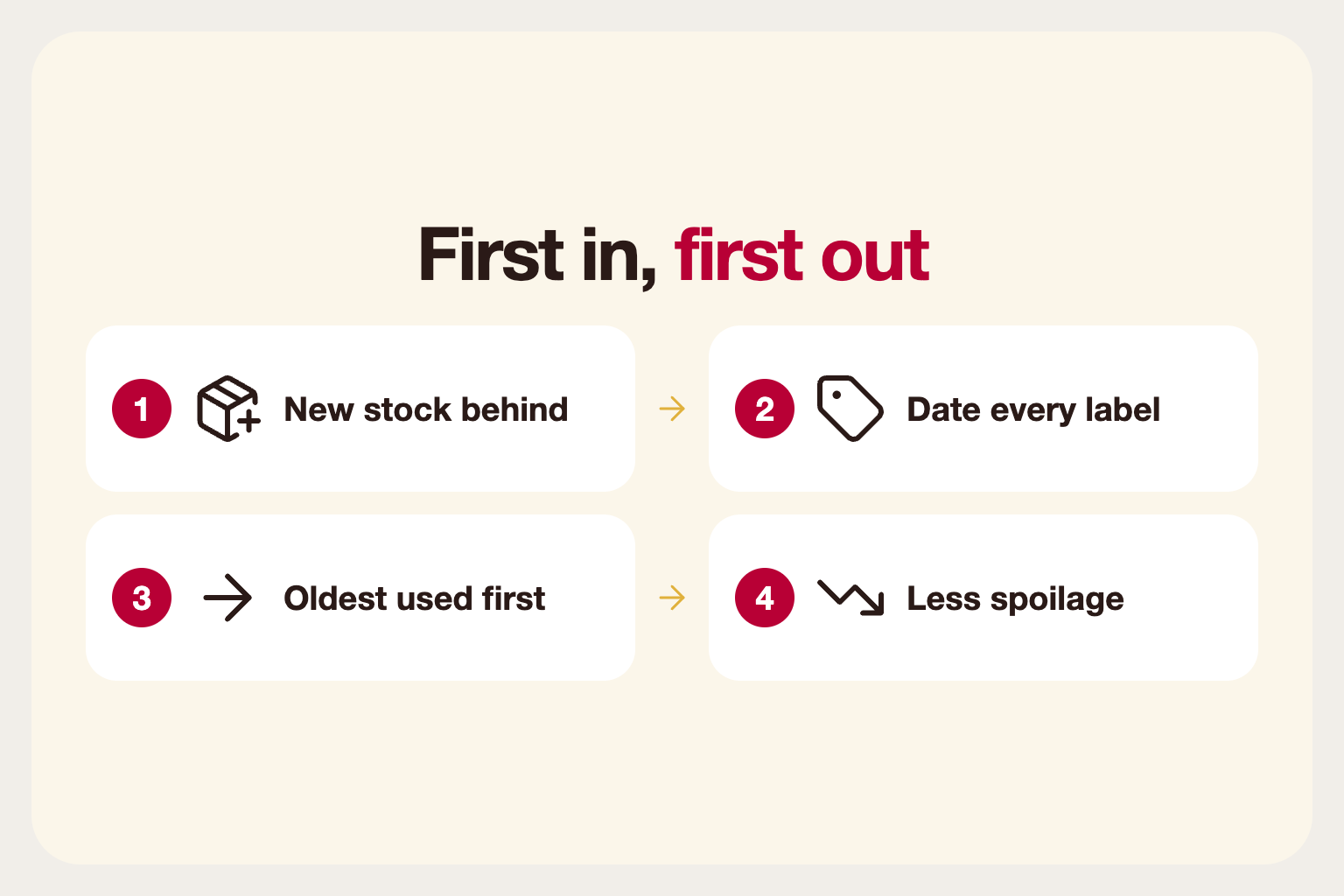
Put new deliveries behind older stock and date everything. It sounds basic, but spoiled product usually comes from the oldest box hidden at the back. A clear label with the delivery date makes it obvious to the whole team what to use first.
Keep shelves tidy and consistent. When every item has a home, a missing item is obvious and a forgotten one is rare.
Compare usage with sales
The most useful question inventory can answer is: did we use what we should have used? Take your opening stock, add deliveries, subtract your closing stock, and you have what was used. Compare that with what your sales say you should have used.
A consistent gap points to waste, over-portioning, theft or recipes that are not followed. You may not know which at first, but you now know where to look, which is more than most kitchens have.
Deal with suppliers on facts
Check every delivery against the order and the invoice before the driver leaves. Short deliveries, substitutions and quality problems are easiest to fix on the spot. Keep a note of repeat problems and raise them with the supplier with dates and examples.
Having two suppliers for key items gives you leverage and a fallback. You do not need to change often, just to know the alternative exists.
Track the items that hurt most
Not everything deserves the same attention. A small number of items, usually proteins, seafood, dairy, produce with short lives and spirits, make up most of your food and drink spend. Give those a tighter routine than napkins and flour.
Look at your last month of invoices, sort by spend and circle the top ten. Those are the lines where a small improvement pays for itself fastest, and where waste or theft hurts most.
Reduce shrinkage and waste
Shrinkage is stock that disappears without a sale: spoilage, over-portioning, mistakes, and occasionally theft. Most of it is not dramatic. It is a few extra ounces on every plate, a missing delivery item nobody noticed, or a batch made too large.
Keep a waste sheet next to the pass, label and rotate stock, and use the same scoops and scales every time. When portions are consistent, your costs become predictable and your counts start to make sense.
Use your sales data to order
Your point of sale already records what you sold. Use it to see which dishes sell on which days, then order and prep to match. Ordering from habit instead of data is the most common cause of both stock-outs and spoilage.
Before every large order, look at the coming week: bookings, events, weather and holidays all move demand. A few minutes of checking beats a freezer full of food nobody ordered.
Make it a routine
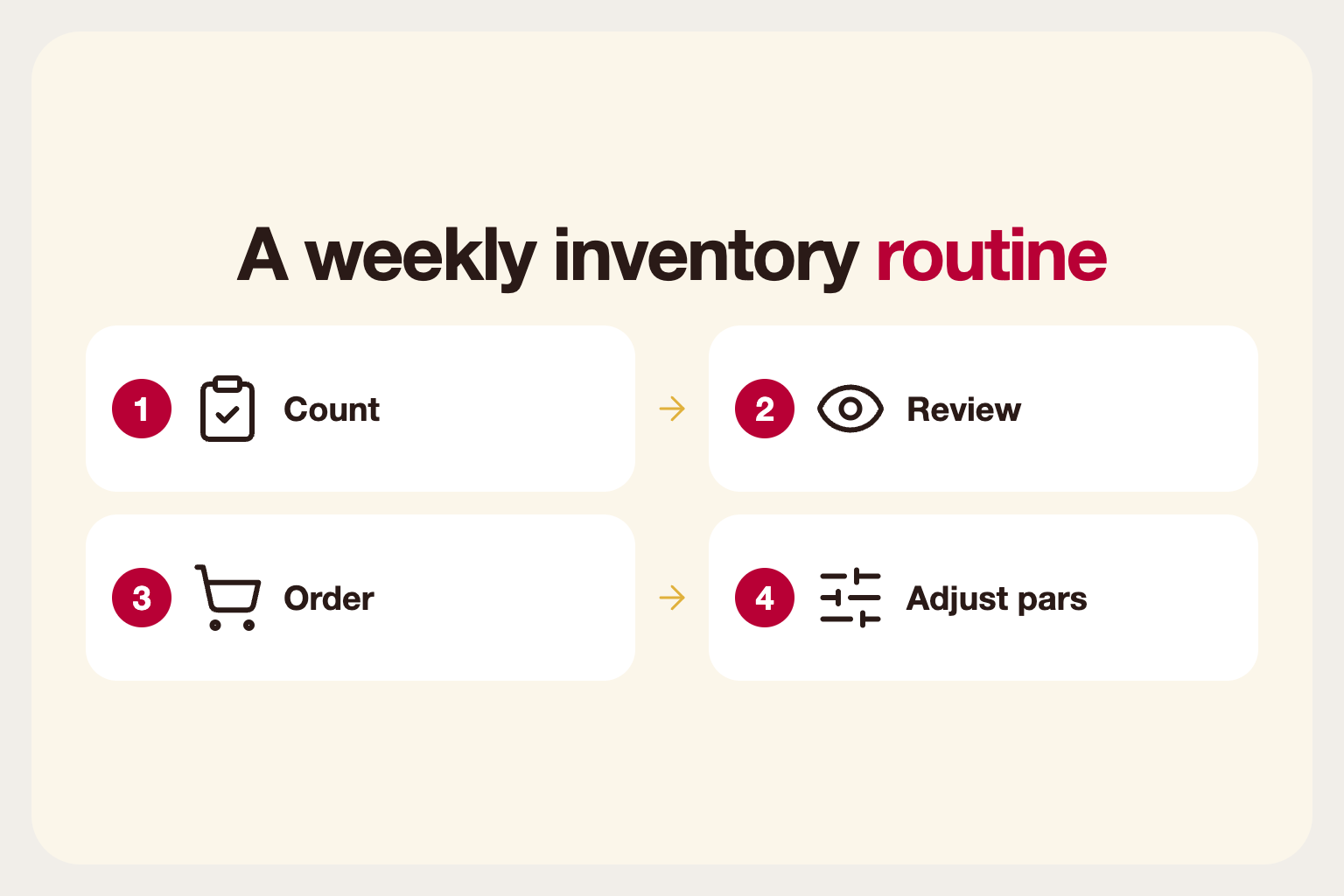
Inventory only works when it is regular. Assign the count to a named person, put it in the weekly schedule and review the results with the team. Short and consistent beats long and occasional.
Start with your ten most expensive items. Once the habit is solid, widen the list. A modest system you actually use will always beat a perfect one you do not.