 Dineator
A complaint is a second chance
Every restaurant gets complaints. Food arrives cold, a booking is lost, a dish is not as described, the bill is wrong. The mistake is not the problem that ends a relationship; it is usually how the mistake is handled. A guest who is treated well after something goes wrong can become more loyal than one who never had a problem.
The aim of this post is practical: a short method your whole team can follow, calm and consistent, whether the complaint comes at the table, by phone or in an online review.
Listen first, and let them finish
The first minute sets the tone. Stop what you are doing, face the guest, and let them say everything without interrupting. People who feel heard calm down quickly; people who feel brushed off escalate.
Avoid explaining or defending while they speak. Phrases such as 'that never normally happens' or 'the kitchen is very busy' may be true, but they sound like excuses. Nod, keep eye contact, and take notes if the complaint is detailed.
Apologise sincerely and take ownership
A good apology is short and specific: 'I am sorry the pasta arrived cold, that is not the standard we want.' It does not blame the kitchen, the server or the guest. Even if the cause was outside your control, from the guest's point of view you are the restaurant.
Avoid 'I am sorry you feel that way'. It sounds like an apology but shifts the problem to the guest. Say what went wrong and that you are sorry it did.
Offer a fix, and let the guest choose where possible
Once you understand the issue, offer a solution straight away: remake the dish, replace the drink, correct the bill. Where it fits, give two options, such as 'I can have it remade now or take it off your bill, which would you prefer?' Choice gives the guest back a sense of control.
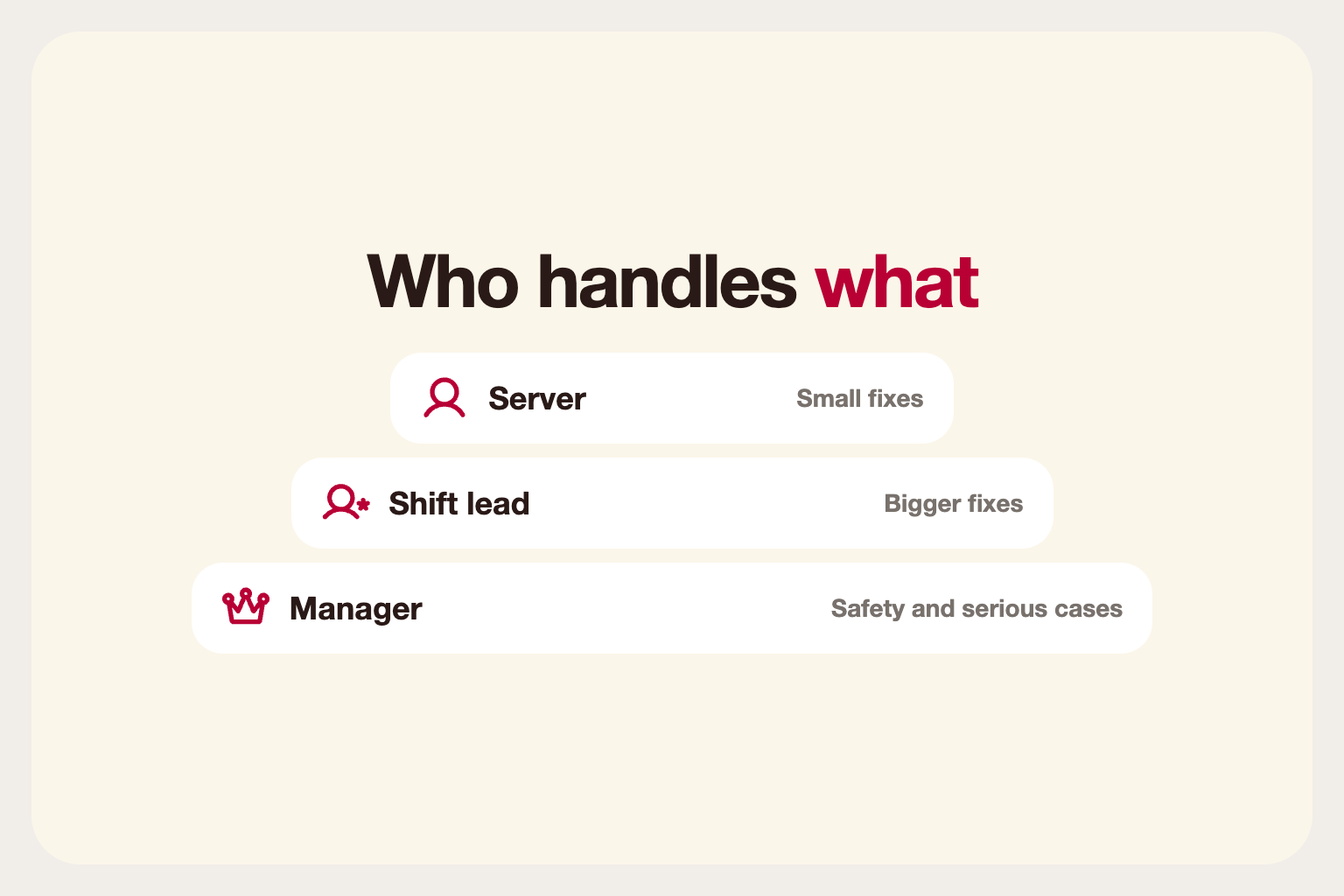
Give your team clear limits on what they can fix without asking. A server who can remove a dish or offer a coffee on the spot resolves most problems in thirty seconds. If every fix needs a manager, the guest waits and the frustration grows.
Do not over-compensate. A free meal for a minor problem teaches guests that complaining pays, and it can be costly. Match the response to the problem.
Know when to call a manager
Agree in advance which situations go straight to a manager: an allergic reaction or suspected illness, an aggressive guest, a complaint about a staff member, a serious billing error, or anything that involves safety. For anything medical or legal, follow your local rules and record what happened.
When a manager steps in, the server should briefly explain the situation so the guest does not have to repeat everything. Repeating a complaint is a common cause of further irritation.
Follow up and record it
After the fix, check back a few minutes later. 'Is the new dish better?' shows you care and gives a last chance to put things right. If the guest leaves unhappy, consider a short follow-up message with a sincere apology and an invitation to return.
Log every complaint in one place: date, what happened, what you did, and who handled it. A simple notebook or a note in your system is enough. The log is not for blame; it is for spotting patterns.
Review it weekly with your leads. If four complaints this month mention slow drinks, that is a staffing or bar layout issue to fix, not four separate bad moods.
Online complaints need a public and a private answer
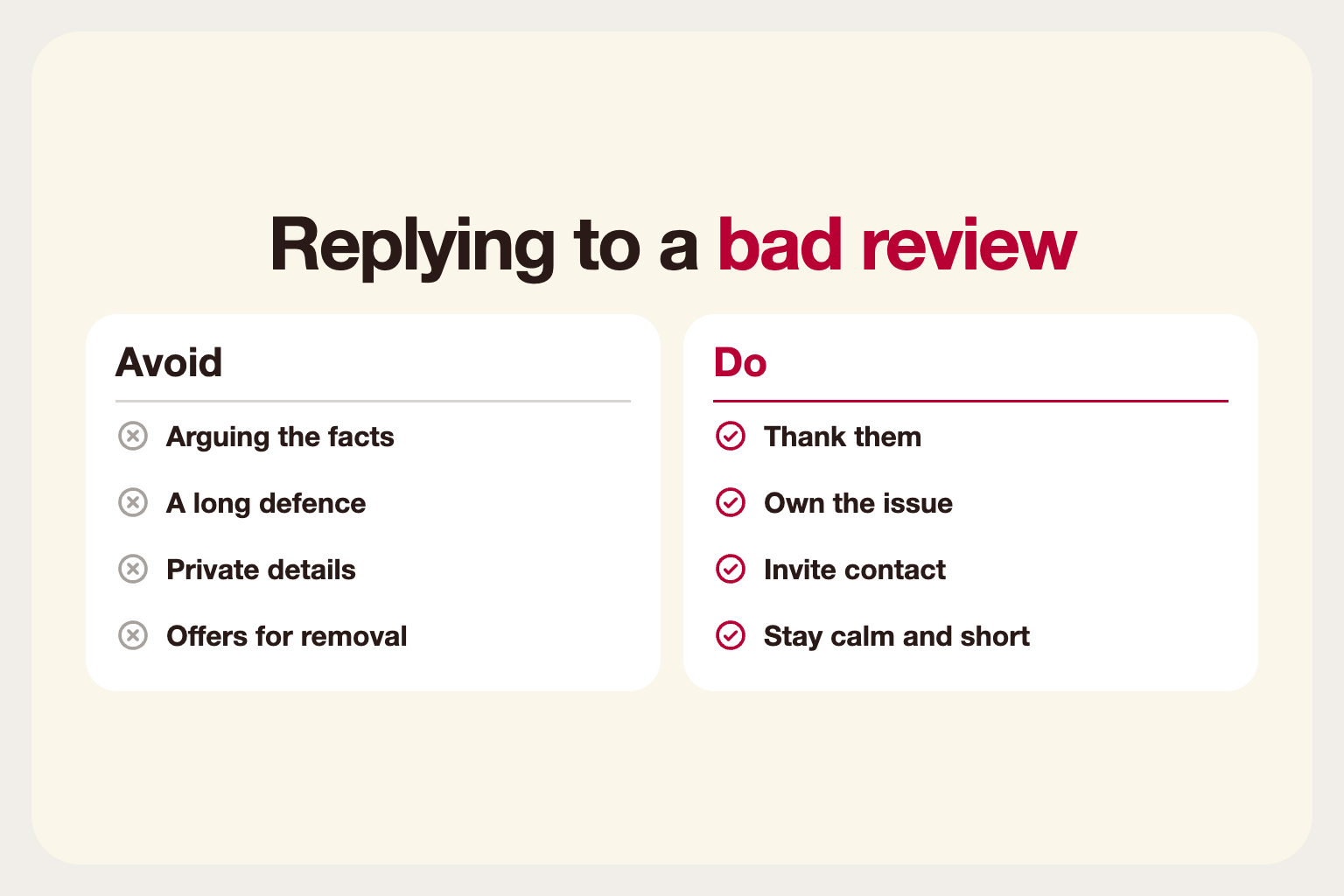
Reply to negative reviews promptly and politely. Thank the person, acknowledge the specific issue, and invite them to contact you directly to put it right. Do not argue about facts or reveal private details of their visit.
Remember that you are writing for everyone who reads the page, not only the reviewer. A calm, professional reply shows prospective guests how you treat people. Our guide on managing online reviews has reply examples.
Never offer something in return for removing a review, and do not post fake reviews. It breaks the rules of most platforms and damages trust.
Look after your team too
Dealing with upset guests is draining. Make it clear that staff will be supported when they follow the process, even if the guest remains unhappy, and that abuse of staff is not acceptable. A short debrief after a hard encounter helps people reset.
Share what you learn. A complaint that leads to a better process is a win for the whole team, and it is worth saying so.
Putting it into practice
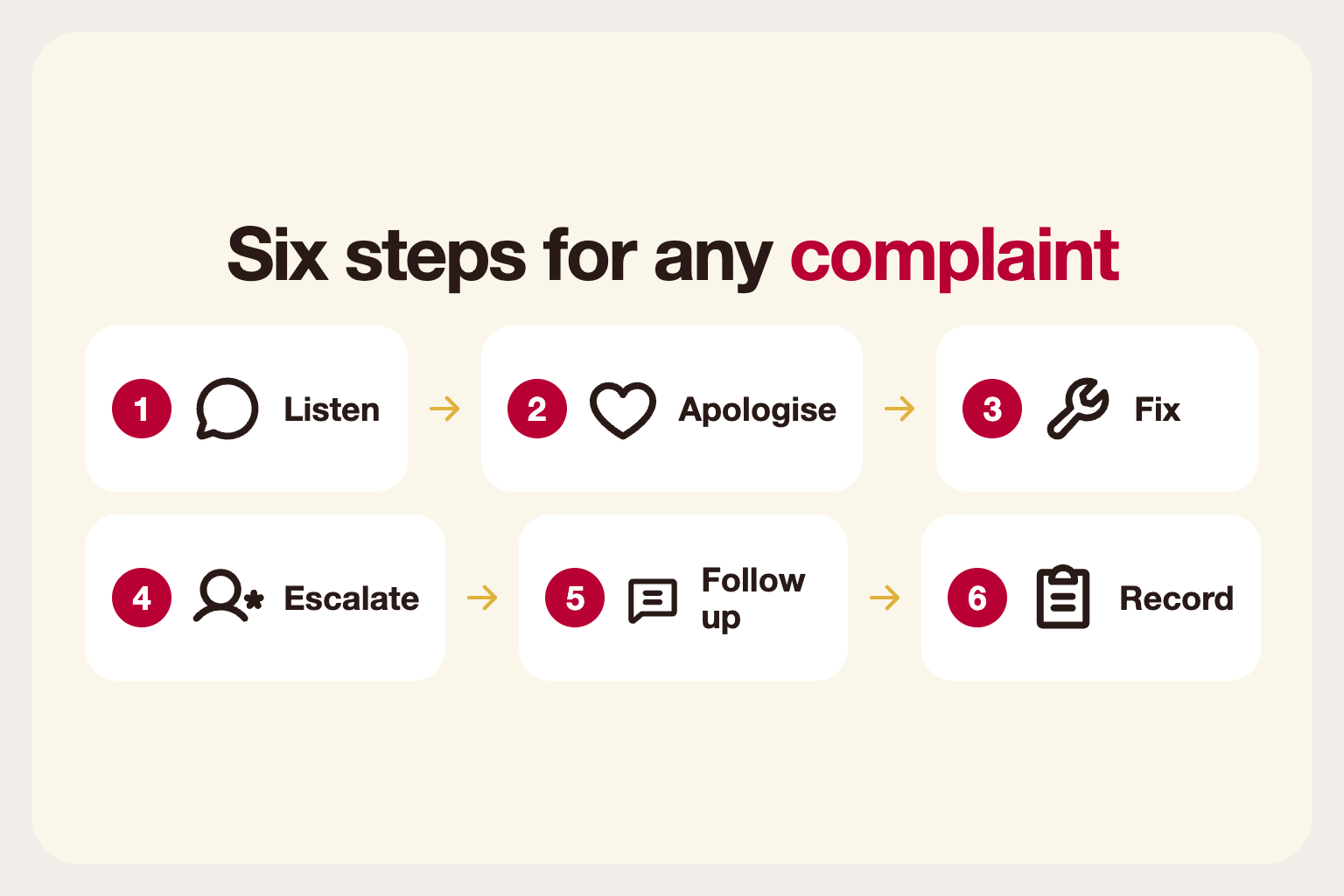
Teach the method in one briefing: listen, apologise, fix, escalate when needed, follow up, record. Agree what each role can offer without asking, and keep a simple log.
In a month, read the log. The patterns in it will tell you what to fix upstream, which is the best way to get fewer complaints in the first place.