 Dineator
The bill is part of the experience
A meal can go perfectly and still end badly if paying is awkward. Waiting for the bill, arguing over who had what and queuing at the till all leave a last impression. Making payment smooth is a cheap way to improve the whole visit.
It also speeds up tables, which helps your capacity on busy nights.
Expect split bills
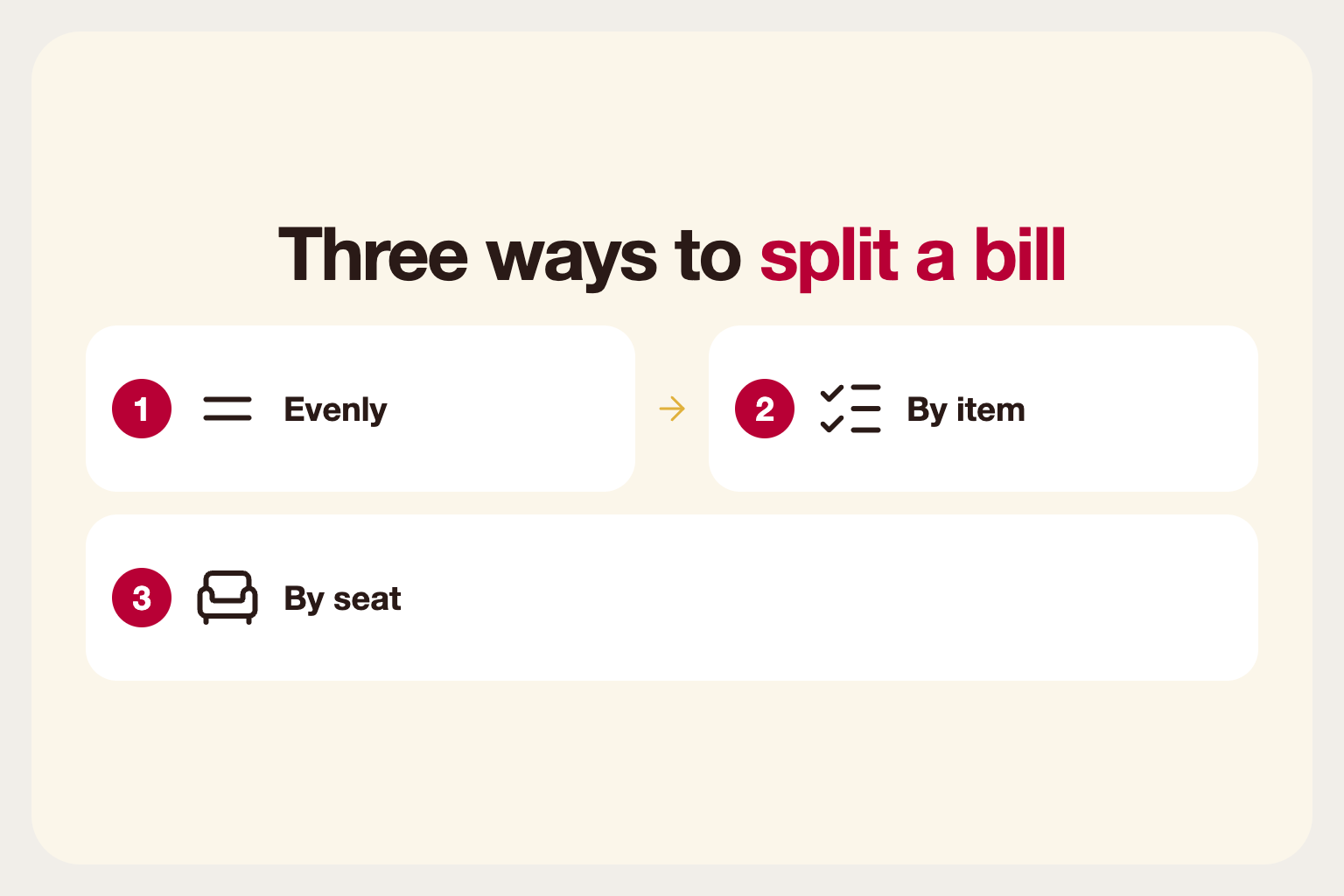
Groups split bills all the time: evenly, by item or by person. If your team has to work it out by hand, it takes time and mistakes creep in. Decide in advance how you will handle each type and make sure every server knows the rule.
A system that lets you split by item, by seat or evenly in a few taps saves minutes every time.
Offer more than one way to pay
Guests expect cards, contactless and phone wallets. Some still want cash. Accept what your guests actually use, and keep the process quick for each.
Pay-at-table options mean guests are not waiting for a server to bring a terminal, and servers are free to look after other tables.
Handle tips fairly
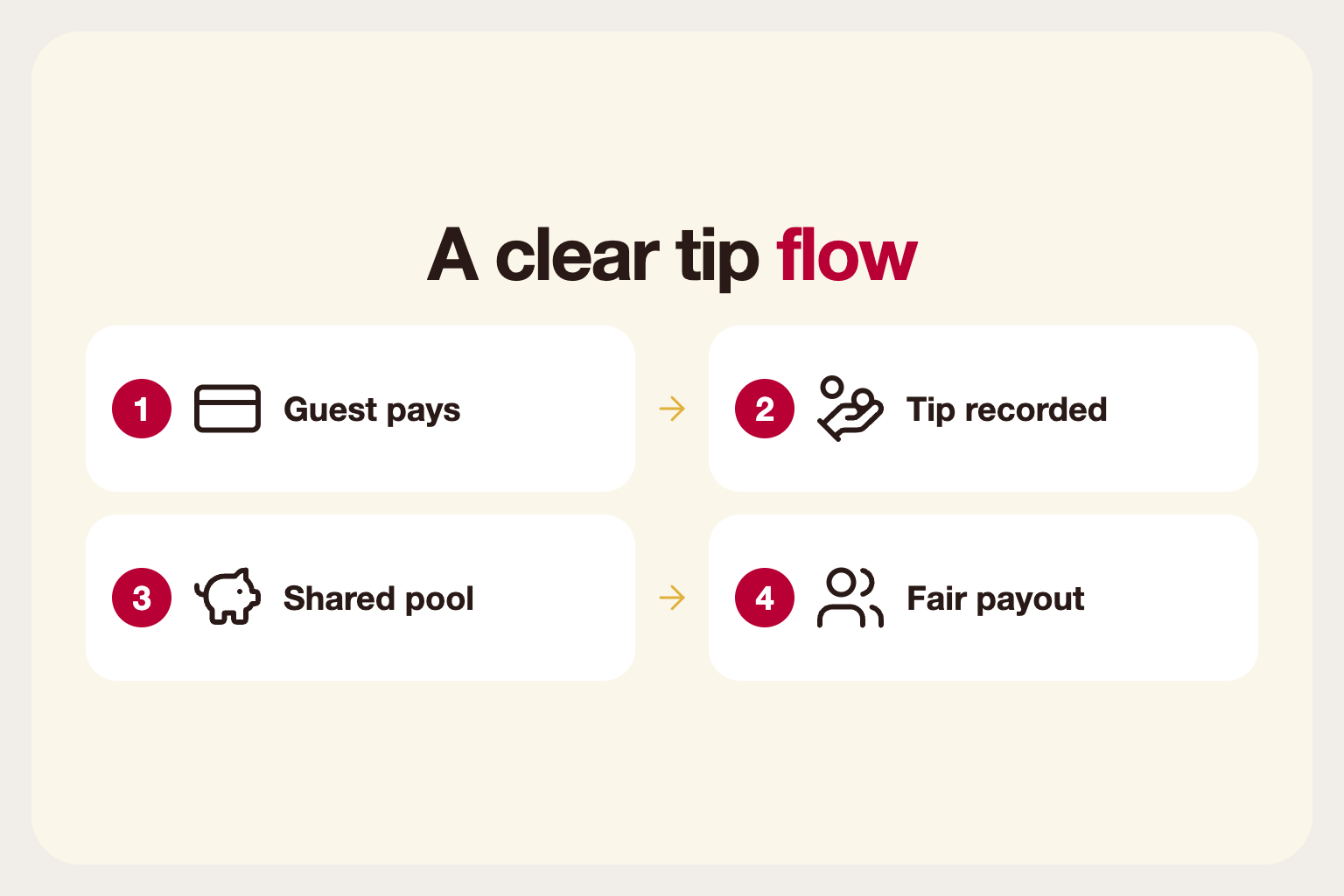
Make tipping easy and transparent. Decide how tips are shared, tell the team clearly and make sure the records are accurate. Unclear tip handling is a common cause of friction in teams.
Check the local rules on how tips and service charges are treated, and apply them consistently.
Deal with mistakes quickly
Wrong totals, missed discounts and double charges happen. Train staff to fix them calmly and keep a record of every refund or adjustment, with a reason. Limit who can approve refunds so the process is safe.
A guest who sees an error fixed politely often leaves happier than one who never had a problem.
Speed up the end of the meal
Many tables sit waiting for the bill longer than they eat dessert. Train servers to offer the bill at the right moment, and make it quick to deliver and settle. Pay-at-table and QR payment cut the wait and free the table sooner.
Guests appreciate not having to hunt for the server. Reading the table well matters more than any technology.
Keep your records clean
Accurate payment records protect you at tax time and when something goes wrong. Make sure every payment, refund and adjustment is recorded in one place with the person responsible. Avoid side deals and unrecorded cash, which cause headaches later.
Back up your records according to the rules where you operate, and keep receipts available for guests who ask.
Protect against payment fraud
Use trusted payment providers, keep terminals up to date and never write down card details. Train staff to spot odd behaviour, such as a card that is repeatedly declined or an unusual refund request.
Limit who can void or refund and review those actions regularly. Simple controls prevent most losses.
Reconcile at the end of the day
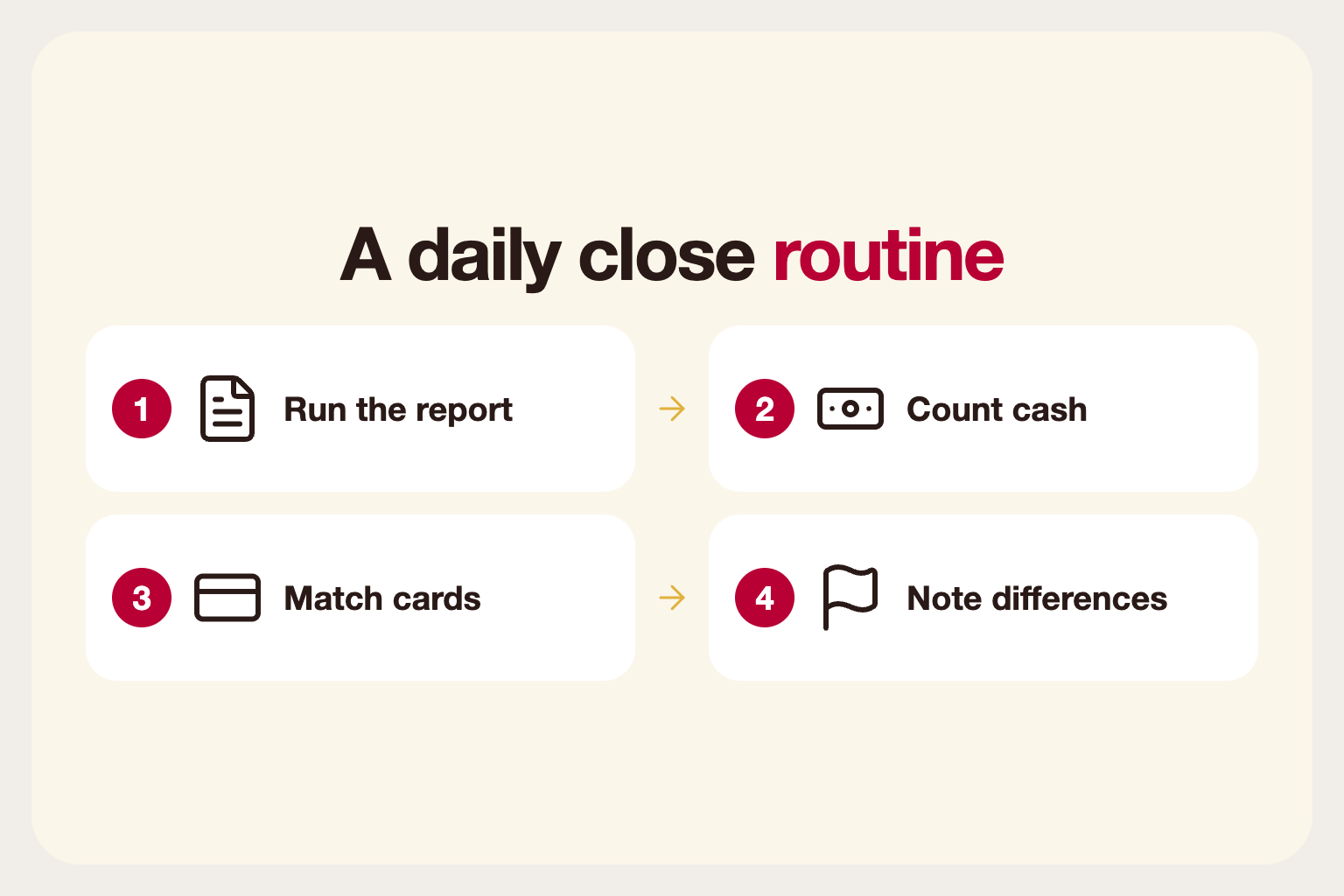
At close, compare what the system says was taken with what is in the till and the card reports. Small differences are normal; patterns are not. Doing this daily means problems are caught while memories are fresh.
Keep it routine and brief, and assign it to someone responsible.