 Dineator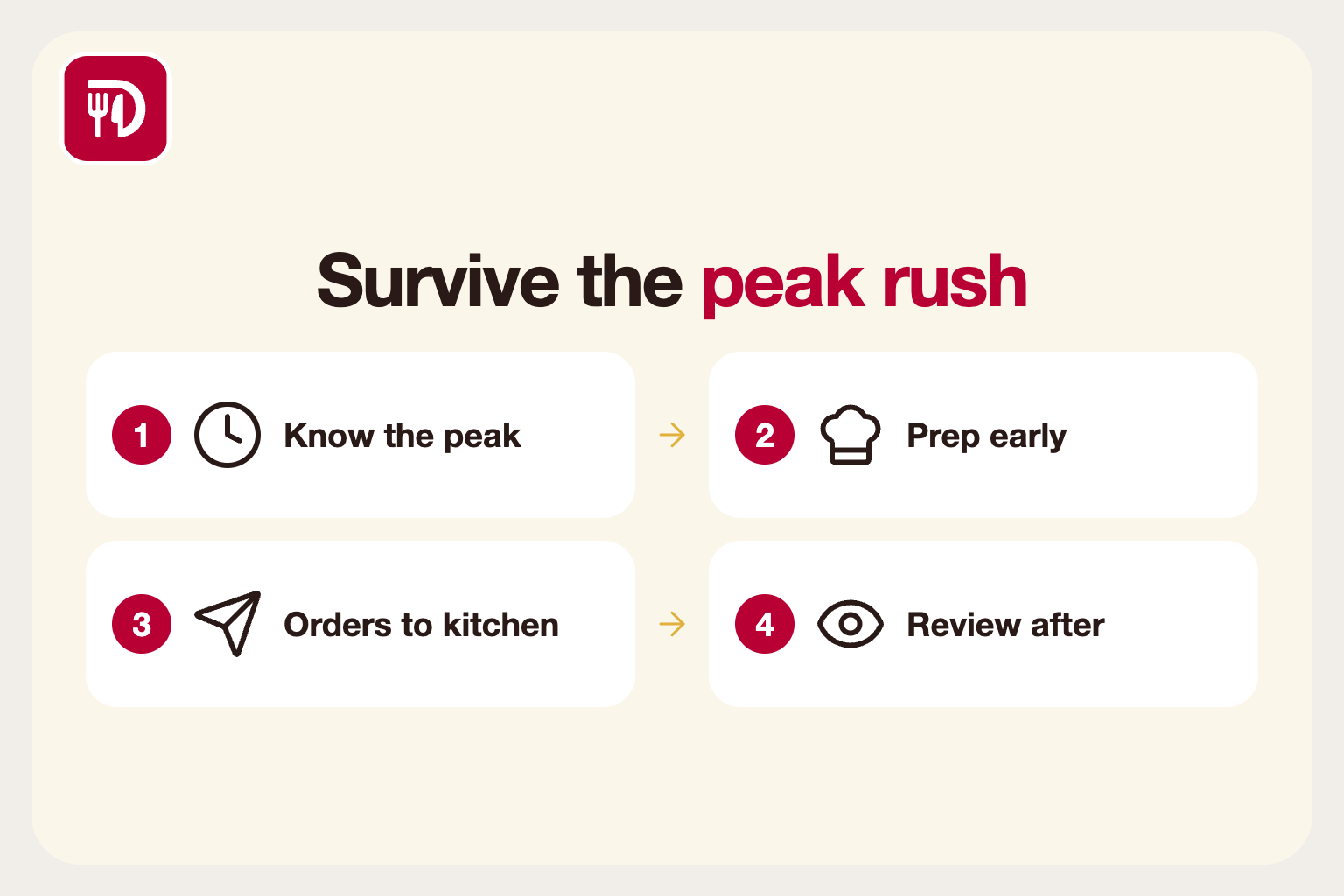
Peak hours decide your night
For most restaurants a large share of revenue arrives in a few busy hours. How well you handle those hours decides whether guests leave happy and whether the team goes home exhausted or proud. Rushes are not random; they are predictable, and that means you can prepare.
Preparation is the difference between a controlled rush and chaos.
Know when the rush comes
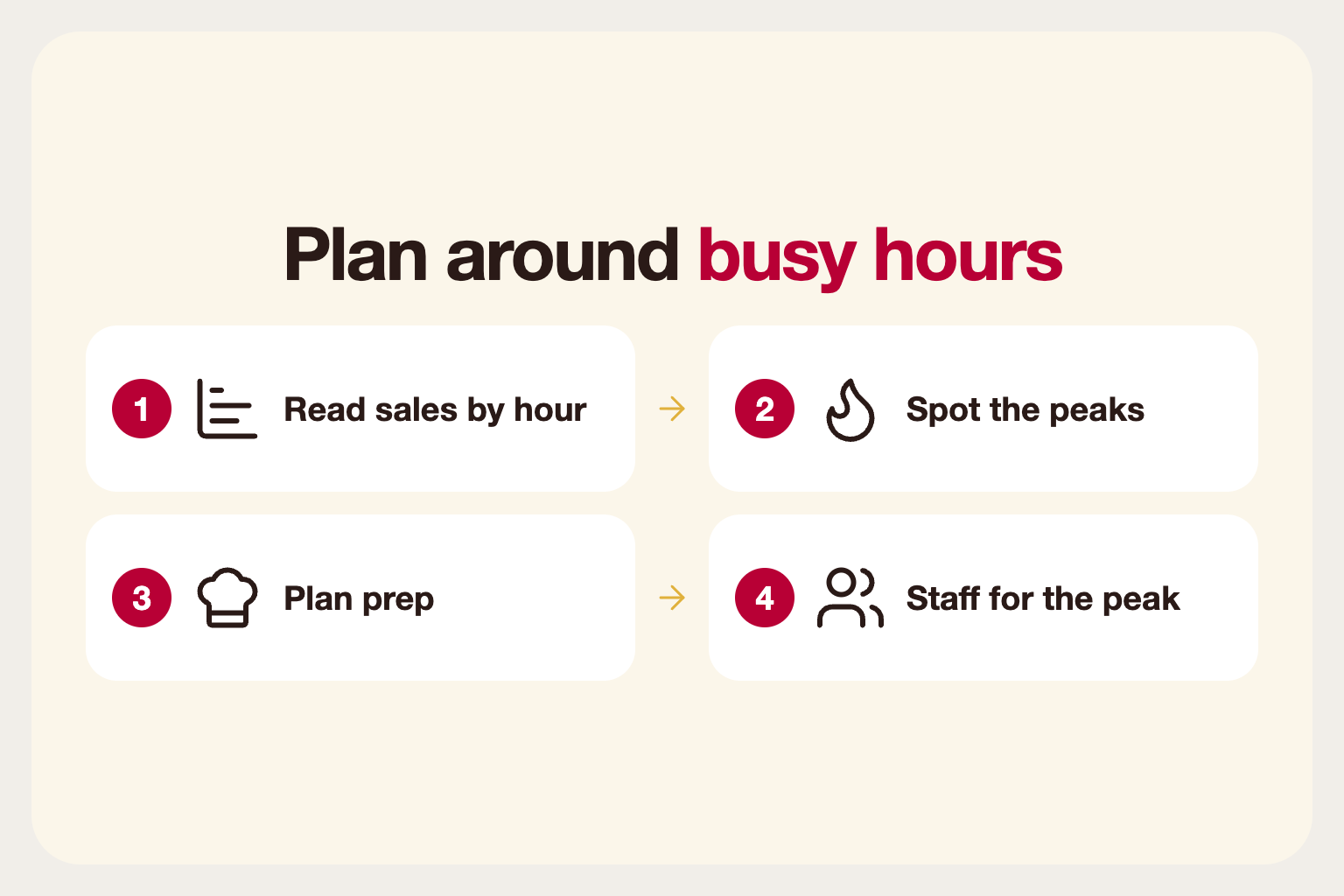
Look at your sales by hour and by day. You will see the pattern: lunch peaks, Friday dinners, the post-cinema wave. Use that to plan prep, staffing and reservations around real demand, not a general feeling.
Plan for the top of the peak, not the average. A kitchen that copes at 8pm on Saturday will cope the rest of the week.
Prep before the doors open
Most rush problems start before service. Stock the stations, prep the sauces, portion the proteins and set up the pass. When the first wave hits, cooks should be assembling and cooking, not chopping.
Use a short pre-service meeting to share specials, low items and any reservation notes. Five minutes of alignment saves an hour of confusion.
Reduce friction in ordering
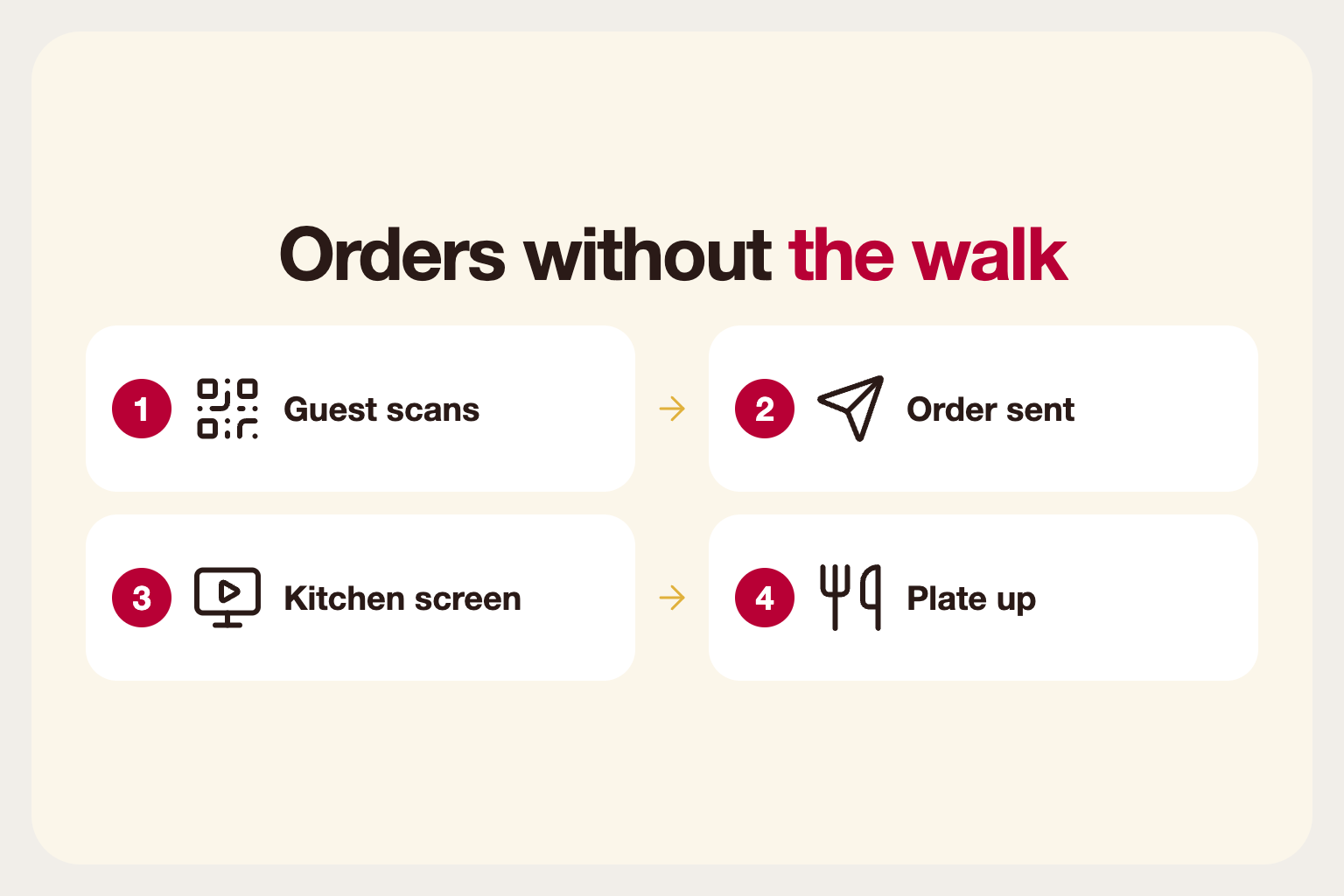
During a rush, every second spent walking orders to the kitchen is a second not spent with guests. Orders that go straight from the table or QR menu to the kitchen screen remove the walk, the shouting and the lost tickets.
Keep the menu manageable at peak. Some restaurants trim to a shorter list during the busiest hours to keep tickets moving.
Keep communication clear
Agree on who calls the pass, how delays are announced and how an out-of-stock item is shared. When something runs out, tell the whole floor at once so no guest is promised a dish that is gone.
A calm voice matters. Teams take their lead from the person running the pass.
Staff for the peak, not the average
A team that is right for a quiet Tuesday is thin on a Saturday night. Look at the hours that carry most of your revenue and make sure you have the people you need then, even if that means shorter shifts at the edges.
Consider split shifts or on-call cover for the busiest windows, and cross-train staff so a gap on one station can be covered quickly.
Protect the kitchen
The kitchen is the bottleneck in most rushes. Keep tickets flowing by firing courses in a sensible order, avoiding giant orders landing all at once and flagging problems early. A kitchen display with timers helps the team see which orders are at risk.
If the kitchen is struggling, slow the intake rather than letting tickets pile up. Quoting an honest wait time is better than a late dish.
Look after the guests who wait
Some waiting is unavoidable at peak. Tell guests the real wait, offer water or a drink, and keep them informed. A guest who knows what to expect is far more patient than one left guessing.
A host or a waitlist system that texts guests when their table is ready lets them wait where they like, and keeps the entrance clear.
Review after the rush
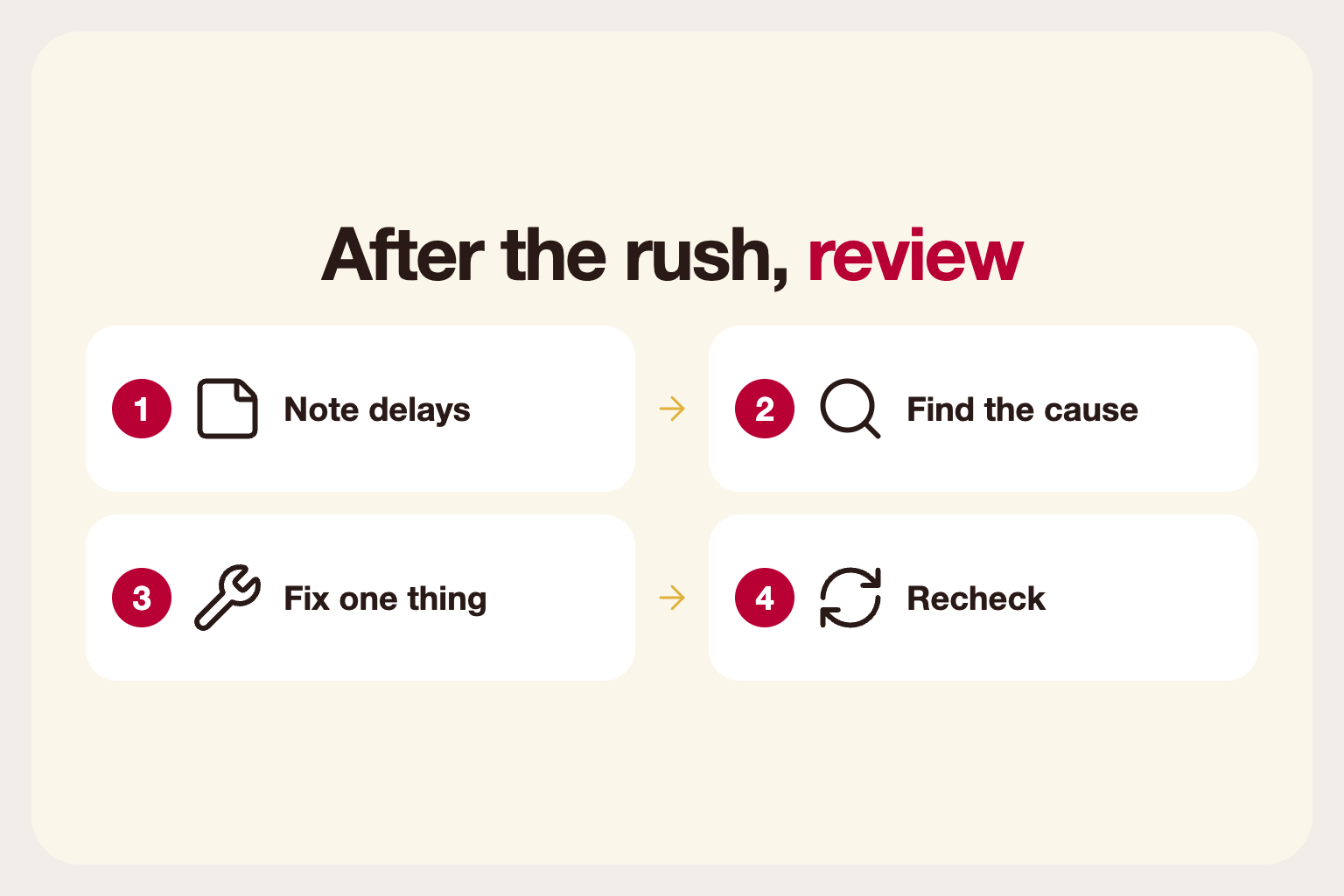
After service, take a minute to note what went wrong and what went well. Were tickets late at a particular station? Did the same item run out? Small notes become big improvements over a month.
Thank the team. A rush survived together is a good moment to build trust.