 Dineator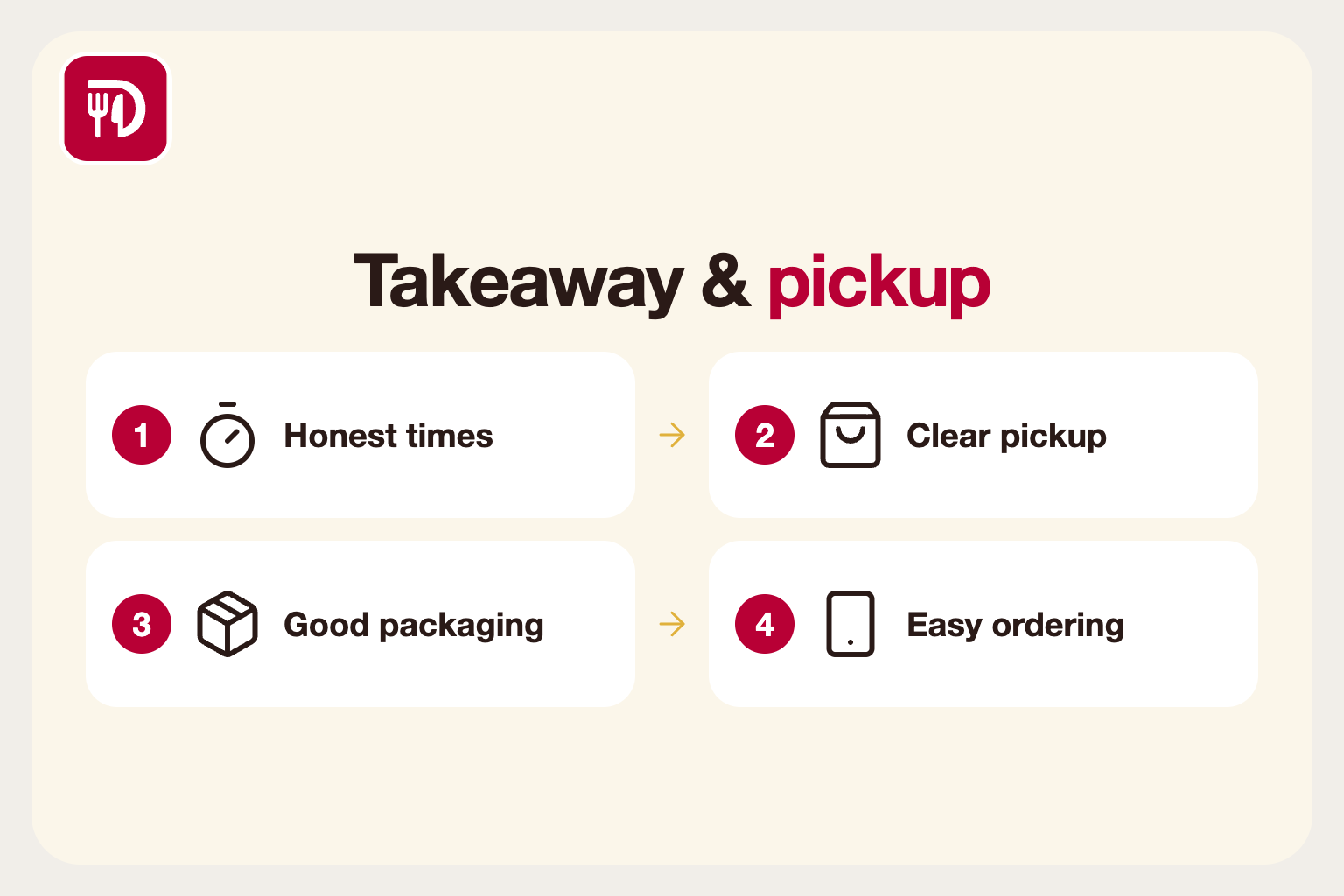
Takeaway is a second restaurant
Pickup and takeaway orders are a business of their own, running alongside the dining room. They bring extra revenue without extra tables, but only if the process is organised. A messy takeaway operation slows the kitchen and annoys guests who are standing at the counter.
Treat it with the same care as table service and it can become one of your steadier income streams.
Give accurate ready times
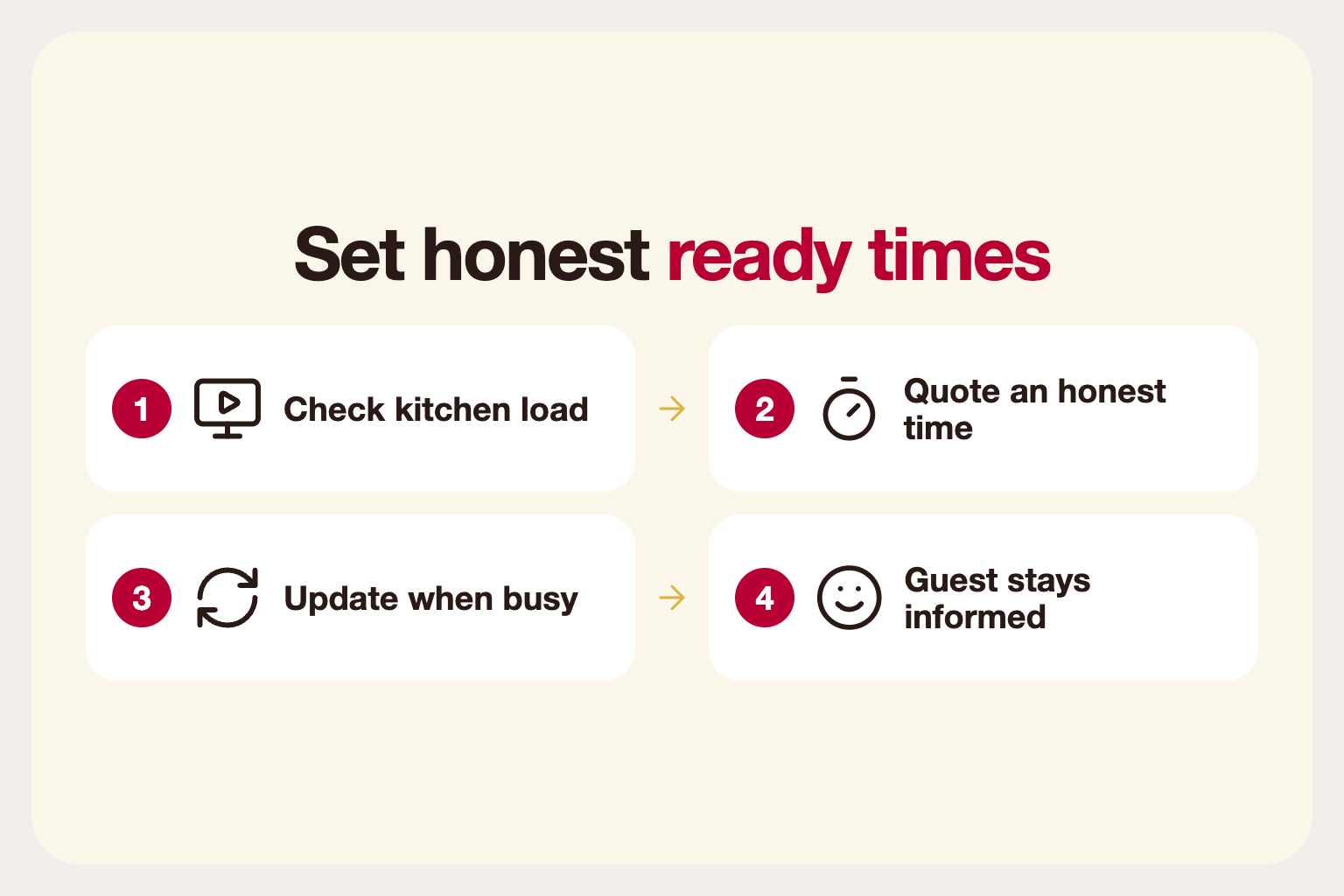
The most common takeaway complaint is waiting longer than promised. Quote a ready time that your kitchen can actually meet, and adjust it when you are busy. An honest twenty minutes beats a promised ten that turns into twenty-five.
Let the system show ready times based on current load, so guests are not given the same number whether you have two orders or twenty.
Create a clear pickup spot
Give takeaway orders a home: a shelf, a window or a corner of the counter, away from the dining room traffic. Label bags with the name and order number so the handover is fast and nothing is given to the wrong person.
Make it easy for guests to find. A sign and a clear path avoid a crowd at the host stand.
Pack for quality
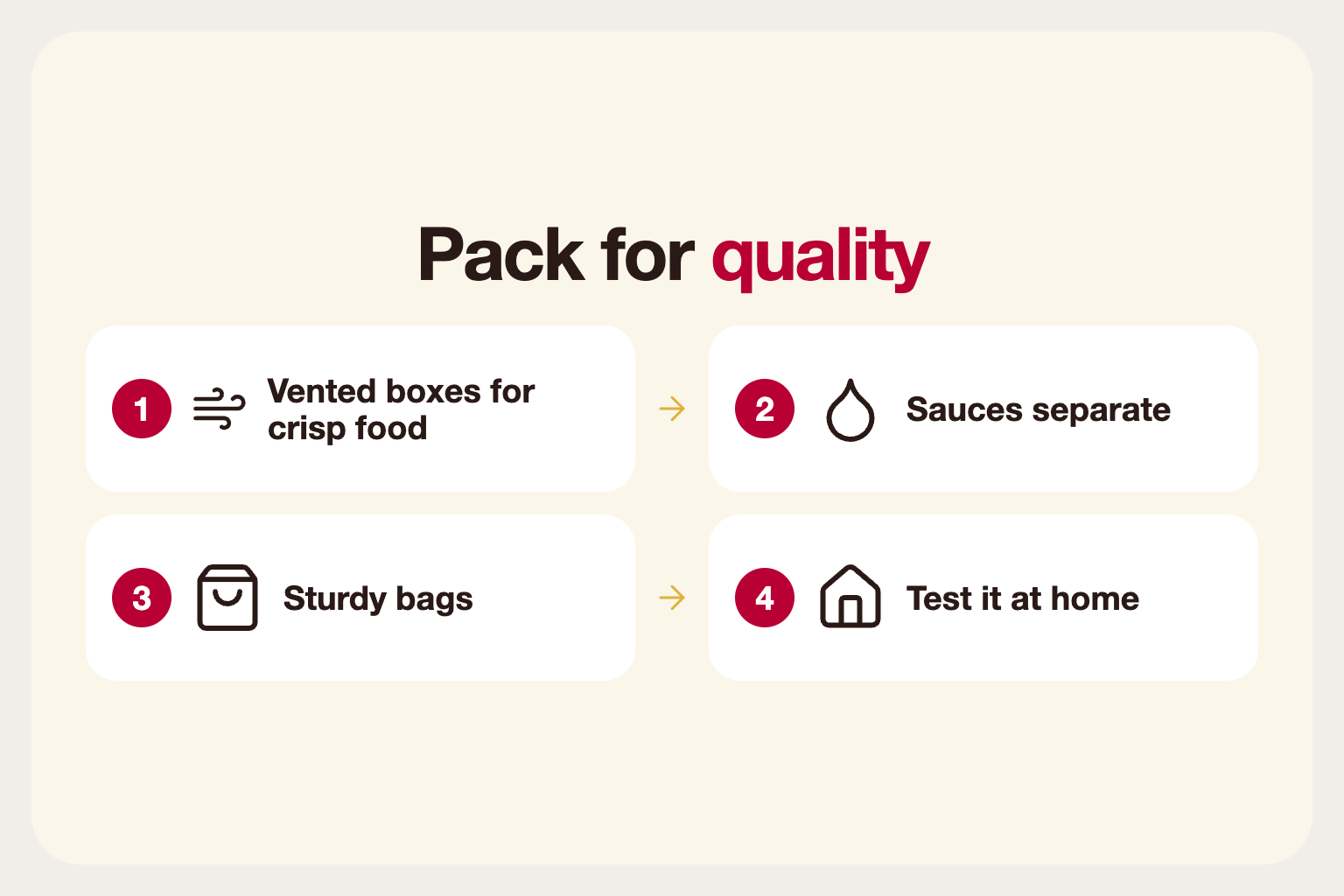
Food that arrives cold, soggy or spilled makes guests think twice about ordering again. Choose packaging that suits each dish: vented containers for fried food, separate compartments for sauces and sturdy bags with handles.
Test your dishes by taking them home. If something does not travel well, change the packaging or reconsider whether it belongs on the takeaway menu.
Keep the kitchen in sync
Takeaway orders should appear on the same kitchen screen as table orders, in the order they were placed and with a clear ready time. That way the kitchen balances both and nothing is forgotten.
Have someone responsible for checking each bag against the order before it leaves. A missing item is easy to fix at the counter and hard to fix at the guest's home.
Make ordering and payment simple
Guests should be able to order from their phone, pay online and know exactly when to arrive. Fewer phone calls mean fewer mistakes and a calmer front of house.
Offer a way to contact you if plans change, and tell guests what happens if they are late.
Promote it in the right places
Add your ordering link to your website, your Google Business Profile and your social profiles. Put a QR code on receipts and tables so dine-in guests can order again from home.
Mention it to regulars. A guest who loves your food in the restaurant is the likeliest customer for a Tuesday takeaway.
Handle busy periods and late pickups
Takeaway rushes often coincide with table service rushes. Consider capping the number of orders per time slot, or lengthening quoted times when the kitchen is full. Guests accept honest limits far more readily than late food.
Decide in advance how long you hold an order, what happens if a guest is late, and how you handle food that has gone cold. Say it plainly on the ordering page.
Keep the experience personal
A friendly greeting and a quick, accurate handover make takeaway feel like part of the restaurant. A small touch, such as a thank-you note or a menu card for next time, brings guests back.
Ask for feedback on takeaway specifically. Guests who collect often notice details that dine-in guests do not.
Review and improve
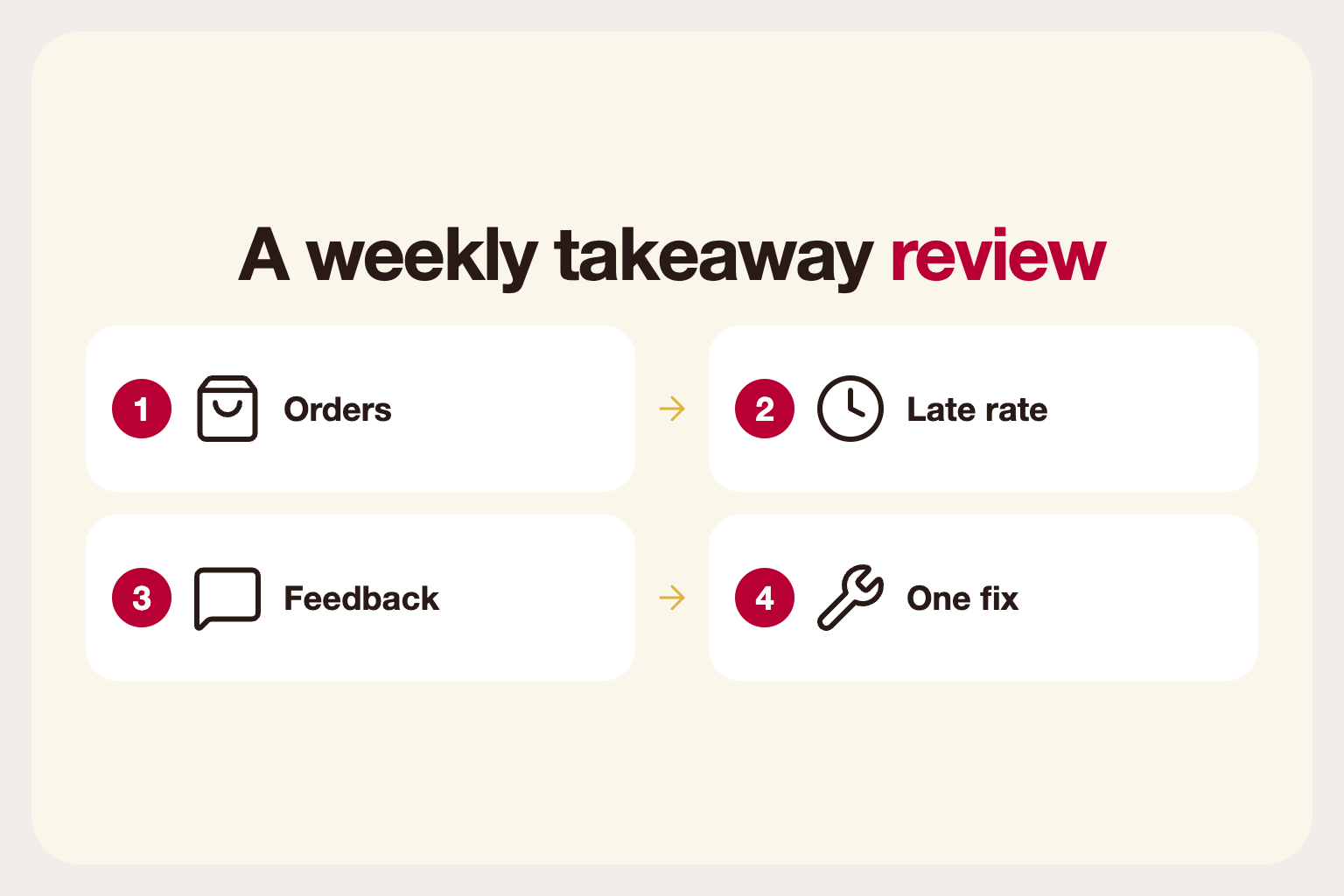
Track the number of takeaway orders, average order value and how often orders are late. Ask guests how the experience was and look for common themes.
Small fixes, such as a better bag, a shorter quoted time or a clearer pickup sign, tend to make a noticeable difference.