 Dineator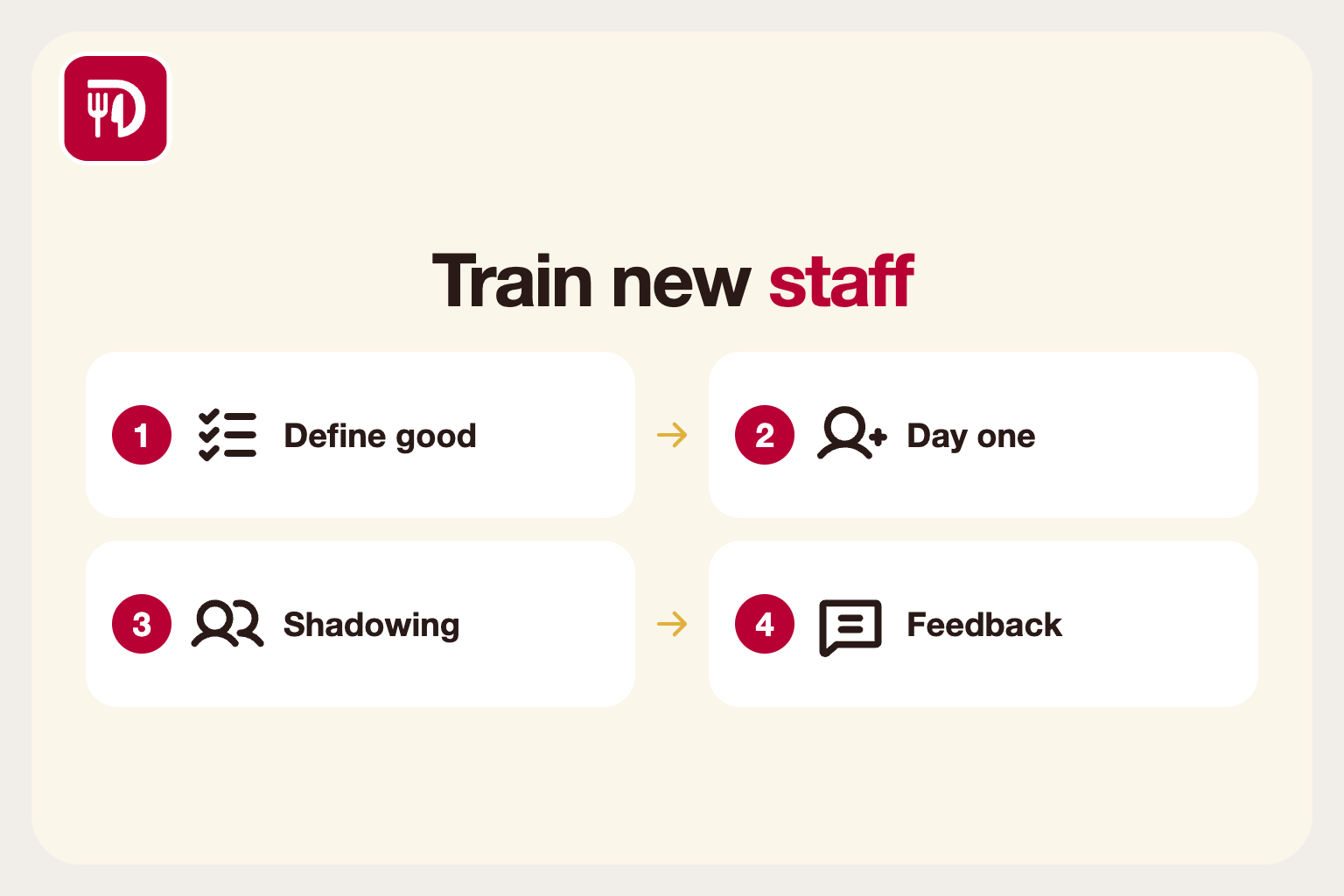
Training is where service quality starts
Most restaurants hire in a hurry. Someone leaves, a busy weekend is coming, and the new person is handed an apron and told to follow whoever looks free. It works for a day or two, and then the same questions come up again and again, the same mistakes repeat, and the team gets tired of explaining.
A simple, repeatable training plan takes a few hours to write and saves far more than it costs. This post shows how to build one that works for servers, cooks and hosts, without a big budget or a human resources department.
Write down what good looks like
You cannot train toward something nobody has defined. For each role, write a one-page description of what a good shift looks like: what the person does before service, during service and at close, and what they should never do.
Keep it concrete. Instead of 'provide great service', write 'greet every table within two minutes, repeat allergies back to the guest, never carry more than the tray allows'. Instead of 'keep the station clean', write 'wipe the board after each ticket and change the cloth every hour'.
Ask your best people to review the page. They usually know the real standard, and they are far more likely to teach it when they helped write it.
A first-day plan that does not overwhelm
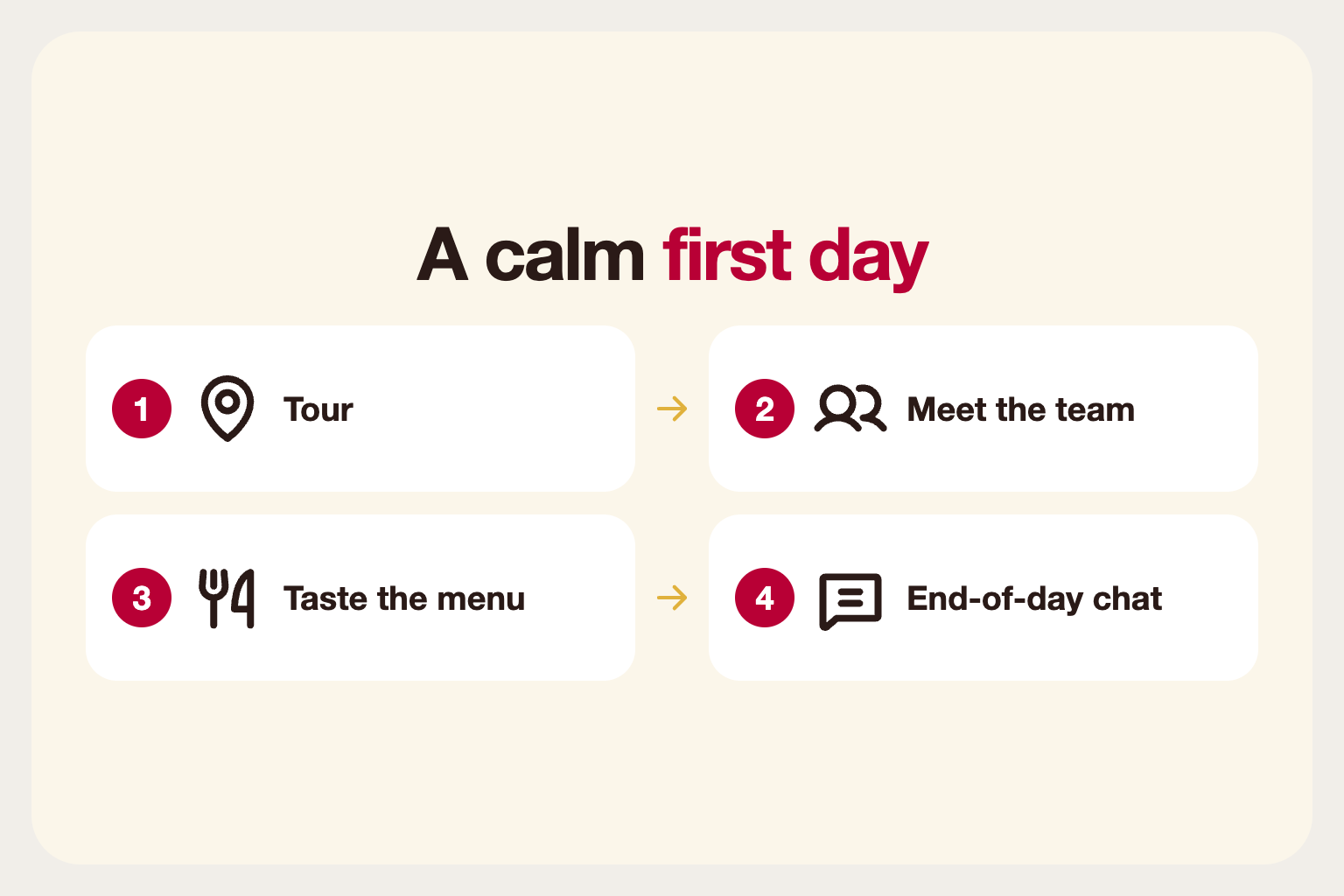
The first day should build confidence, not test it. Start with a tour that covers the fire exits, first aid kit, where to put belongings, where to find the cleaning supplies and who to ask when stuck. Introduce the person to everyone by name and role.
Then give them a small, safe job to practise: for a server, learning the menu and shadowing a table; for a cook, prepping one component with supervision; for a host, learning the floor plan and the booking screen. Avoid putting a new hire alone on a task that can hurt a guest, such as handling allergies, before they have been shown the rules.
End the day with ten minutes of conversation. What was confusing? What would help tomorrow? It shows you care and uncovers gaps in your plan.
Teach the menu with all five senses
Staff sell what they understand. Run a tasting before service where everyone tries the main dishes, with a short description of each: what is in it, how it is cooked, how it is plated and what it goes well with. People remember a flavour far longer than a list on paper.
Give every new person a one-page menu sheet that includes ingredients, common allergens and the dishes that can be adapted. Test them gently in the first week with a few questions, and make sure they know to ask the kitchen instead of guessing. Our guide on showing allergens on your menu explains why this matters.
Use shadowing, then reverse shadowing
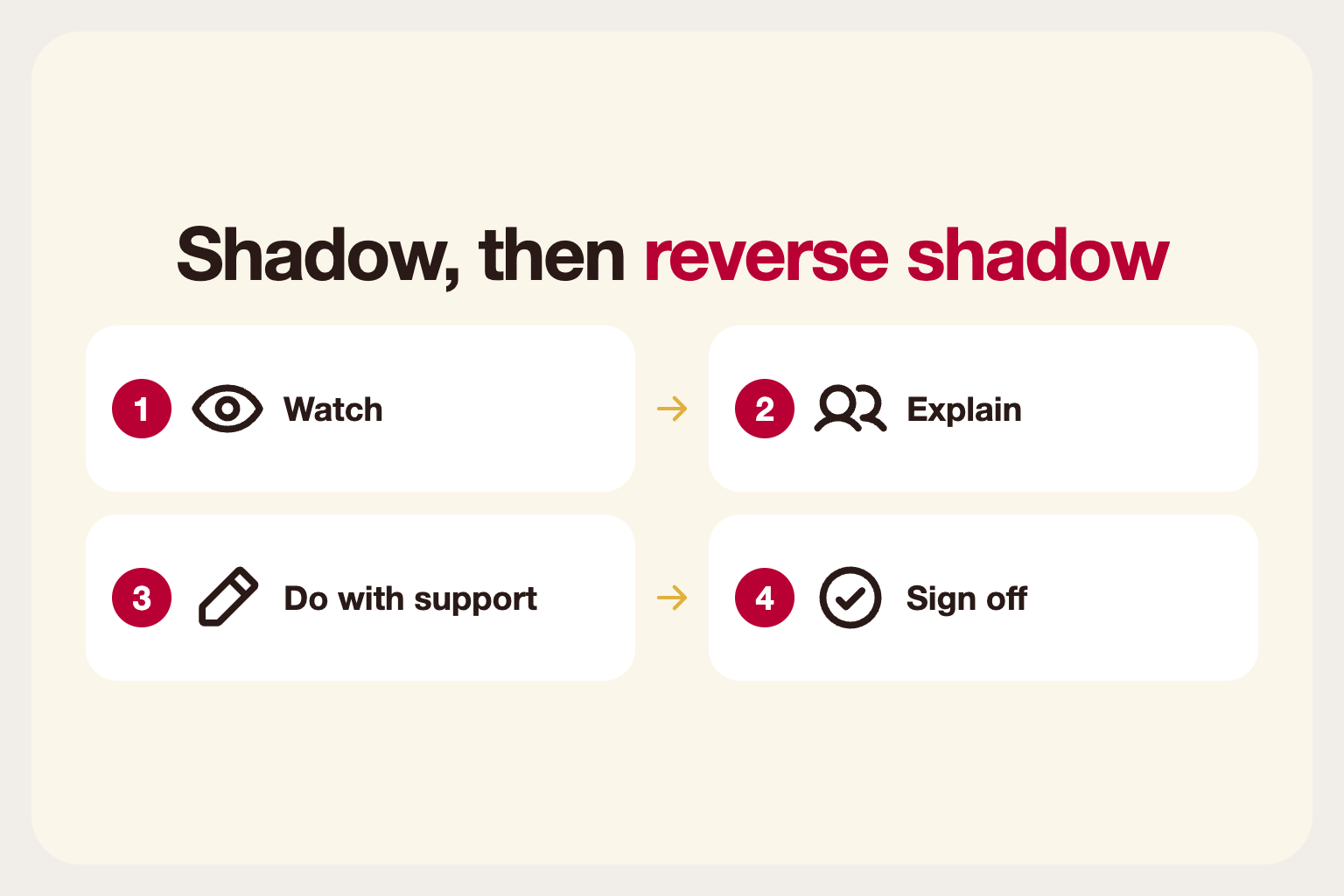
Shadowing means the new person follows an experienced colleague and watches. It works, but only if the experienced person is chosen on purpose and has time to explain. Pick someone patient, tell them they are being trusted with this, and make sure their own tables or station are covered.
After a few shifts, flip it: the new person does the work and the experienced colleague watches and steps in only when needed. This is where real learning happens, because mistakes are made in front of someone who can fix them quietly.
Sign the person off for each skill, for example opening the till, running a table alone or working the grill, so everyone knows what they can do independently.
Make the systems part of training
Do not leave the point of sale, the kitchen display or the booking screen until later. Give each new person a practice account or a test table where nothing is real, and let them enter orders, apply a discount, split a bill and send an order to the kitchen.
Show them how to correct a mistake without panic: where to void an item, who approves a refund, how to tell the kitchen about a change. The fear of a wrong tap is a big reason new staff slow down.
Use individual logins from the start. They protect the new person from blame for someone else's actions, and they let you see who needs more help with which task.
Give feedback early and often
Do not wait for a formal review. A thirty-second comment at the end of a shift, such as 'good job greeting that table fast, next time check the water jug' is more useful than a long conversation three months later.
Praise specific behaviour, not general character. 'You noticed the guest looked lost and offered to help' tells someone what to repeat. 'You are great' does not.
When something goes wrong, ask what happened before you say what should have happened. Many mistakes come from missing information, not carelessness.
Check in at 7, 30 and 90 days
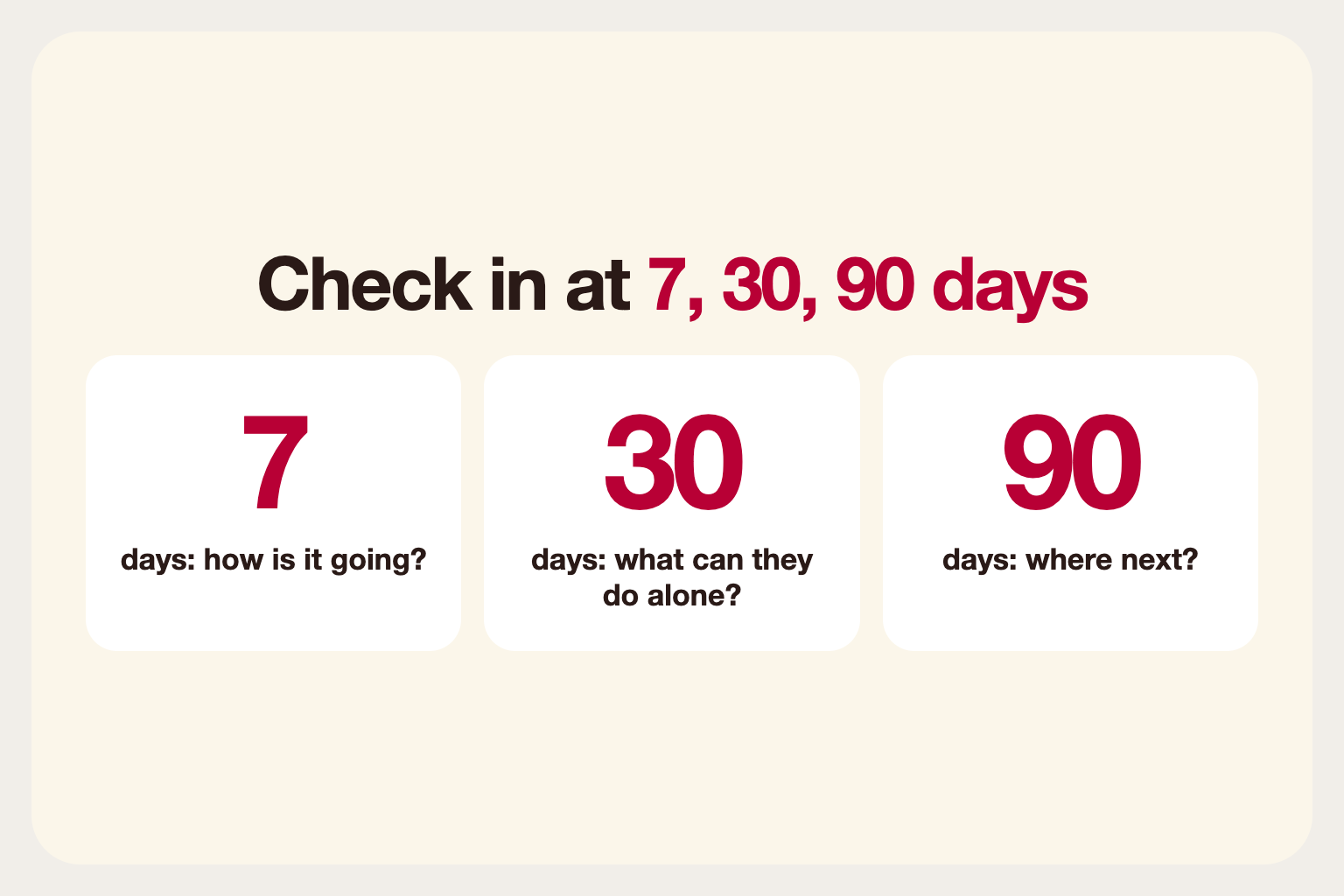
Set three short check-ins in the calendar when the person starts. At seven days, ask how they are finding the work and the team. At thirty days, review what they can now do alone and what they still need to learn. At ninety days, talk about their future: do they want more hours, a new station, a different role?
These conversations take fifteen minutes each. They are also the cheapest way to keep good people, because most staff who leave in the first few months say nobody asked how they were getting on.
Putting it into practice
Good training is a short written standard, a calm first day, a tasting, shadowing in both directions, system practice, honest feedback and three check-ins. None of it needs software or a big budget.
Start by writing the one-page standard for your busiest role this week. Use it with the next person you hire, fix what is unclear, and repeat for the next role.