 Dineator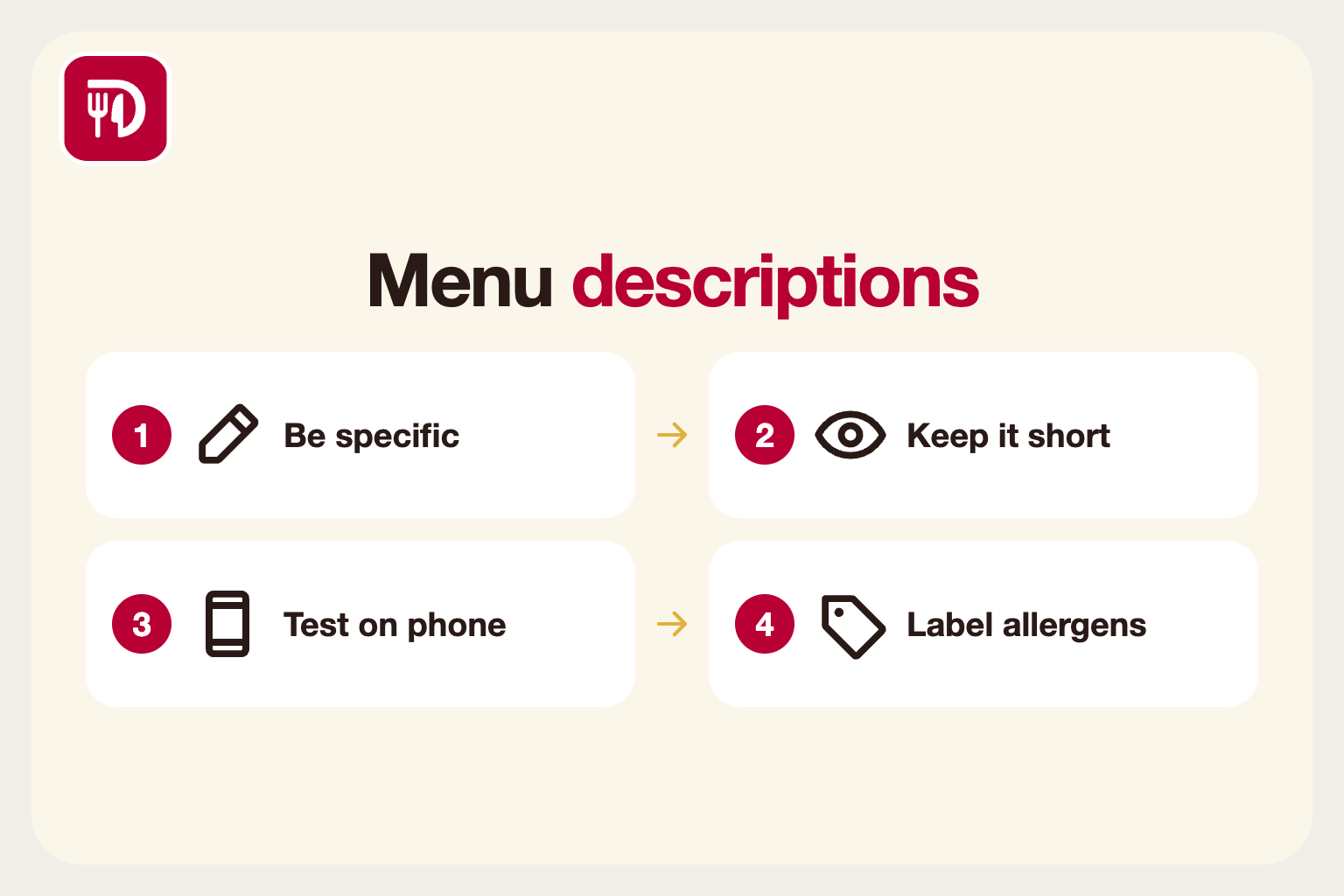
Why menu descriptions deserve attention
A menu is the one piece of writing every guest reads. It shapes what they order, how much they spend and how they feel about your food before the first bite. A good description is not decoration; it answers a question the guest is already asking: what is this, and will I like it?
The same applies on a screen. Guests browsing your online ordering page or scanning a QR menu cannot ask a server, so the words have to do that job. This post covers how to write descriptions that are honest, appetising and easy to read.
Start with what the guest needs to know
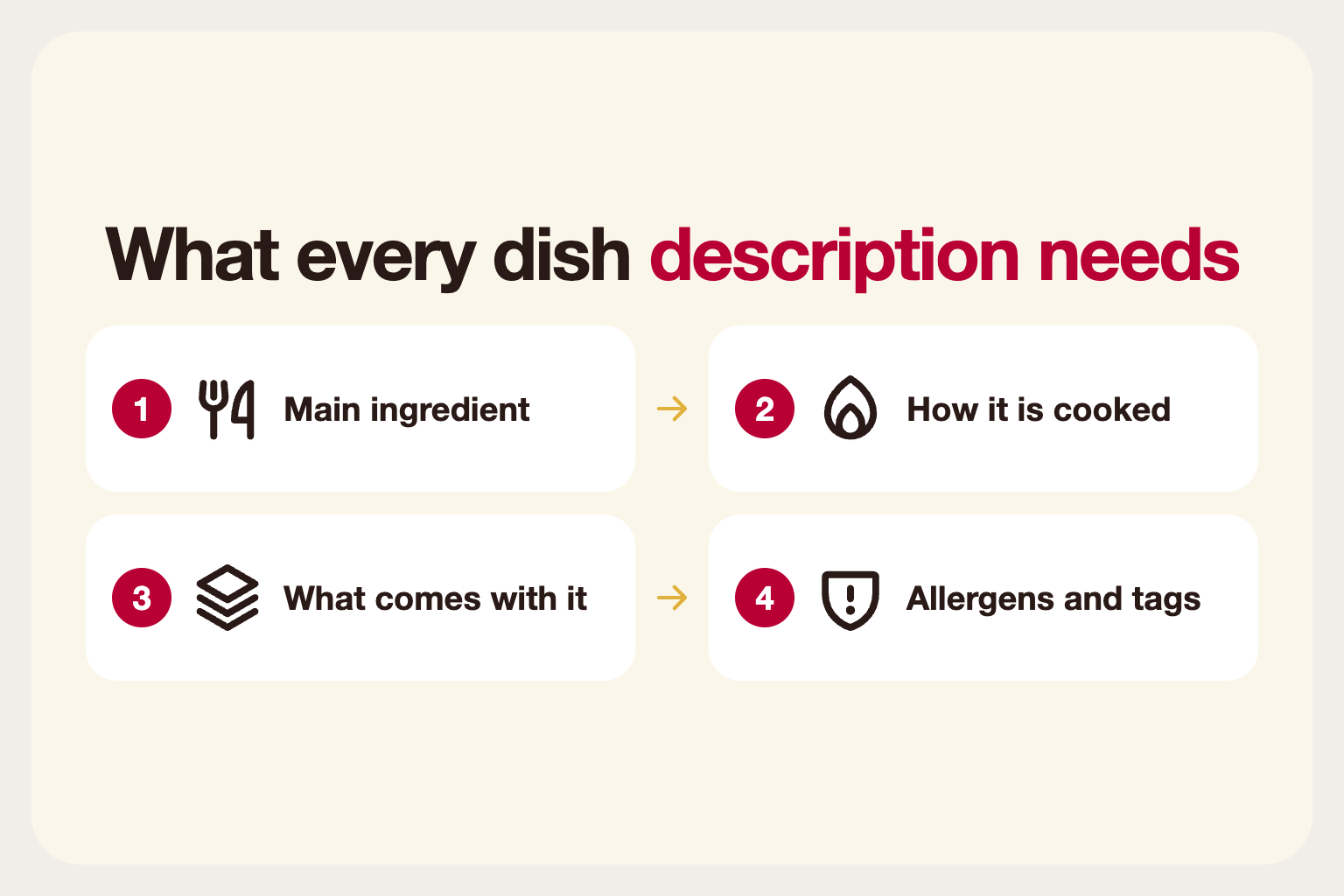
Before you reach for adjectives, check that the description covers the basics: the main ingredient, how it is cooked and what it comes with. A guest should be able to picture the plate. 'Slow-cooked lamb shoulder with roasted carrots and mint yoghurt' is clearer than 'Chef's signature lamb'.
Add anything that affects a choice: heat level, size, whether it is made to share, and the main allergens or dietary tags. Clear labelling is part of good service, and in many places it is a legal duty, so check your local rules.
Be specific, not flowery
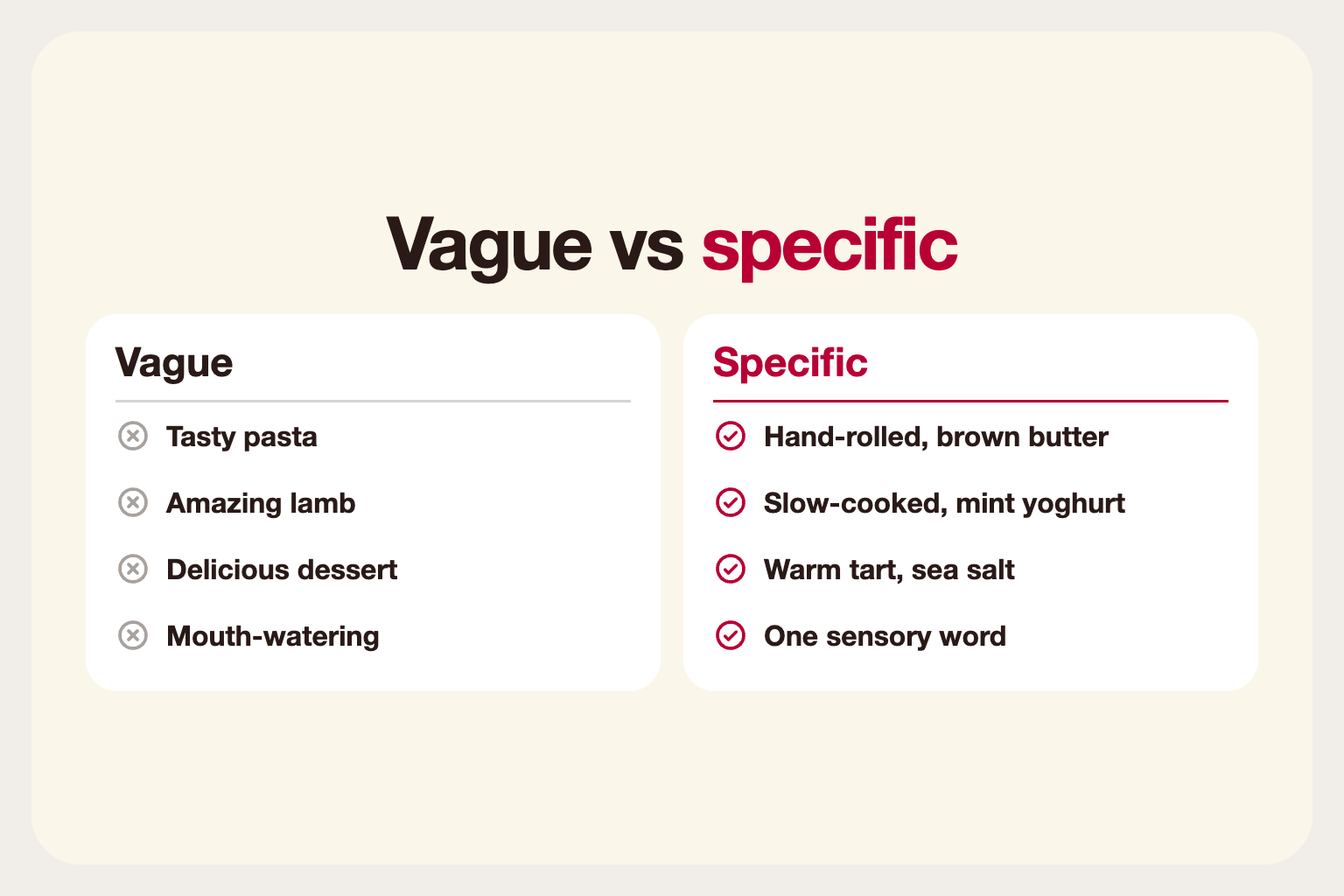
Words like 'delicious', 'amazing' and 'mouth-watering' tell the guest nothing. Every restaurant uses them, and readers learn to skip them. Specific details are more persuasive: where the ingredient comes from, how long it was cooked, what makes the sauce different.
Compare 'tasty homemade pasta' with 'rolled by hand each morning, tossed in brown butter and sage'. The second makes you hungry because it gives your imagination something to work with. Only claim what is true, though. If you say 'homemade', it must be made in-house.
Use sensory words that describe texture, temperature and flavour: crisp, smoky, charred, creamy, tangy, warm. Choose one or two per dish. More than that starts to sound like a perfume advert.
Keep it short and scannable
Most guests skim. Aim for one line, or two at most, for each dish. Put the name first, then the description, then the price, in a consistent order across the menu. Avoid long paragraphs, and avoid a dot-leader line that makes the eye hunt for the price.
On a phone, check line breaks and font size. A description that looks neat on paper can become a wall of text on a small screen. Test the menu on your own phone before publishing.
Group dishes in logical sections with clear headings, and keep each section to a manageable number of items. Too many choices makes decisions harder, and that can lower both satisfaction and sales.
Tell a small story where it helps
A short story can lift a signature dish: a family recipe, a local farm, a technique from a place you worked. Keep it to one sentence and make it true. If every dish has a story, none of them stand out.
Use names carefully. A dish named after a person or place sounds charming, but it may confuse a first-time guest. Pair a fancy name with a plain description so nobody has to guess.
Write for the way people actually order
Think about the guest who is in a hurry, the guest with a dietary need, the guest who has never been before and the regular. Provide a clear route for each: tags for those who need them, a short description for those in a rush, and a few standout dishes for new visitors.
Mention substitutions only if you really offer them, and be clear about extra charges. A surprise on the bill hurts trust more than a plain menu ever could.
Describe sizes and portions honestly. If a dish is a small plate meant for sharing, say so, so the table orders enough.
Edit, test and keep it fresh
Read every description aloud. If it sounds like something you would not say to a guest, change it. Ask someone who has not eaten there to read it and tell you what they imagine; if it is not what you cook, rewrite it.
Watch what sells. If a good dish is not moving, try a new description before dropping it. Change one thing at a time so you can see what worked.
Update the words when the dish changes. A menu that still describes last year's recipe is a quiet kind of dishonesty, and it leads to complaints.
Putting it into practice
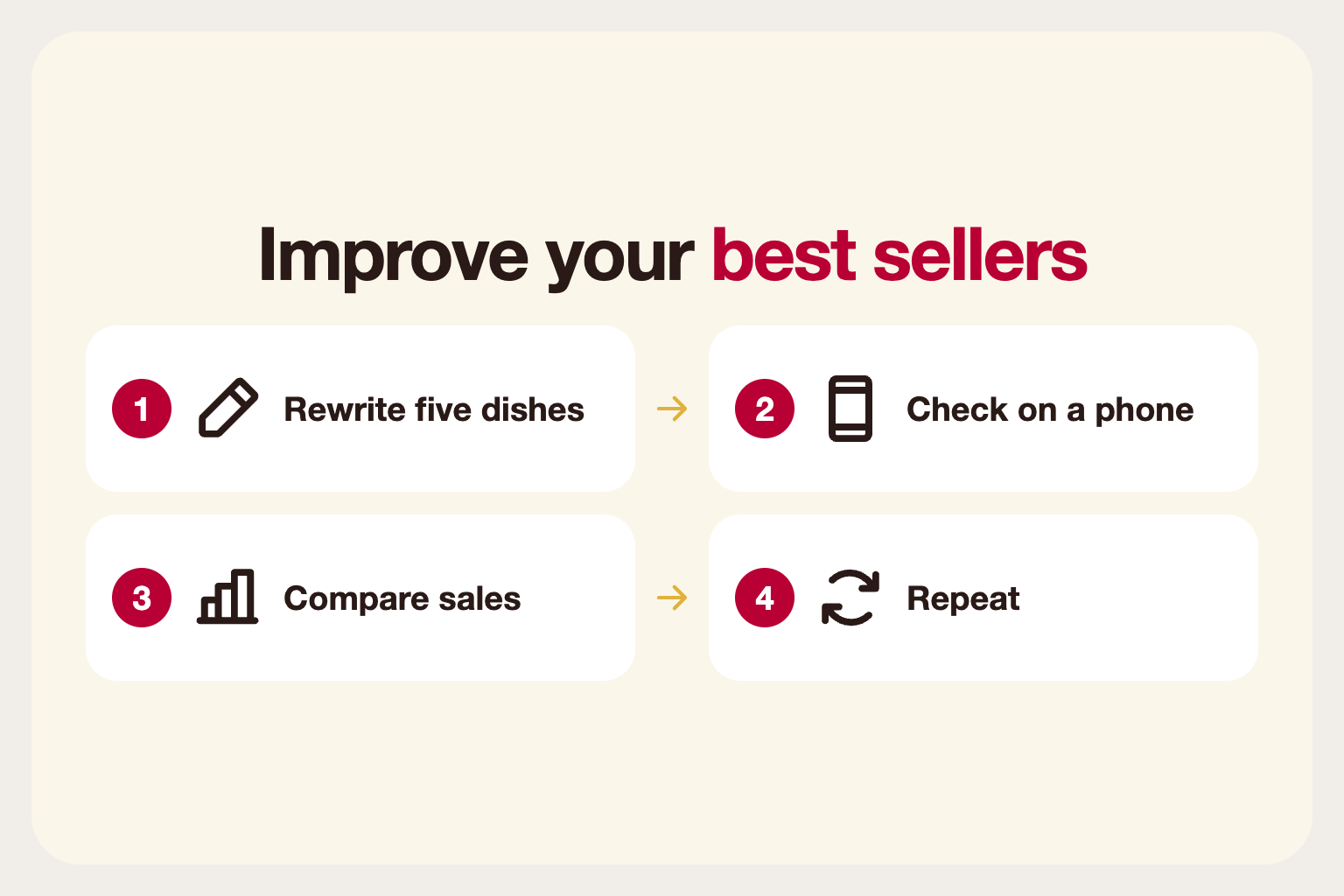
Pick the five dishes you most want to sell and rewrite their descriptions this week: say what it is, make it specific, keep it short, and check it is accurate and labelled correctly. Compare their sales over the next month.
If you use a live menu, you can edit the text in seconds and see the effect straight away, which makes it a low-risk way to improve your menu without reprinting anything.