 Dineator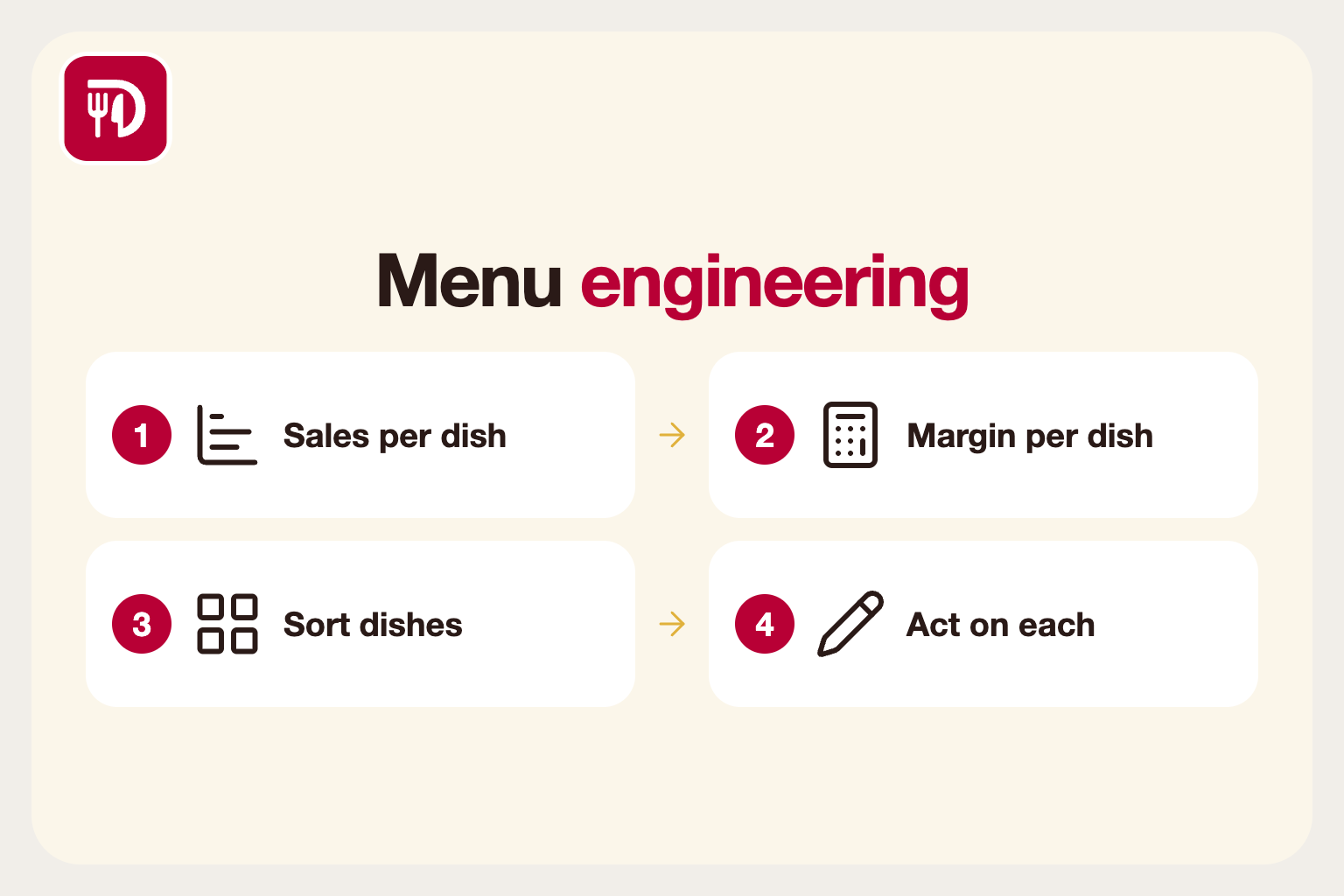
What menu engineering means
Menu engineering is a simple idea: look at how popular each dish is and how much money it earns, then use that to decide what to promote, change or remove. It helps you stop guessing about which dishes really carry your business.
You do not need special software. A spreadsheet with a month of sales and your dish costs is enough to begin.
Gather two numbers per dish
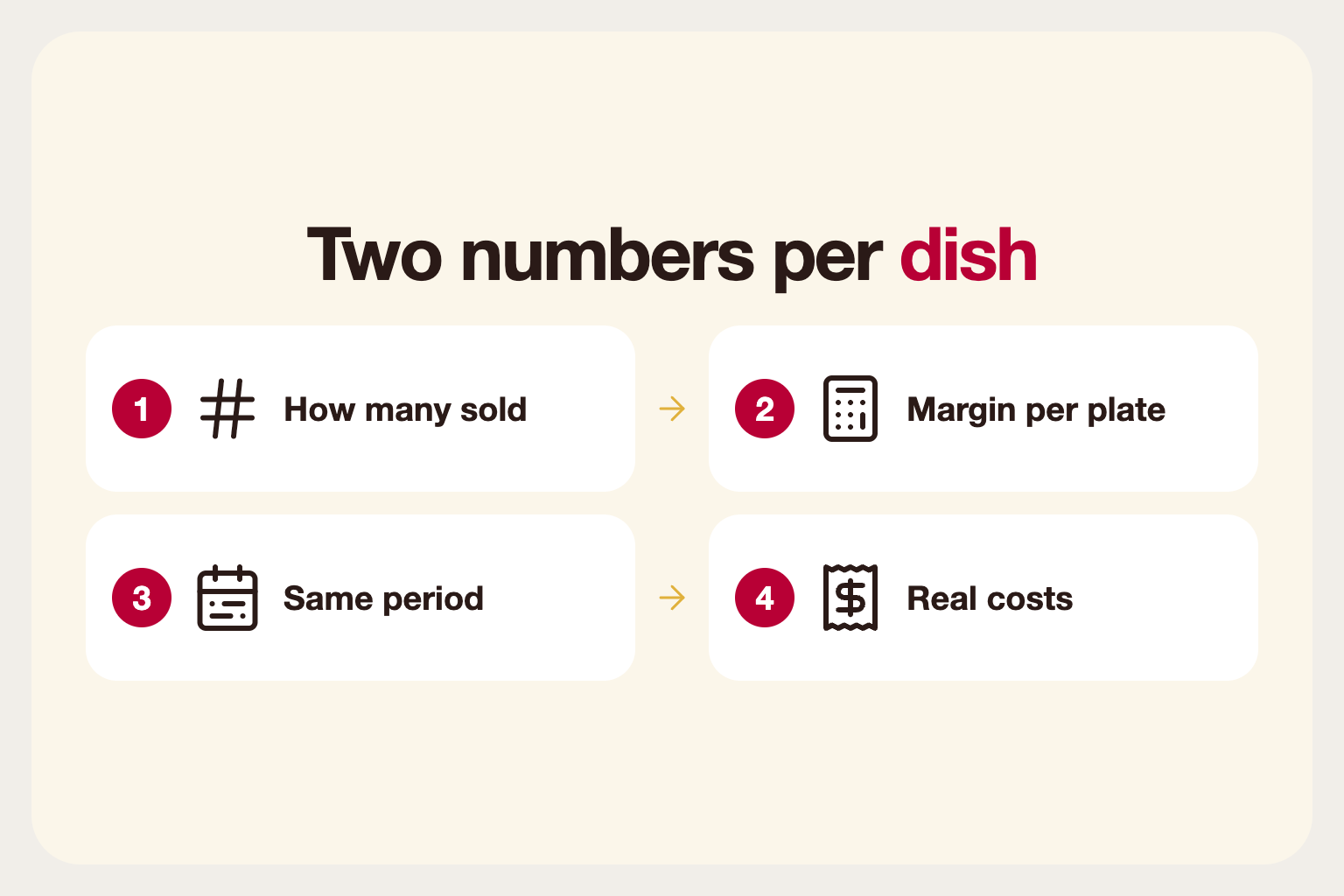
For every dish you need how many were sold over a period, and how much each one earns after the ingredient cost, often called the contribution margin. Both numbers must come from real data: your sales report and your costed recipes.
Keep the period consistent, such as the last four weeks, and avoid periods with unusual events that would distort the picture.
Sort dishes into four groups
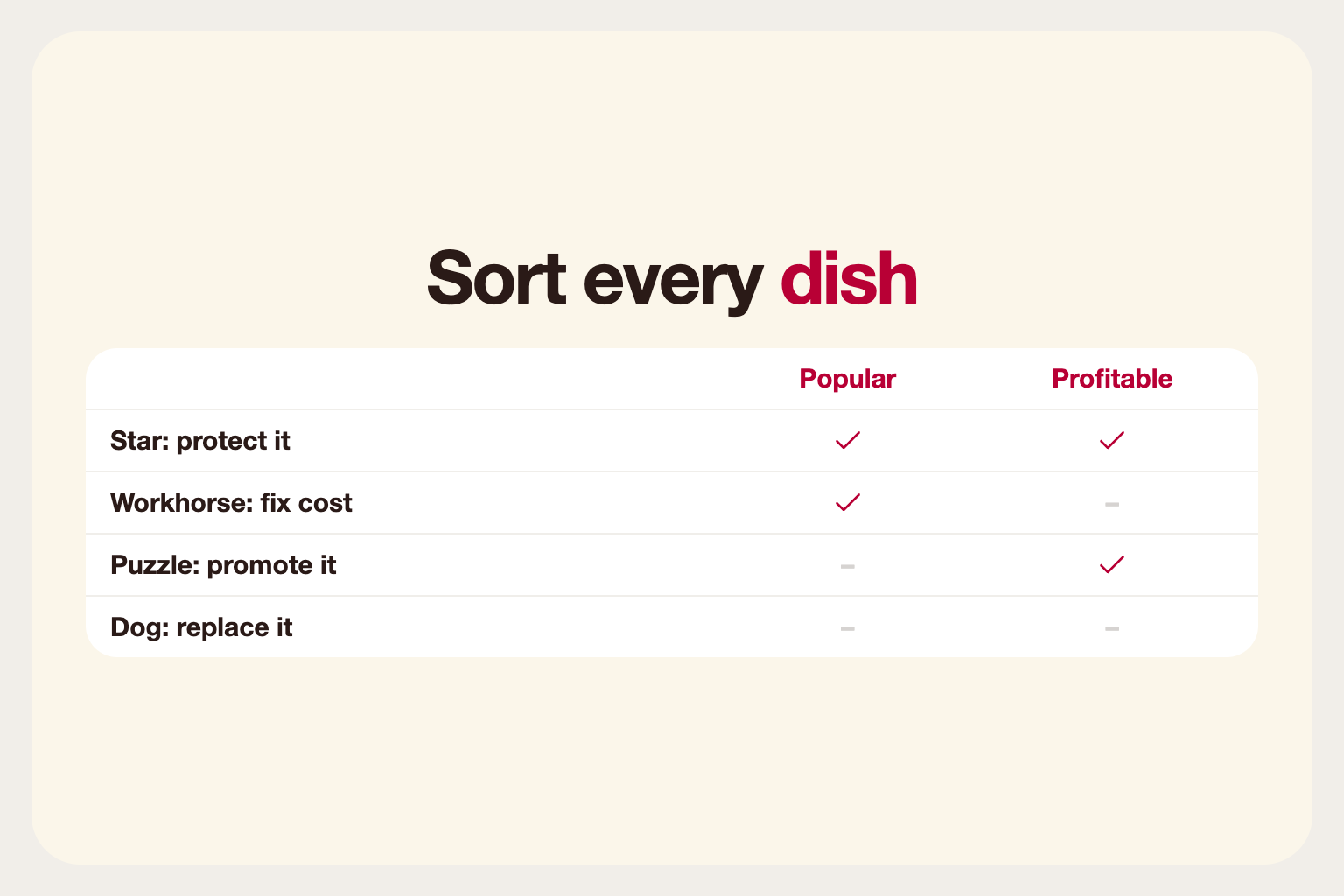
Popular and profitable dishes are your stars: protect them. Popular but lower-profit dishes are workhorses: nudge their price or cost. Profitable but unpopular dishes are puzzles: give them a better position or description. Neither popular nor profitable dishes are candidates for removal.
The labels matter less than the questions they prompt. Each group suggests a different action.
Take action on each group
For stars, keep quality high and make sure they are easy to find. For workhorses, test a small price increase or a cheaper way to prepare them. For puzzles, try a new name, a better description or a spot at the top of a section. For underperformers, remove or replace them.
Change one thing at a time so you can tell what worked.
Design the menu to guide the eye
Guests do not read every item. They scan, usually starting at the top of a section and noticing items that are highlighted. Place the dishes you want to sell in those natural spots and describe them well.
Keep the list focused. A menu with too many choices slows decisions and makes the kitchen harder to run.
Watch for side effects
Removing a dish can change how guests order. Promoting one item can pull sales from another. Look at the whole picture after each change, including average spend per guest and the speed of the kitchen.
A change that raises the margin on one dish but slows the kitchen may not be a good trade.
Include drinks, sides and desserts
Drinks, sides and desserts often carry the best margins, and they are easy to overlook. Make them visible, train staff to suggest them naturally and make sure they are quick to add on a QR menu or point of sale.
A thoughtful add-on at the right moment helps the guest as well as your margin.
A worked example
Imagine a pasta that sells forty times a week and earns a modest amount per plate, and a steak that sells fifteen times and earns much more. Together they tell different stories: the pasta brings guests in, the steak pays the bills.
The action is not to drop the pasta. It might be to add a side to the pasta, shrink a costly garnish, or feature the steak where guests look first.
Common mistakes to avoid
Do not judge a dish only on food cost percentage. Do not remove a dish without checking what else it sells alongside. Do not change many things at once. And do not forget what the kitchen can handle: a profitable dish that slows every ticket may cost more than it earns.
Keep the guest in mind too. A menu that feels like a spreadsheet exercise is not a menu people enjoy.
Repeat every quarter
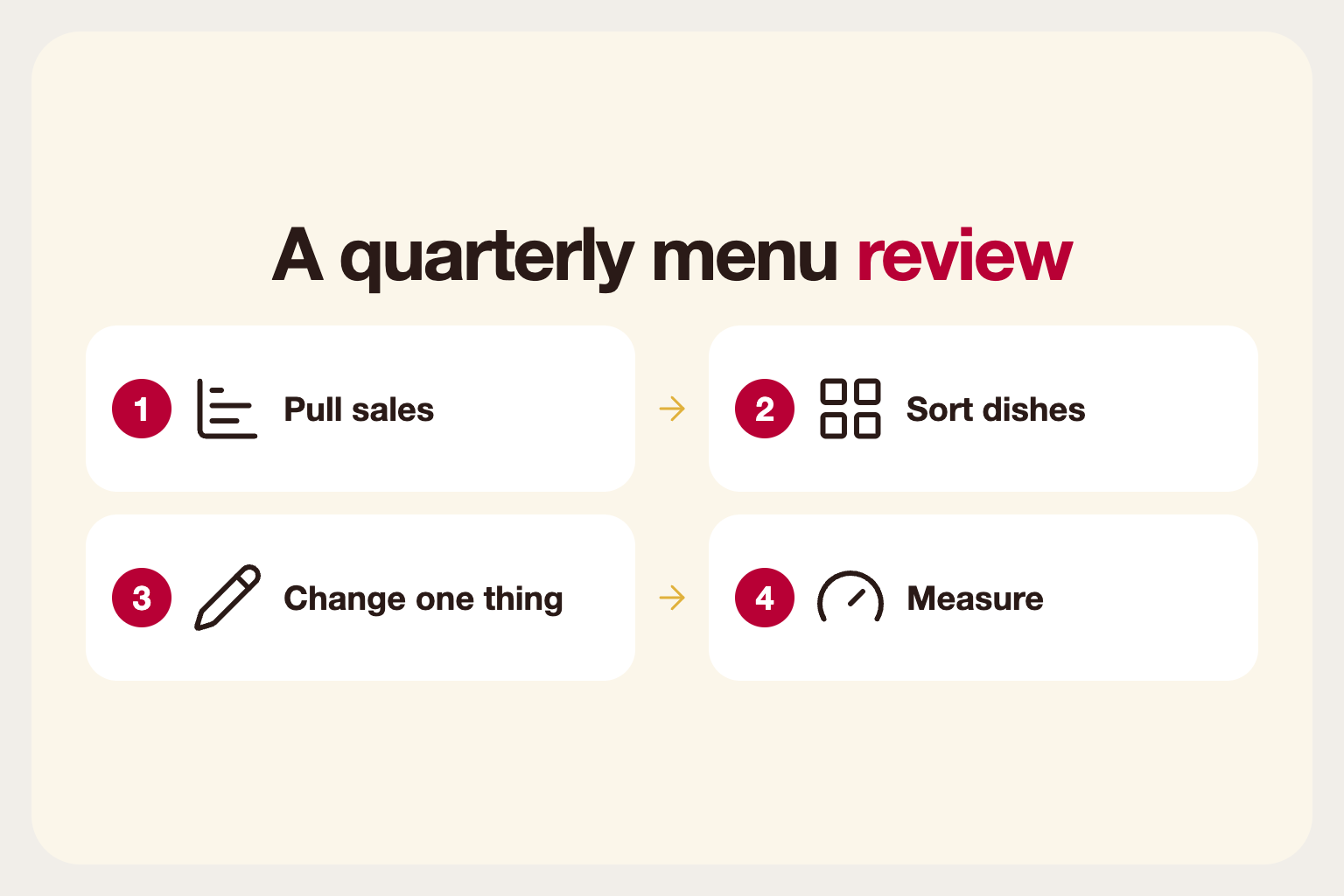
Tastes, costs and seasons change, so the picture does too. Repeat the exercise every quarter and keep notes on what you changed and what happened. Over time you build a menu that fits your guests and your kitchen.
Menu engineering is not a one-off project; it is a habit of looking at the numbers and acting on them.