 Dineator
Waste is a margin problem, not just an ethics problem
Every ingredient you throw away was bought at full price. Because food is one of the biggest cost lines in a restaurant, even a small reduction in waste goes straight to the bottom line. The trick is measuring where waste happens before trying to fix it, because the biggest source is rarely the one people assume.
Many kitchens guess at their waste. They suspect over-portioning or a particular dish, but without a record they cannot tell whether a fix worked. A little measurement turns an argument into a to-do list.
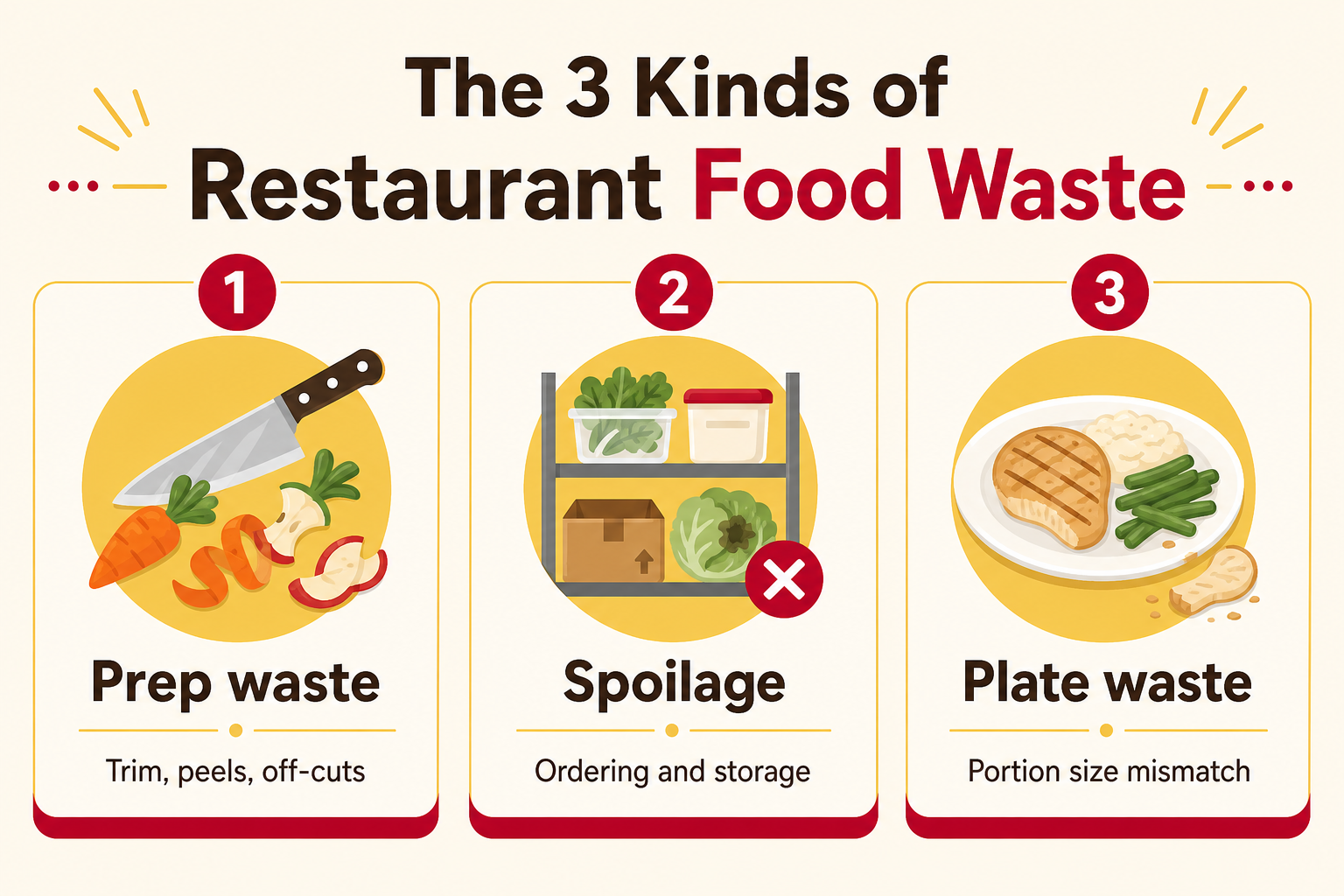
Know the three kinds of waste
Prep waste is trim, peels and off-cuts created while preparing food. Some is unavoidable, but a lot depends on technique, how a dish is specified and whether trim has a second life in stocks, staff meals or specials.
Spoilage is food that goes off before it is used. It is usually an ordering and storage problem: too much bought, deliveries that do not match demand, or the oldest stock hidden at the back of the walk-in behind newer boxes.
Plate waste is food returned uneaten. It points to portion sizes, side dishes nobody finishes or dishes that do not match what the menu description promised. It is also the one waste stream your guests can tell you about directly.
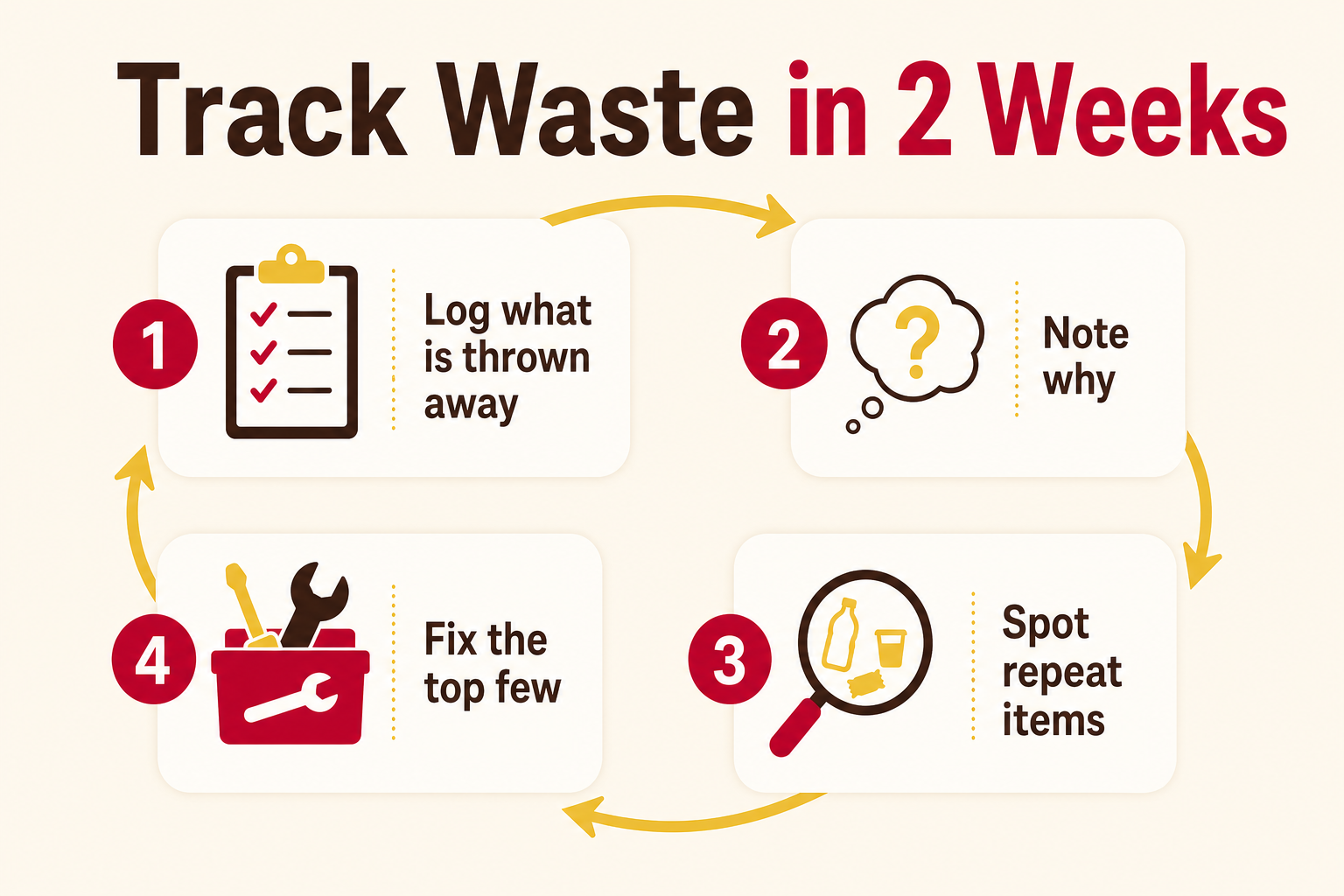
Track it for two weeks
Put a bin or a sheet next to the pass and have the team note what gets thrown away and why: overcooked, wrong order, expired, dropped. You do not need software for this. A clipboard works. Keep the reasons short so people actually fill them in during service.
After two weeks the same three or four items will show up again and again. Those are your targets. Fixing the top handful usually does far more than trying to tighten everything at once, and the team will see results quickly, which keeps them engaged.
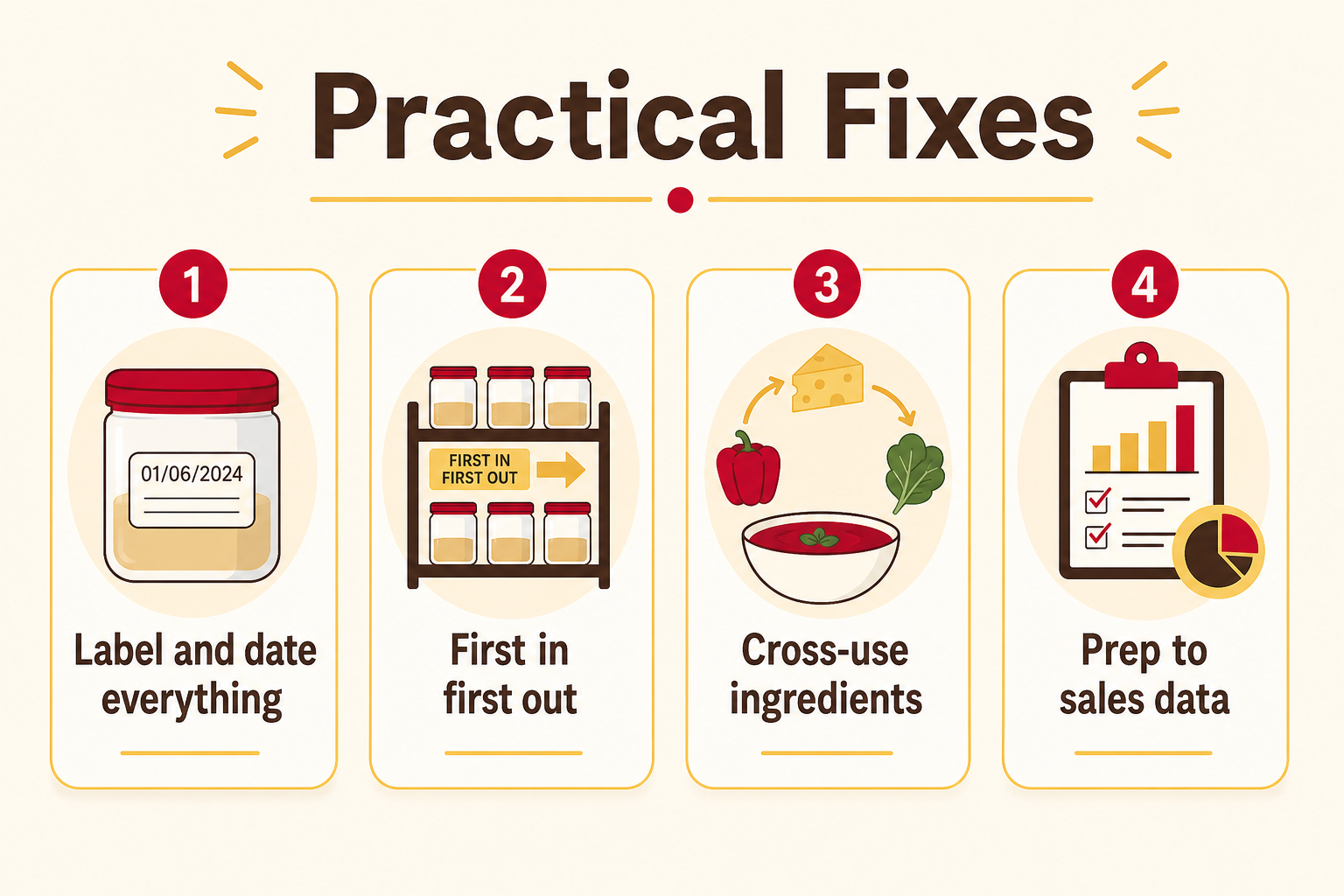
Practical fixes that work
Label and date everything, and use first-in, first-out so older stock is used first. Check par levels against what you actually sold last week, not what you hope to sell. Pars that never change are a quiet source of over-ordering.
Cross-utilise ingredients. If you buy fresh herbs for one dish, make sure two or three other dishes use them. Fewer unique ingredients means fewer chances to spoil, and a simpler order sheet.
Use your sales data. Knowing which dishes sell on which days lets you prep to demand. Slow sellers can be trimmed from the menu or turned into specials that use stock approaching its date.
Write the order clearly. Wrong or unclear tickets cause remakes. Sending orders digitally to the kitchen display, with modifiers and allergies visible, cuts remade dishes and the food that goes in the bin with them.
Rethink portions and the menu
If the same side dish keeps coming back half eaten, shrink it or make it optional. If a garnish is always scraped off, drop it. Small spec changes cost nothing and quietly cut waste on every plate.
Look at the menu as a whole, too. A long menu needs a long list of ingredients, and every extra ingredient is another thing that can spoil. Many restaurants find a tighter menu improves speed, consistency and waste at the same time.
Involve the whole team
Waste is not only the kitchen's problem. Servers see what comes back from tables, bartenders see unused garnish and fruit, and delivery staff know what arrives damaged. Ask each group what they see thrown away and what they would change. The best ideas usually come from the person closest to the bin.
Keep it positive. If people fear blame for logging waste, they will stop logging it. Frame the log as information, not a report card.
Work with your suppliers
Talk to suppliers about pack sizes, delivery frequency and quality. Smaller, more frequent deliveries can cut spoilage for fresh items, even if the unit price is slightly higher. Ask whether short-dated produce can be swapped, and check deliveries on arrival so damaged goods are credited instead of binned later.
A good supplier relationship also helps with substitutions: a flexible menu that can swap one leafy green for another avoids waste when an item is unavailable or oversupplied.
Turn leftovers into value
Not all surplus has to become waste. Trim can become stock, soups or staff meals. Day-old bread can become croutons or pudding. Ripe fruit can become a dessert special or a cocktail. A nightly special built from what needs using is often among the best-margin dishes on the menu.
Where food is still safe but cannot be sold, consider donating to a local food rescue group, subject to local food-safety rules.
Make it a habit, not a project
Review waste in a short weekly meeting. Share the numbers with the team and let them suggest fixes. People who see their effect on the numbers tend to care more. Celebrate a week when a problem item drops out of the log.
Small, steady improvements beat a one-off clean-up that fades after a month. Treat waste tracking like cleaning or cash-up: a short routine that is always done, rather than a campaign that is eventually forgotten.