 Dineator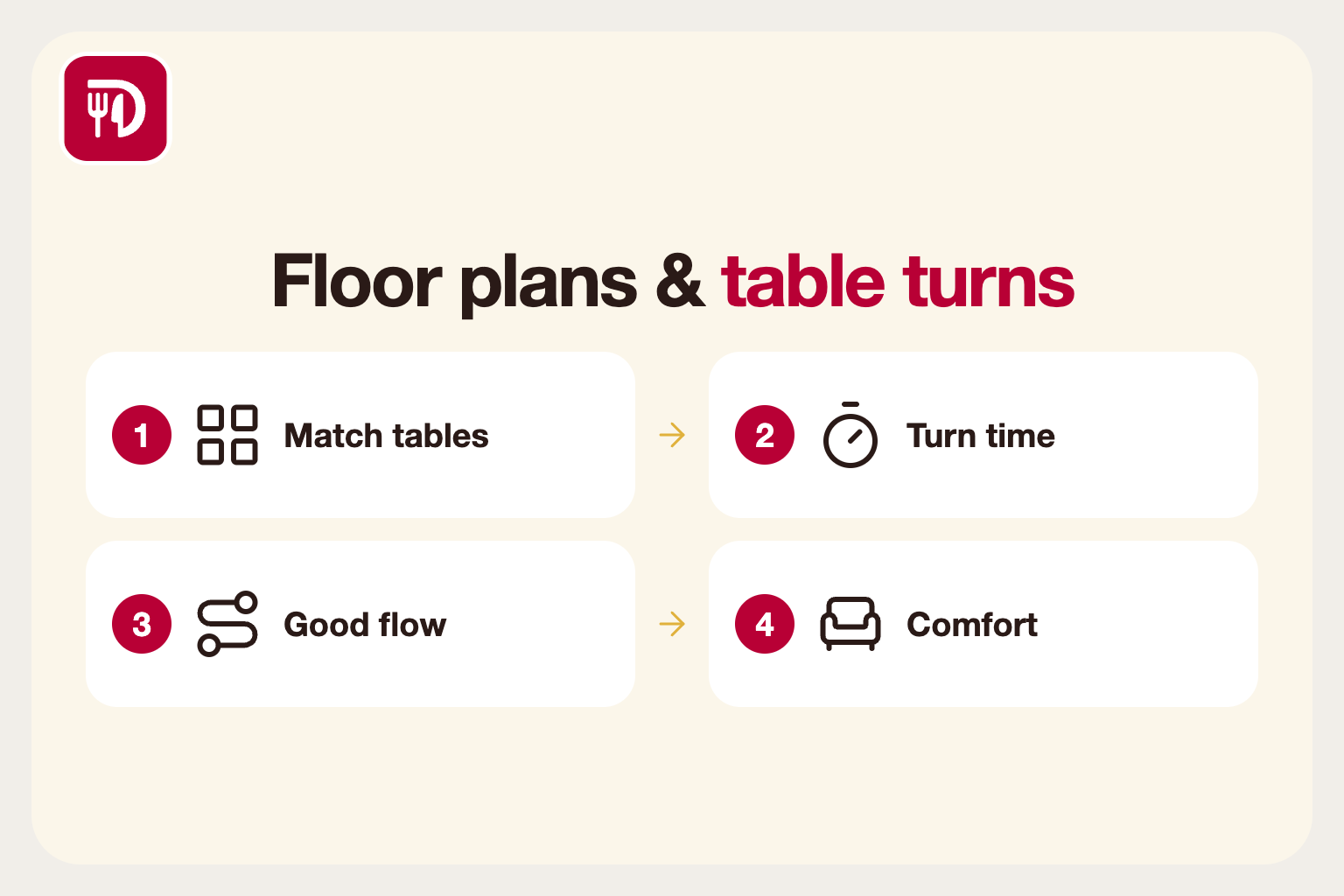
Your floor plan is a revenue tool
A dining room is a machine for turning tables into revenue. How tables are laid out, how many seats each one holds and how smoothly guests move through them all decide how many covers you can serve on a busy night. A good floor plan is not decoration; it is capacity.
Small changes can matter. Moving one table, adding a two-top by the window or widening an aisle can change how well the room runs.
Match tables to your guests
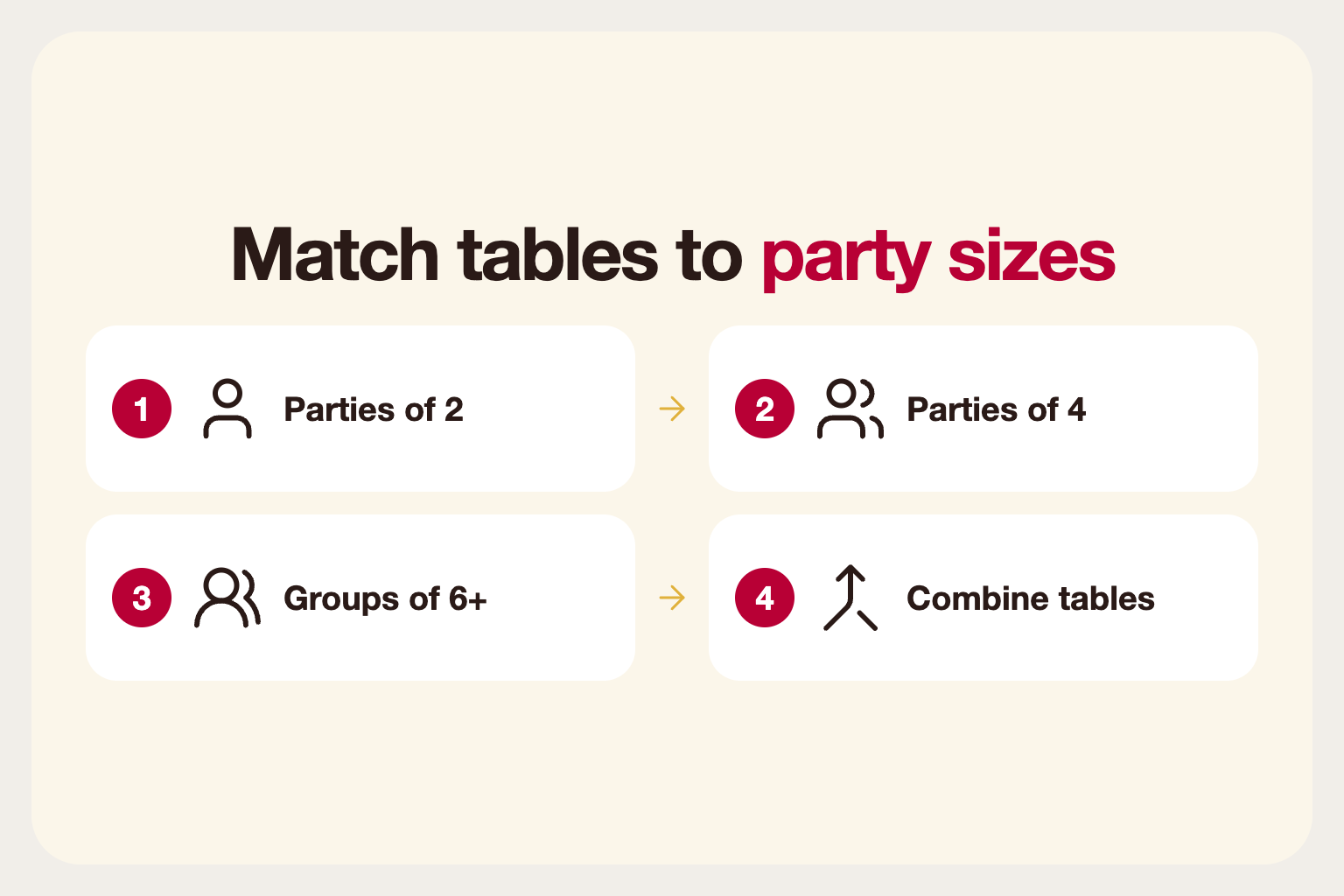
Look at the parties you actually seat. If most guests come as couples and you have mostly four-tops, you are wasting seats every night. Flexible tables that combine for larger groups give you the most options.
Count how often each party size appears over a few weeks and set the room to match, keeping a few larger tables for groups.
Understand table turn time
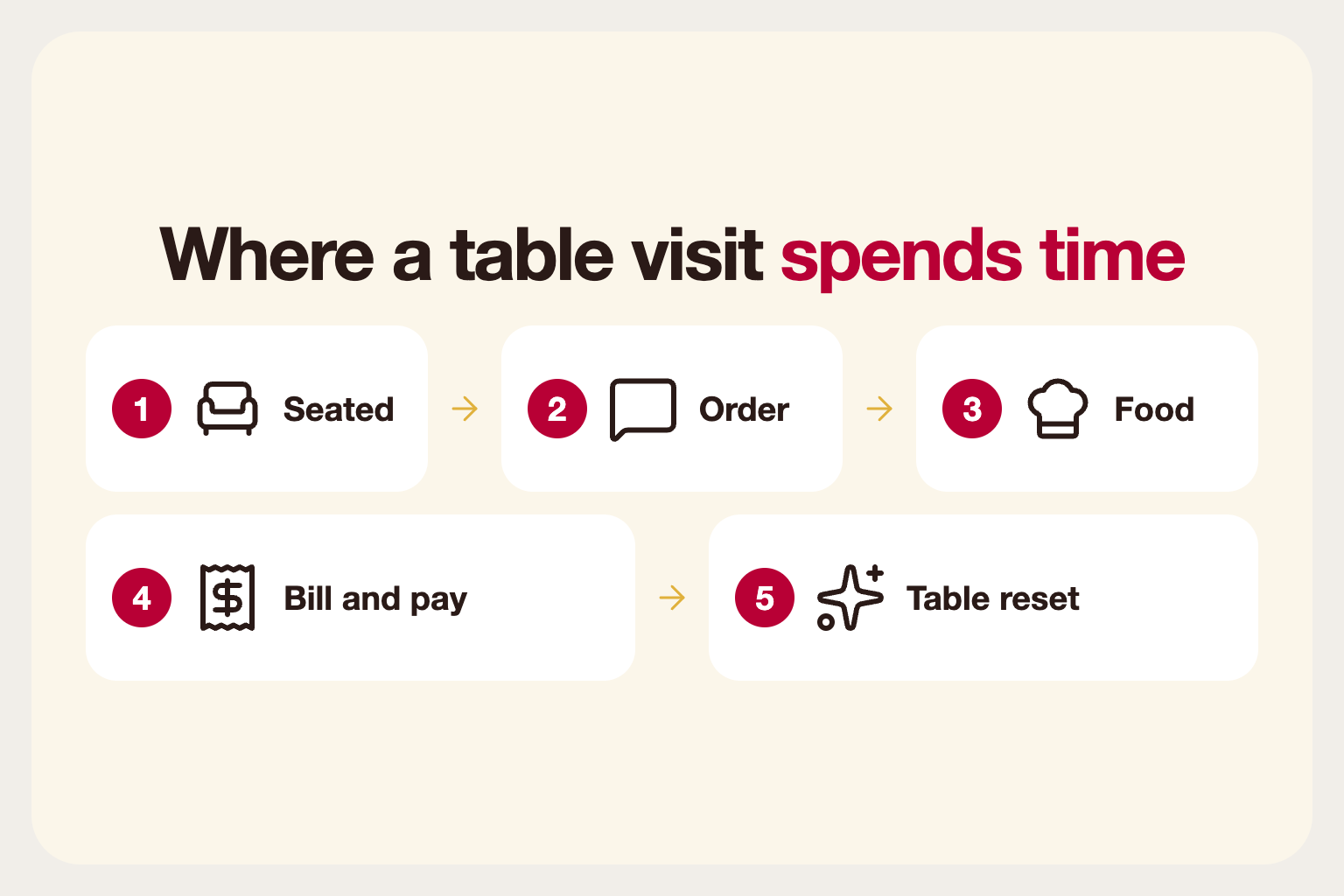
Table turn time is how long a table stays occupied for one party, from seating to being ready for the next. Shorter turns mean more covers on busy nights, but only if guests still enjoy their meal. The aim is smooth service, not rushing.
Measure it. Note seating and clearing times for a week and you will see where the time goes: waiting to order, waiting for food, waiting for the bill.
Find the slow steps
In most restaurants the delays are in a few places. Guests wait to be greeted, wait for the kitchen, or wait for the bill after finishing. Each of these can be shortened without rushing anyone.
Digital ordering at the table, clear ticket timing in the kitchen and a bill that can be paid from the phone all remove waiting without making guests feel pushed.
Keep the room flowing
Servers need clear paths. Check where they pause, where they cross and where the room bottlenecks. A table that blocks the route to the kitchen costs time on every trip.
Think about zones. Dividing the room into sections with a clear owner makes service faster and gives guests someone who knows their table.
Plan for different times of day
The room you need at lunch is rarely the room you need at 8pm. Lunch may be full of two-tops and quick turns; dinner may bring longer sittings and larger groups. If your tables can be moved or combined, change the layout to suit each service.
Even small adjustments help, such as keeping a few tables flexible near the door for walk-ins and parties of unpredictable size.
Balance walk-ins and bookings
Bookings give you certainty and walk-ins fill the gaps. Decide how many tables you hold for each and let hosts see both at once. A walk-in can often be seated for a short sitting before the next booking arrives, as long as someone can see when each table frees up.
Leave a small buffer between bookings for clearing and resetting. A booking starting the minute the last guests leave is a recipe for a rushed room.
Think about comfort and noise
Tables that are too close, a draught from the door or a loud speaker above a table all shorten the time guests want to stay, or make them leave unhappy. Walk the room as a guest would and sit at every table once.
Good flow and comfort also help staff. A room that is easy to move through is a room that serves faster.
See the room at a glance
Hosts need to know which tables are free, occupied, about to be cleared or reserved. A live floor view makes seating decisions easier and avoids the mental juggling that leads to a lobby full of waiting guests next to empty tables.
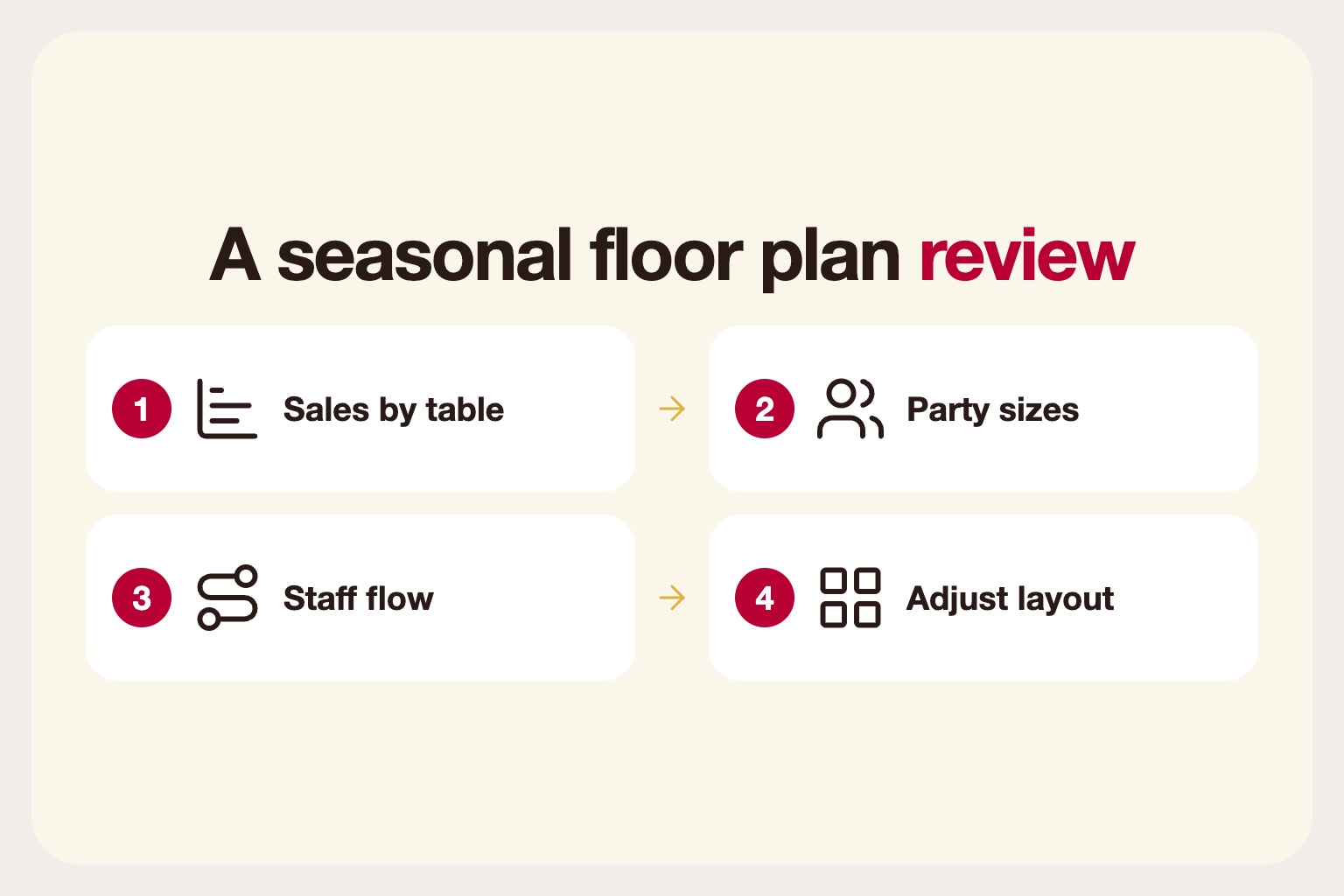
Review the plan every season. Menus, events and guest habits change, and the layout should follow.