 Dineator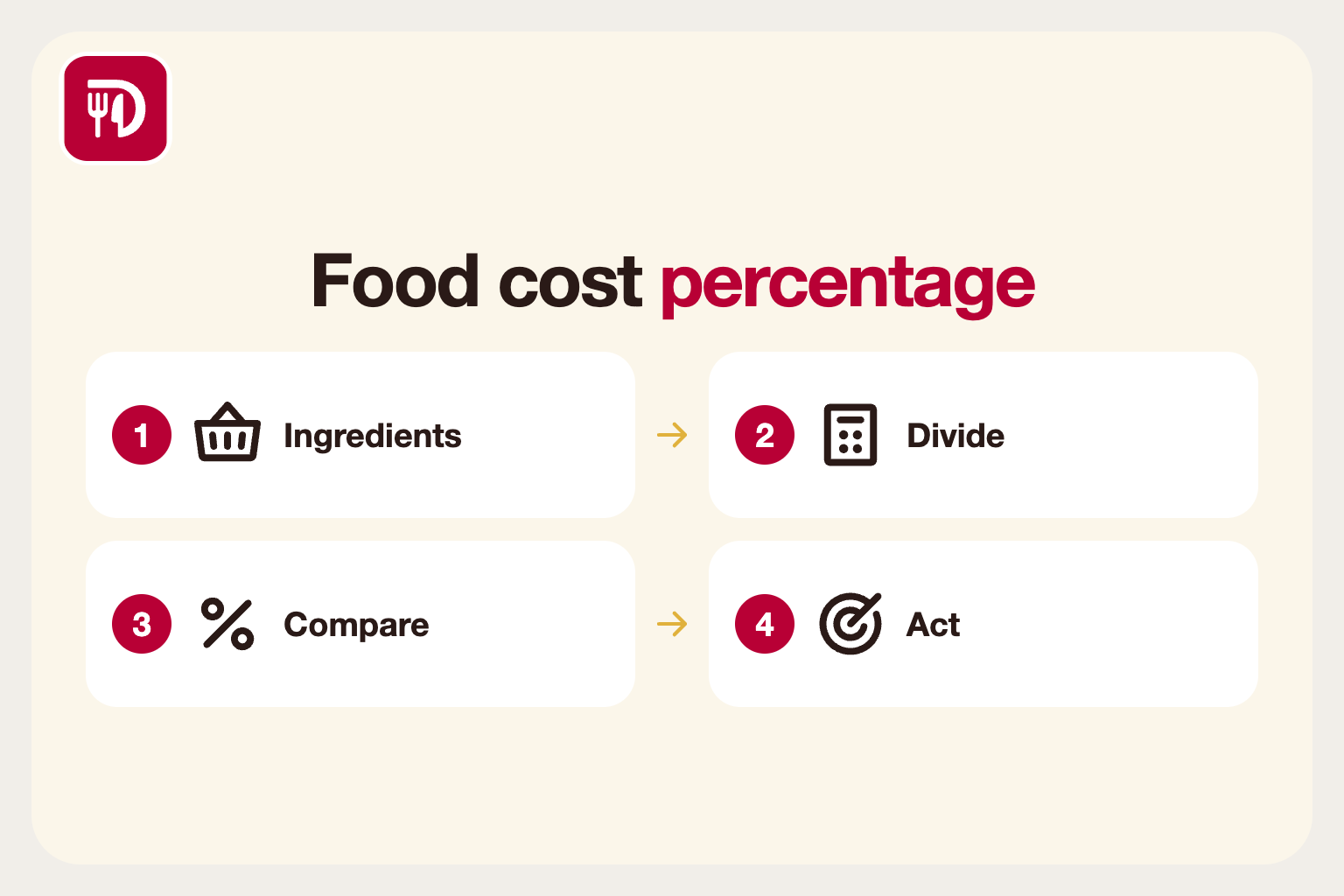
What food cost percentage actually tells you
Food cost percentage is the share of your food sales that goes on buying the food. If you sell 1,000 of food in a week and the ingredients cost 300, your food cost is 30 percent. It is one of the first numbers any restaurant adviser asks for, because it shows quickly whether your pricing, portions and purchasing are in line.
A single percentage is not a verdict. A steakhouse and a pizzeria will have very different numbers and both can be healthy. What matters is whether your figure is stable, whether it matches your own target, and whether it moves for a reason you understand.
The simple formula
For one dish, divide the cost of its ingredients by its selling price. A plate that costs 4.50 to make and sells for 15.00 has a food cost of 30 percent (4.50 divided by 15.00). Check the price you use for the sale: if it includes tax, remove the tax first, because the tax is not your income.
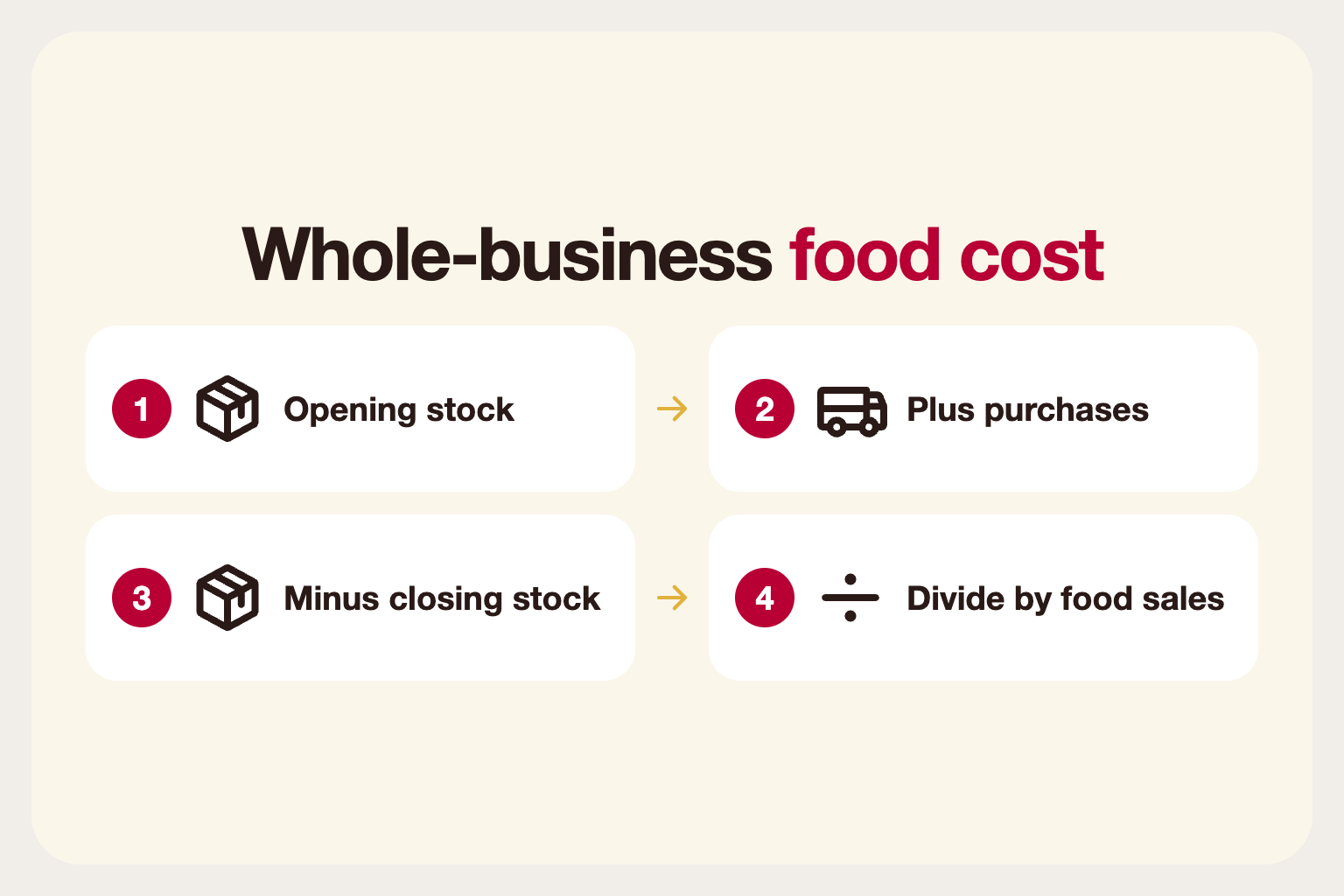
For the whole business over a period, use this: opening stock, plus purchases, minus closing stock, gives you the cost of food used. Divide that by your food sales for the same period. That is your actual food cost percentage, and it is the number to compare with your target.
The method needs a stock count at the start and the end of the period. That is why a regular count matters; without it, you only know what you bought, not what you used.
Theoretical versus actual cost
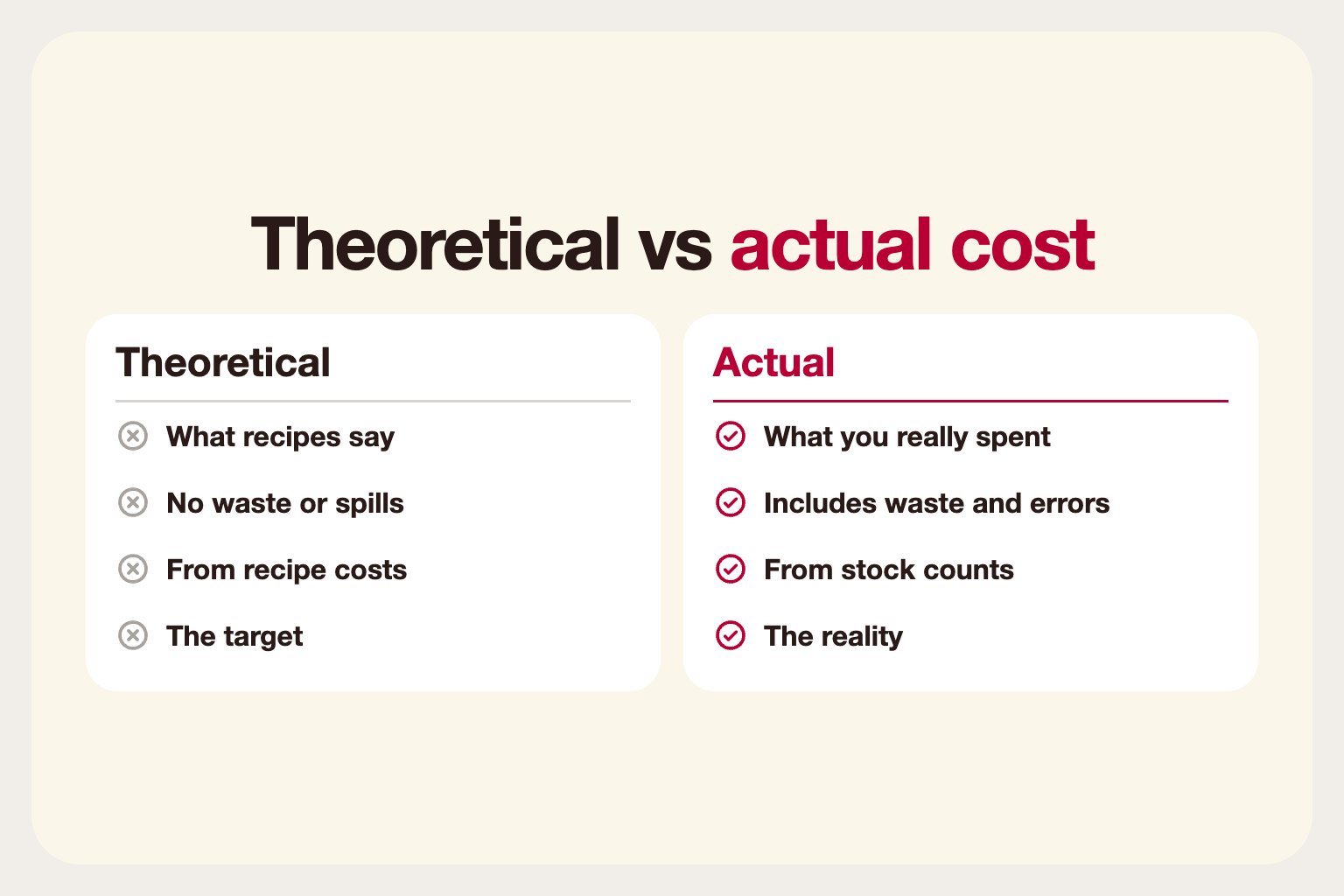
The theoretical cost is what the food should have cost if every dish was made exactly to the recipe, with no waste, no spillage and no mistakes. You get it by adding up the recipe costs of everything you sold.
The actual cost is what you really spent, from the stock count formula above. The gap between the two is where the interesting story lives. A small gap is normal. A large or growing gap points to waste, over-portioning, unrecorded staff meals, spoilage, theft or recipes that no longer match what the kitchen cooks.
Track the gap weekly. When it jumps, look at what changed that week: a new cook, a new supplier, a big event, a delivery that was short.
Setting a sensible target
There is no single right number. Many restaurants aim for a food cost somewhere around the high twenties to mid thirties as a share of sales, but this depends on the type of food, the price level, how much you make in-house and how much of your menu is drinks, which often carry a lower cost percentage.
Better than copying a benchmark is working backwards from your own business. Decide how much you need to keep after food, labour and fixed costs, then see what food cost that leaves room for. Our post on why margins are so thin shows how little room there often is.
Remember that percentage and pounds-in-pocket are different. A dish with a 40 percent cost that sells in high volume may earn you more than a 25 percent dish nobody orders. Look at the profit per plate as well.
Why your food cost might be too high
The common causes are surprisingly ordinary. Suppliers raise prices and the menu does not follow. Portions creep up because a cook is generous. Offcuts and trim are thrown away that could go into stock or staff meals. Over-ordering leads to spoilage. Comps and remakes are not recorded. Specials are priced by instinct.
Start with the biggest line, usually proteins, and check three things: the current price you pay, the portion you actually serve, and the yield after trimming and cooking. A joint that loses a third of its weight in cooking costs much more per portion than the invoice suggests.
Ways to bring it down without cheapening the food
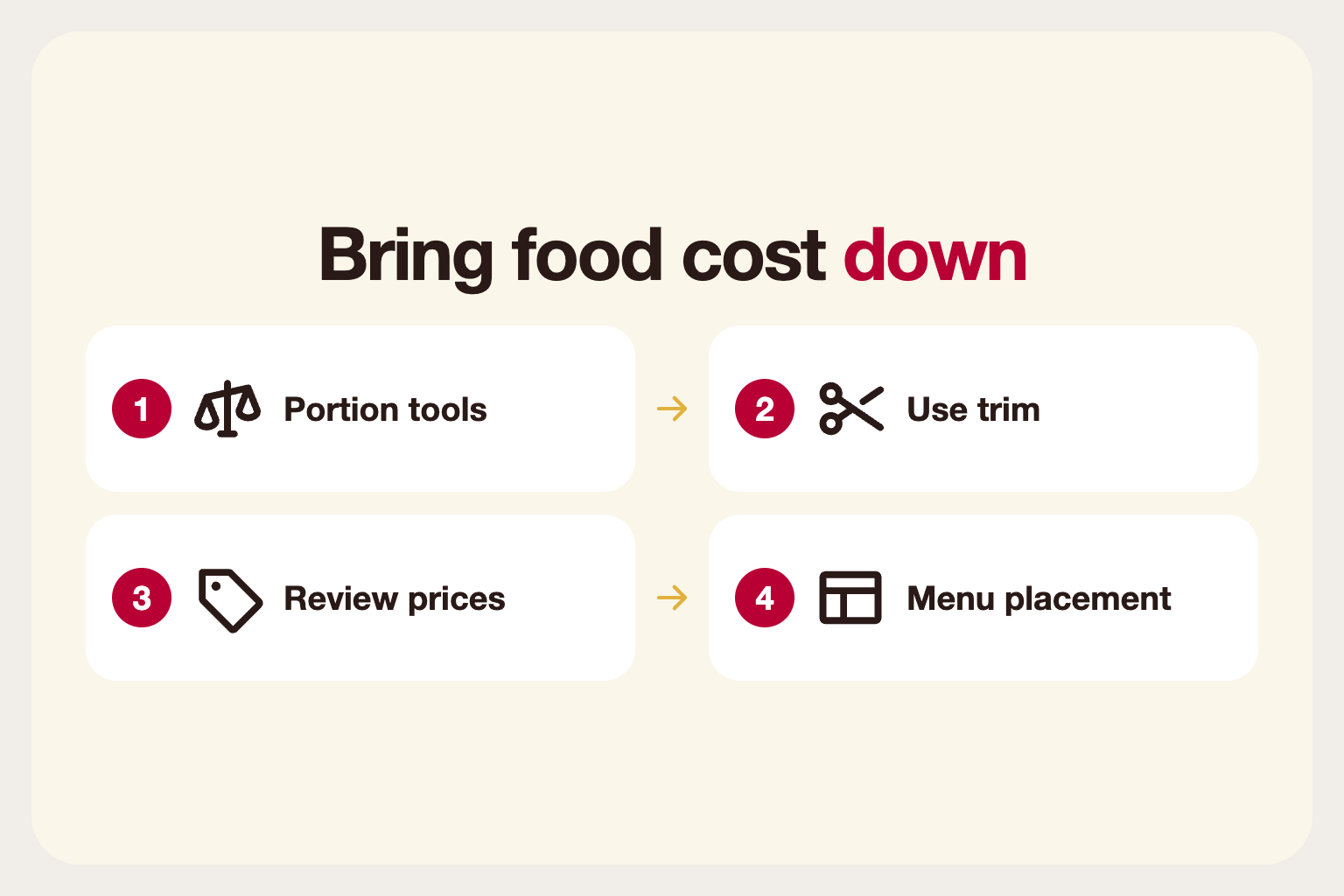
Use portion tools: scoops, ladles, scales and marked containers. A slightly smaller scoop on a cheap side adds up over thousands of plates, and guests rarely notice.
Review the recipes, not just the prices. Can a garnish that is rarely eaten be simplified? Can a trim be used in a staff meal, a soup or a sauce? Can a costly ingredient be shared across several dishes to reduce what you hold?
Look at the menu layout. Placing a high-margin dish where eyes land first, or describing it well, often does more than cutting a cost. Our guide on menu engineering walks through this.
Adjust prices when costs have really moved. Small, regular increases are easier for guests to accept than a large jump once a year.
Keep the data tidy
Food cost is only as good as the data behind it. Record supplier prices when invoices arrive, update recipe costs when prices change, count stock on the same day each period, and log waste and staff meals as they happen.
A system that links your menu, recipes and sales makes the theoretical figure easy to produce. Without one, a simple spreadsheet with one tab per month still works if someone owns it.
Putting it into practice
Calculate the cost of your top ten dishes this week, run a stock count at the start and end of a period, compare theoretical and actual, and write down one action. Repeat monthly.
Food cost percentage is a signal, not a goal in itself. Use it to ask better questions, then fix the few causes that matter most.