 Dineator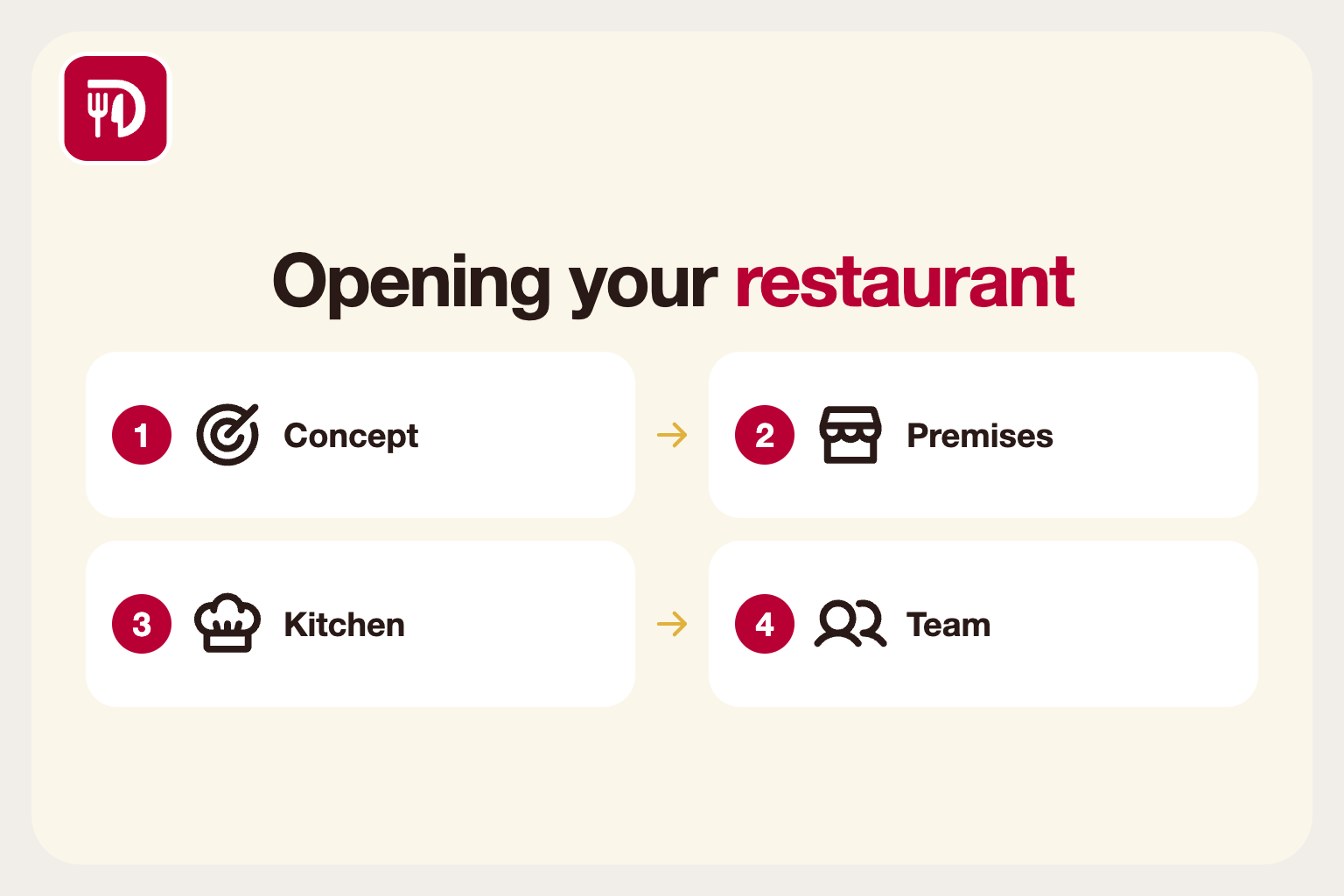
Why a checklist beats good intentions
Opening a restaurant means hundreds of small decisions, and most of them depend on each other. The lease affects the kitchen layout, the layout affects the equipment, and the equipment affects the menu you can realistically cook. Miss one link and the opening date slips, and every week of delay is rent you pay without selling a single plate.
A written checklist does not make the work easier, but it makes it visible. This post walks through the order of work that tends to hold up, from the first idea to the first three months of trading. Rules differ by country, state and city, so treat every legal point here as a prompt to check with your local authority, not as advice.
Before you sign anything: concept and numbers
Start with a plain description of who you cook for, what they pay and why they would choose you over the place down the road. If you cannot say it in two sentences, the menu, the room and the marketing will all drift.
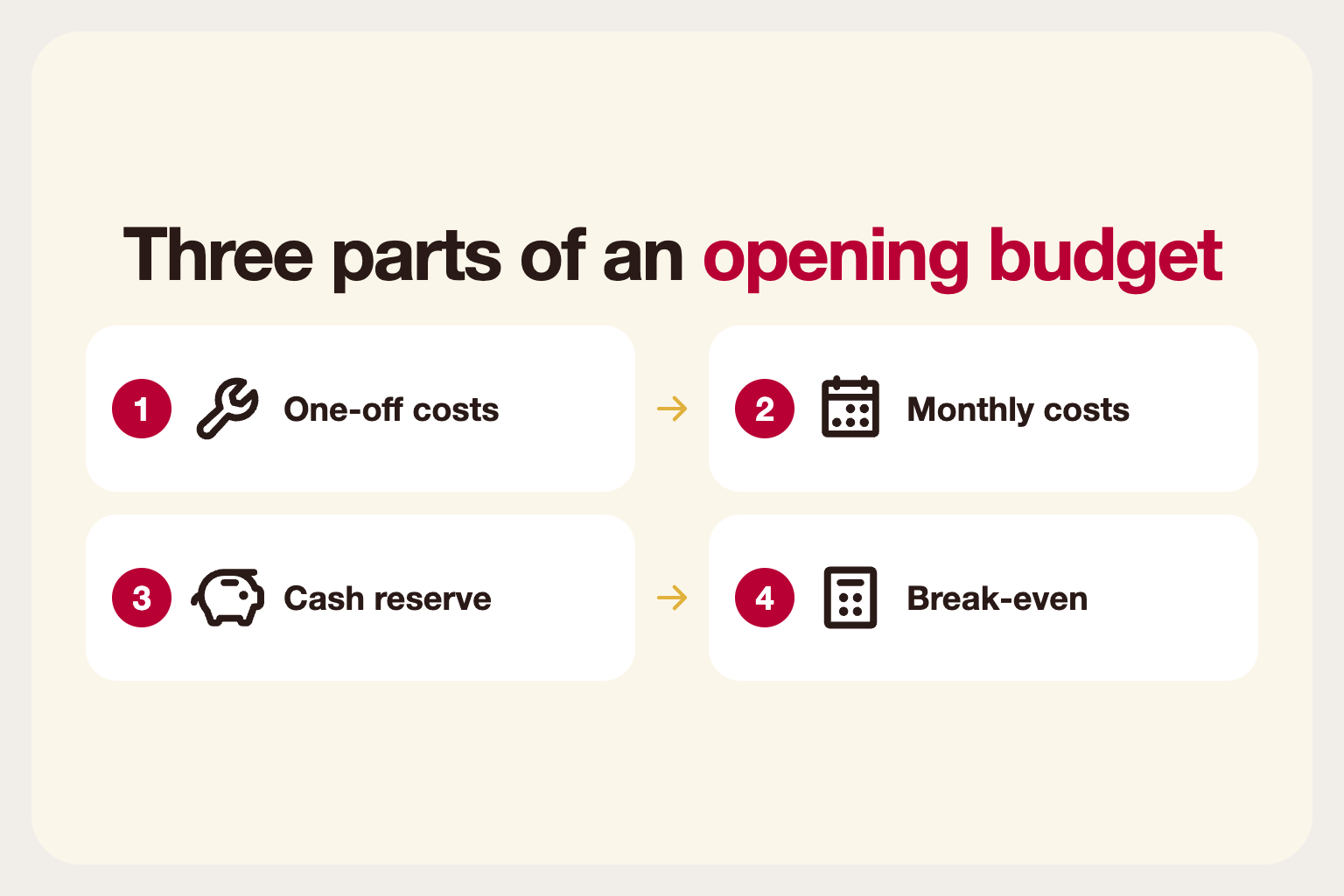
Then build a simple budget with three parts: one-off costs (fit-out, equipment, deposits, licences, first stock), monthly running costs (rent, wages, utilities, insurance, software) and a cash reserve. Many new owners budget for the opening and forget that the first months rarely cover their own costs. A reserve that covers a few slow months is what keeps a rough start from becoming a closure.
Work out your break-even point before you commit. Take your monthly fixed costs, estimate your food and labour as a share of sales, and calculate how much you must sell each week to cover everything. If that number looks out of reach for the size of room you are looking at, change the plan before you change the lease.
Premises, licences and insurance
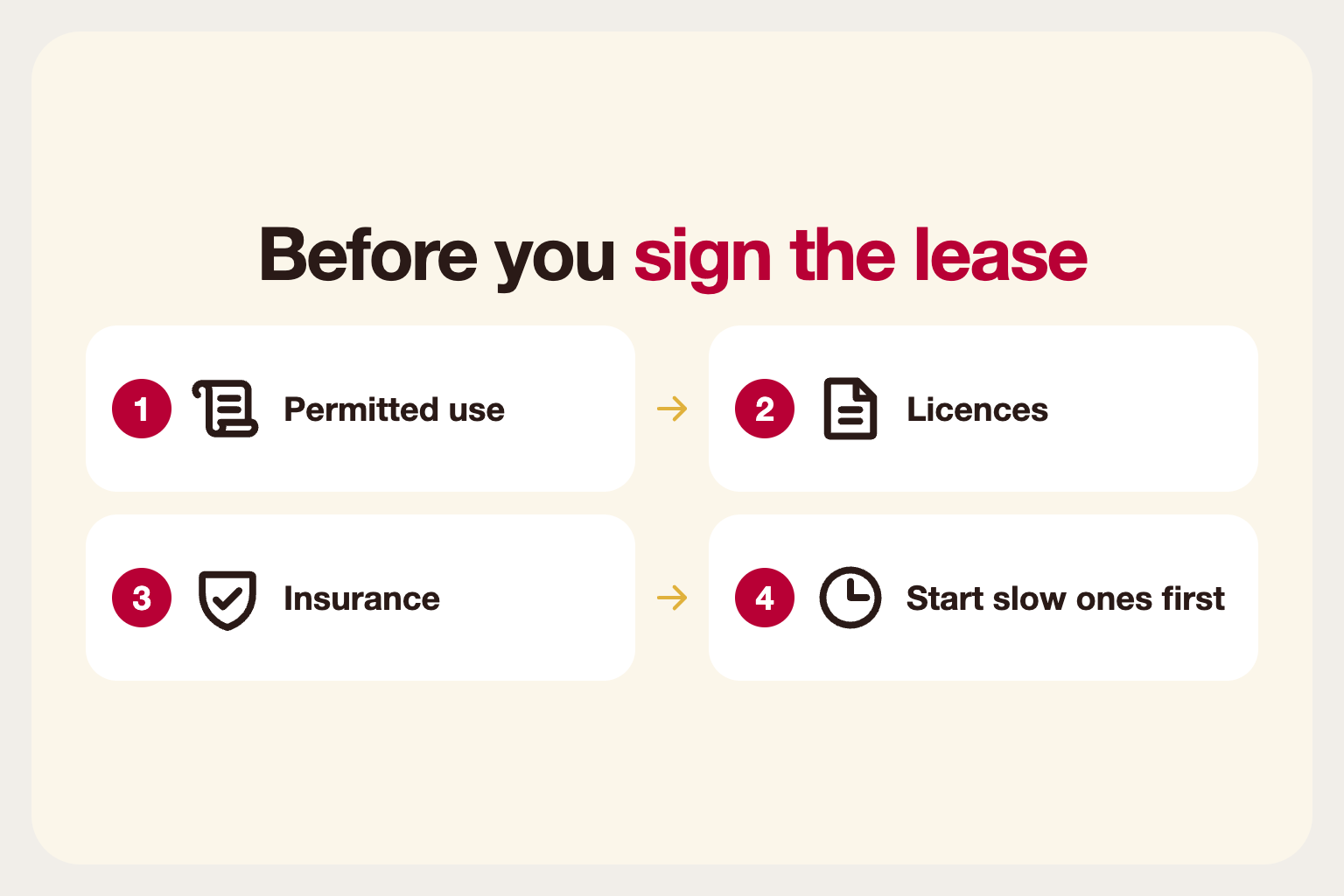
Check what the space is already approved for. A site that was a shop may need a change of use before it can serve food, and extraction, drainage and fire exits can be expensive to add. Ask the landlord and your local council or municipality early, and put any conditions in writing.
List the licences and registrations your area requires: business registration, food business registration, food handler training, alcohol licensing if you will serve it, music or entertainment licences and signage permissions. Start the slowest ones first, because some take weeks. Opening before an approval arrives can mean fines or a forced closure.
Arrange insurance before the keys change hands. Typical cover includes property, public liability, employer liability when you have staff, and stock. Ask your broker what a closure for repairs would cost you, not only what a fire would.
Kitchen, equipment and suppliers
Design the kitchen around the flow of food: delivery, storage, prep, cooking, plating, service, washing up. Raw and cooked food should not cross paths, and cooks should not have to walk across the room for a pan. Draw the layout on paper and walk through a busy service in your head before anything is installed.
Buy the equipment your menu needs, not the equipment a bigger menu might need. Second-hand is often fine for stainless steel tables and shelving; be more careful with refrigeration and anything that must pass a safety inspection. Ask what servicing costs and who does it.
Choose two suppliers for your key products where you can, and agree delivery days, minimum orders, payment terms and what happens when an item is short. A supplier who answers the phone at seven in the morning is worth a little extra on the invoice.
Menu, pricing and technology
Keep the opening menu short. A tight menu means fewer ingredients to hold, faster training, quicker tickets and less waste while you are still learning what sells. You can always add dishes in month three, but removing a dish people already love is much harder.
Cost every dish before you print a price. Add up the ingredients, divide by portions, and compare the cost with the price you want to charge. Our guide on pricing a menu covers this step by step.
Decide how orders, payments and the kitchen will connect before you buy hardware. A point of sale, a kitchen display, a QR ordering menu and an online ordering page work best when they share one menu, so you update a price once. Test every device, printer and card reader with a full mock order before opening day.
Hiring and training before you open
Hire your kitchen lead and front-of-house lead first, and let them help choose the rest. Aim to have the team in place at least a week before opening so there is time for training shifts, not just a briefing on the morning.
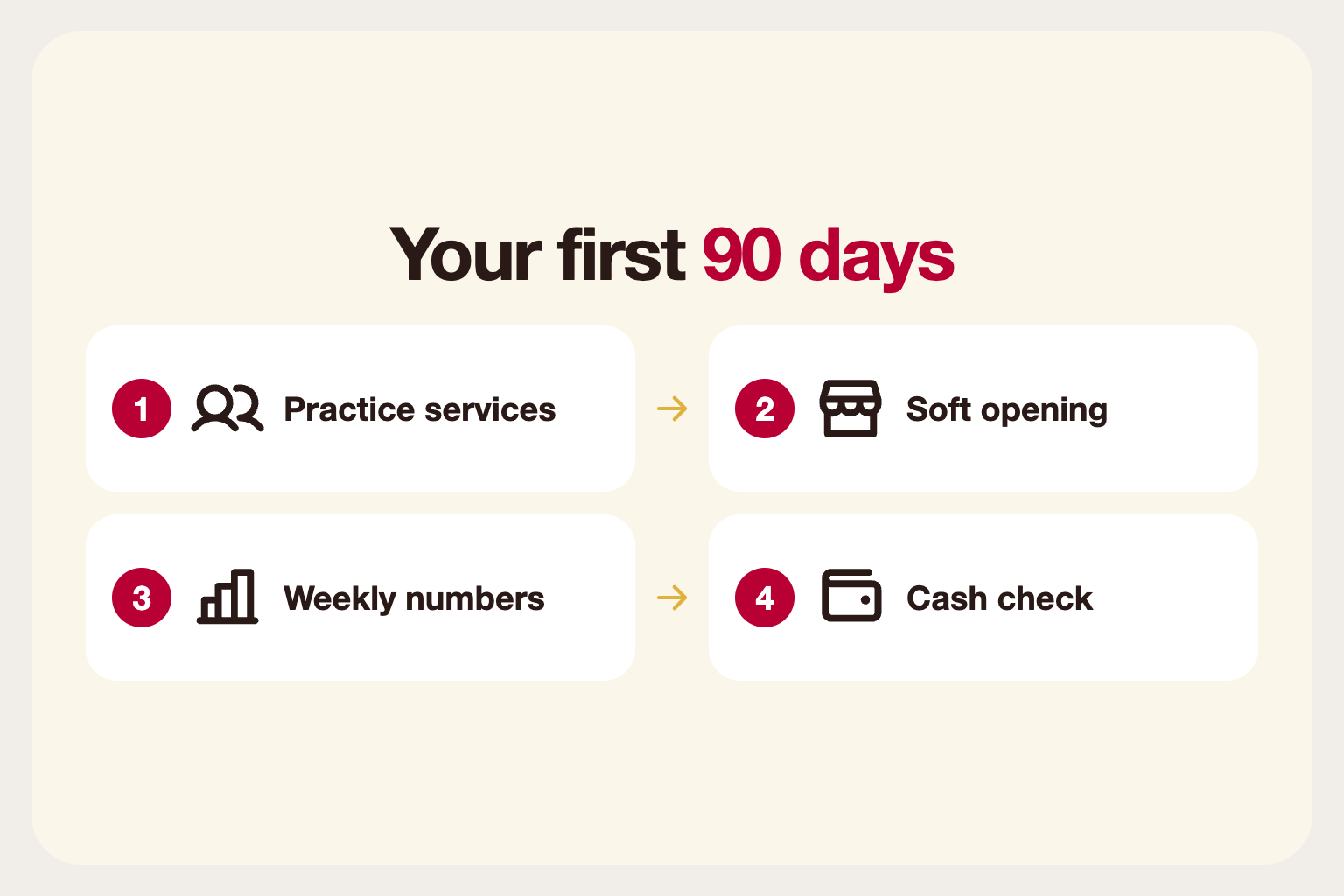
Run at least two practice services with friends, family or invited neighbours. Give them a real menu, real tickets and a bill at the end, even if the food is free. Practice services expose the problems that a plan cannot: the printer that jams, the pass that is too narrow, the dish that takes twenty minutes.
Write down the basics for every role: how to open, how to close, how to handle a complaint, who to call when something breaks. Short and clear beats long and unread.
A soft opening and the first 30 days
A soft opening, with limited hours or a smaller menu and a quieter announcement, lets the team find their rhythm before the full crowd arrives. Invite the people most likely to give honest feedback and ask for it directly.
In the first month, keep a daily note: covers, sales, what ran out, what was sent back, what the kitchen struggled with. Look at it every week with your leads. The goal is not to be perfect, but to fix the top three problems each week.
Set up your listing on maps and review sites, add your real opening hours and photos, and reply to every review. If you take bookings, make sure the booking page shows the correct times for your timezone.
Days 30 to 90: watch the numbers
By the second month you have enough data to see patterns. Compare food cost with your target, check labour as a share of sales, and find the three dishes that sell most and the three that barely move. Prune the slow ones and protect the strong ones.
Check your cash position weekly, not monthly. Know what is due, when, and what is in the account. Most young restaurants that fail are not unpopular; they run out of cash before the business matures.
Talk to regulars. Ask what they came for and what almost put them off. A handful of honest conversations is worth more than any survey.
Putting it into practice
Opening a restaurant is a long list, but it is a list you can work through in order: concept and numbers, premises and licences, kitchen and suppliers, menu and technology, team and training, soft opening, then the numbers. Take one stage at a time and write down what is left.
Print the checklist, give each item an owner and a date, and review it weekly. The restaurants that open calmly are usually the ones that kept a list.