 Dineator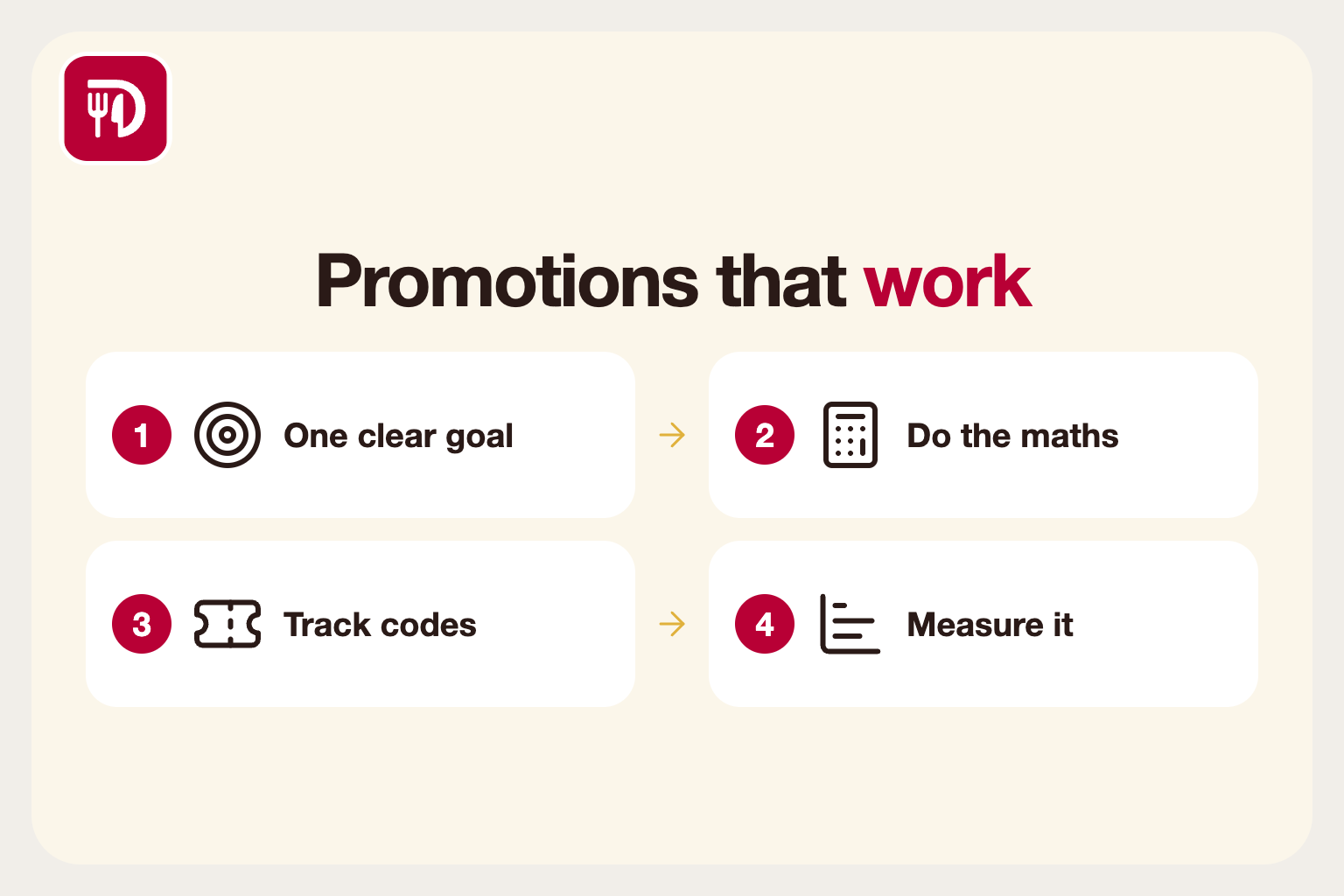
Promotions should have a purpose
A discount is a cost, so it should buy something: a new customer, an empty table filled, a slow night improved or a regular brought back. Promotions without a clear goal tend to give away margin to people who would have come anyway.
Before launching one, write down what you want it to achieve and how you will tell whether it did.
Choose the right type of offer
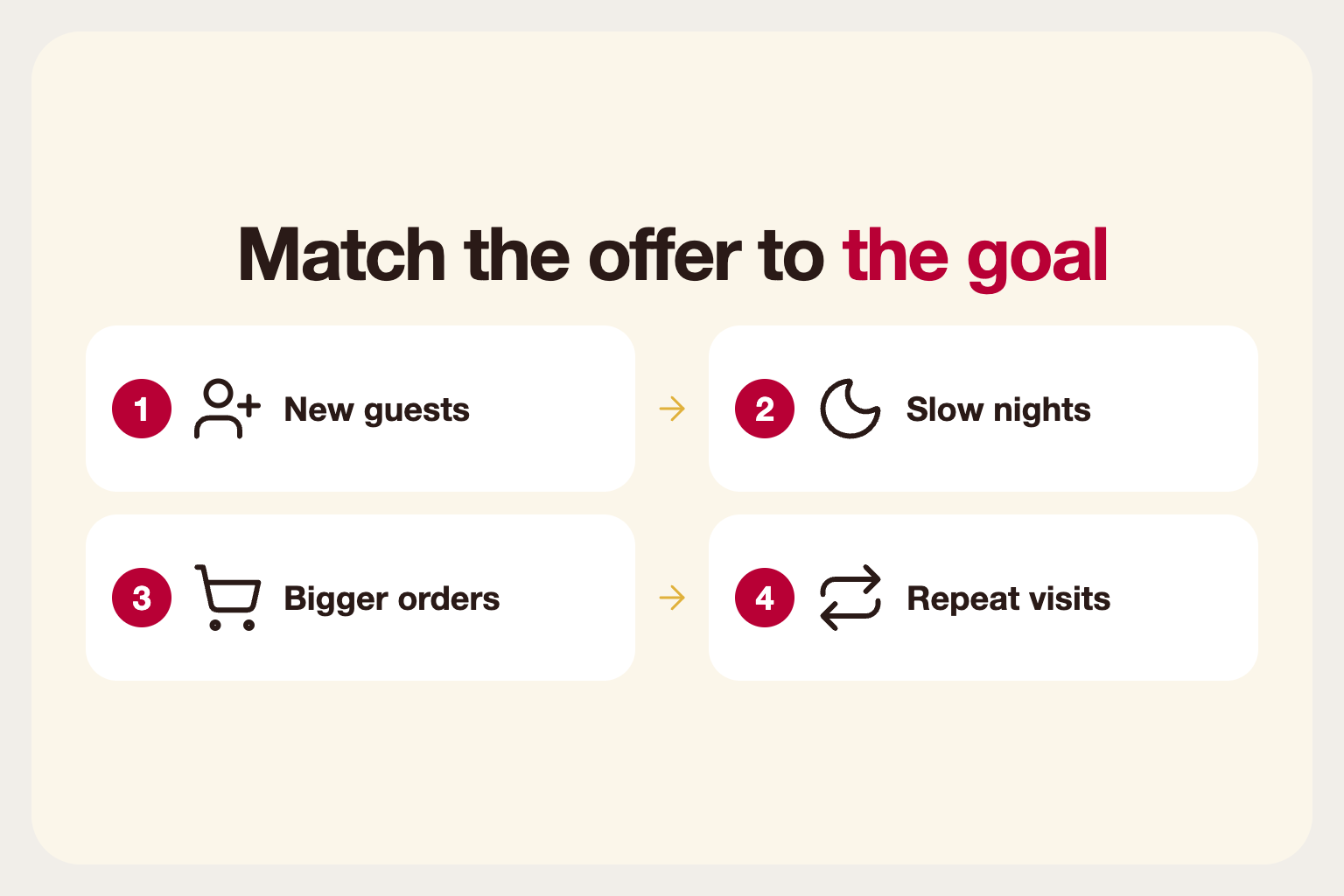
Common options include a percentage off, a free item with a main, a set menu at a fixed price and a reward for repeat visits. Each suits a different goal. A free dessert encourages a larger order; a quiet-night offer fills tables when you need them.
Pick one clear offer at a time. Several overlapping deals confuse guests and make results impossible to read.
Do the maths first
Work out what the offer costs you per order, and how many extra orders you need for it to pay off. A twenty percent discount on a thin-margin dish may remove most of your profit. A free side that costs little to make might be far cheaper.
Offers that apply to high-margin items such as drinks and desserts tend to protect your profit better than blanket discounts.
Set simple rules
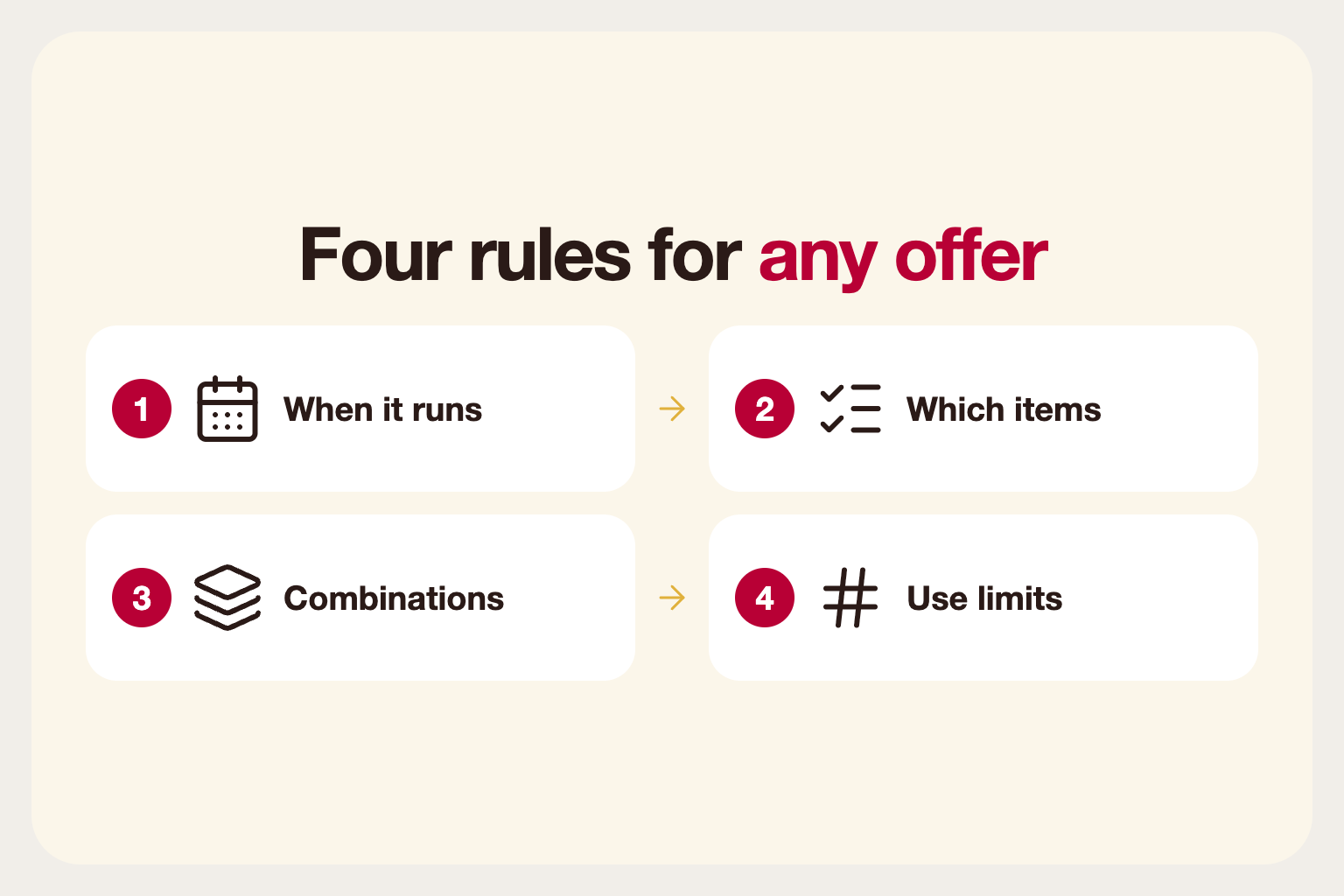
Decide when the offer runs, which items it covers, whether it can be combined with others and how many times a guest can use it. Rules that are easy to explain are easy to follow, and easy for staff to apply.
Limit offers to specific days or hours when you want to attract guests, so they do not eat into your busiest, already-profitable times.
Use codes to track results
A coupon code or a dedicated link tells you exactly how many people used the offer and what they spent. That is how you learn whether the promotion paid for itself.
Use different codes for different channels, such as social media and printed flyers, so you can see which one brings guests in.
Tell the right people
Promote offers where your guests already are: your website, your online ordering page, social profiles and email list. Existing guests who have agreed to hear from you are the most likely to respond.
Be clear about the terms. Surprises at the till damage trust.
Avoid training guests to wait for discounts
If you discount all the time, guests learn to wait for the next deal and your full price starts to feel too high. Use offers sparingly and for specific reasons, and keep the core menu at a fair price.
Value can come from more than money: a special event, an early look at a new dish or a thank-you for regulars.
Offers for different moments
Some offers suit particular moments: a quiet-hours deal for midweek lunches, a welcome offer for a first online order, a birthday treat for regulars or a bundle for groups. Matching the offer to the moment keeps it relevant and the cost contained.
Seasonal and event-based offers also create natural reasons to share your message without discounting every week.
Keep staff in the loop
Every team member should know what offers are running and how they work. A server who is unsure how to apply a coupon creates delays and awkward moments. Brief the team before each promotion and give them a one-line summary to refer to.
Invite their feedback. They hear how guests react to offers long before the numbers arrive.
Measure and learn
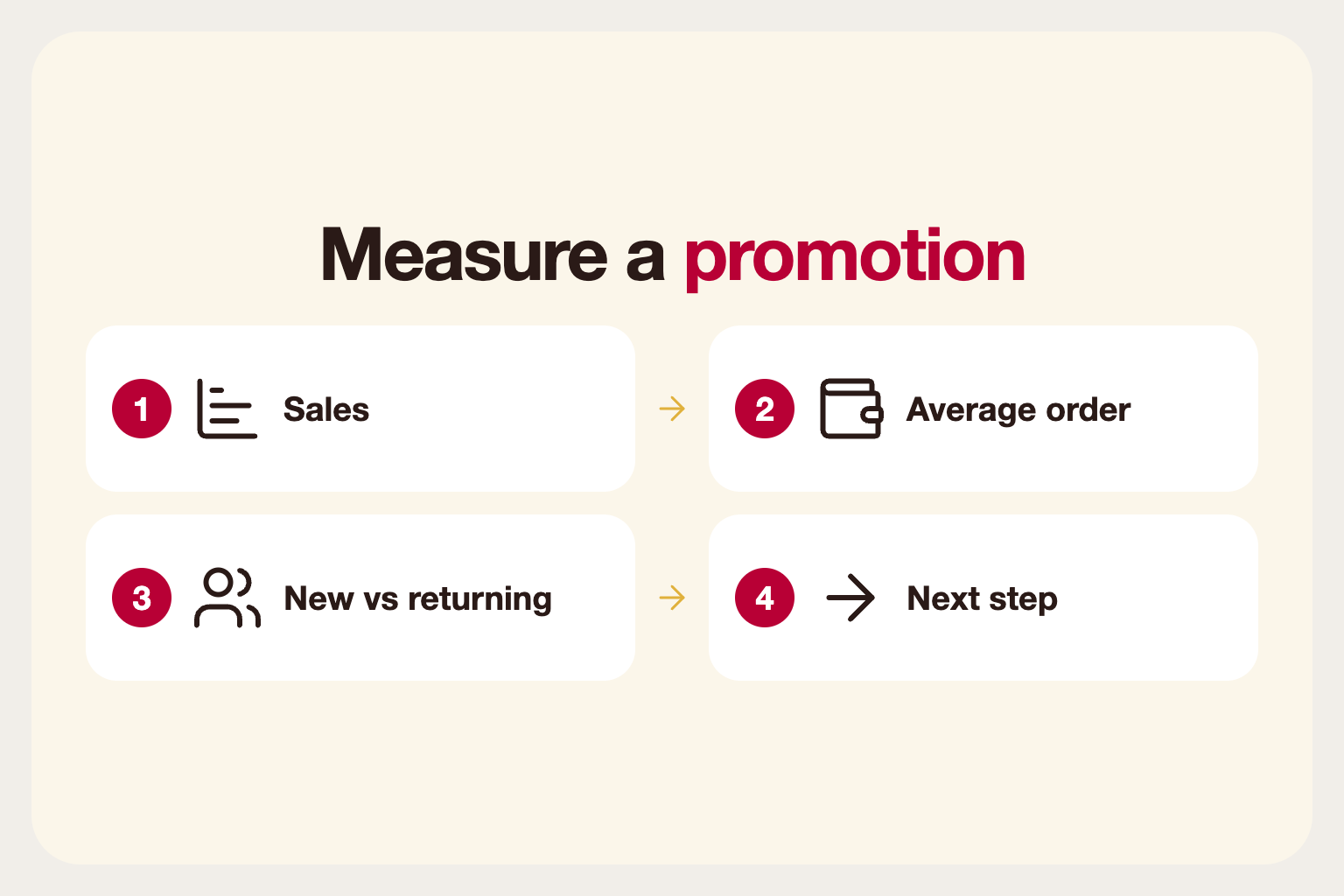
After the offer ends, compare sales, average order value and new versus returning guests with a normal period. Did it fill the slow nights? Did people come back afterwards? Keep notes on each promotion so the next one is better.
Repeat what worked, drop what did not, and keep promotions as a deliberate tool, not a habit.