 Dineator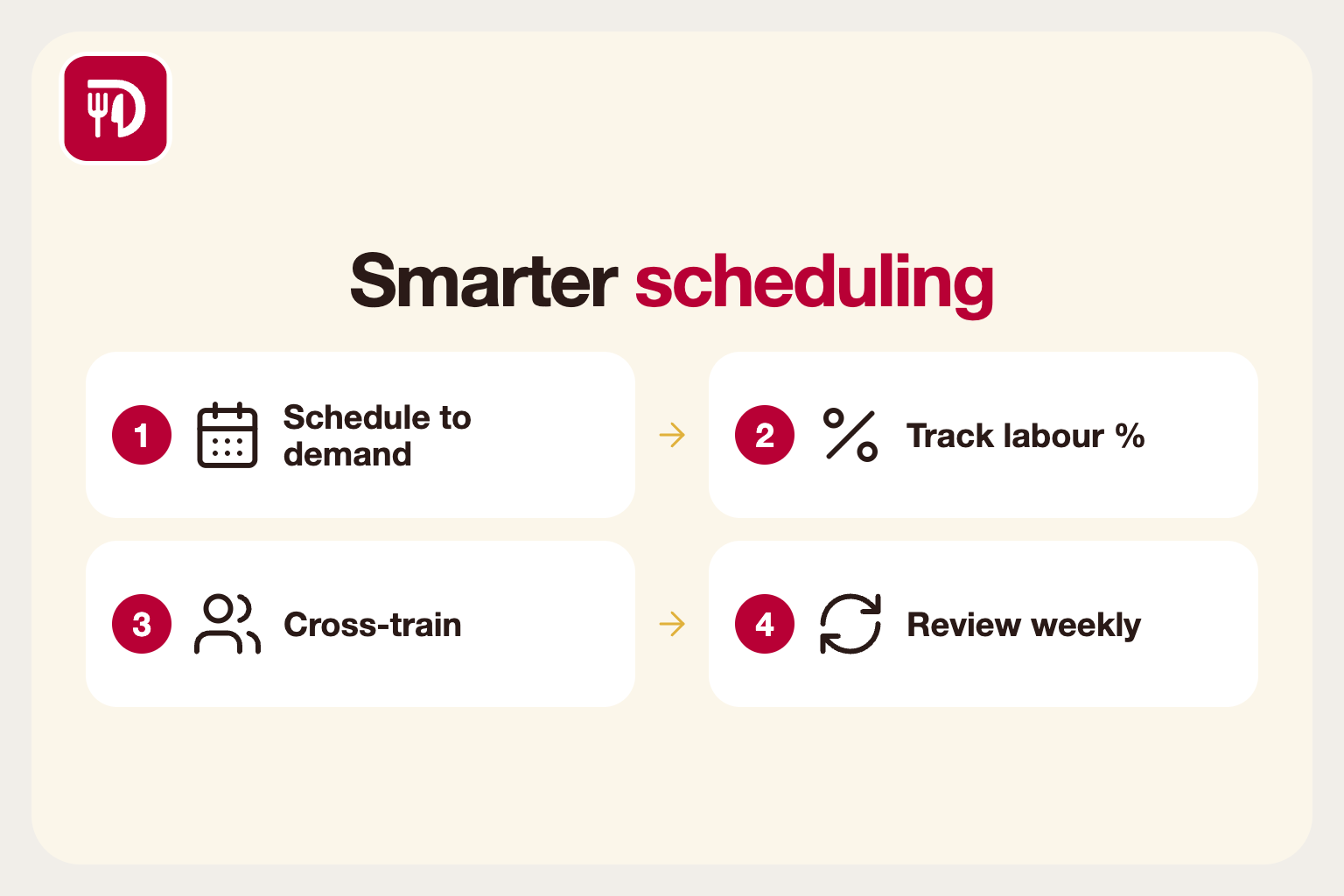
Labour is your biggest controllable cost
Along with food, labour is one of the two largest costs in a restaurant. Unlike rent, you can change it from week to week. A schedule that matches staffing to demand is one of the most direct ways to protect your margin without hurting service.
The challenge is that cutting hours too far hurts service, and over-staffing quietly drains profit. The aim is the right people at the right times.
Schedule to demand, not habit
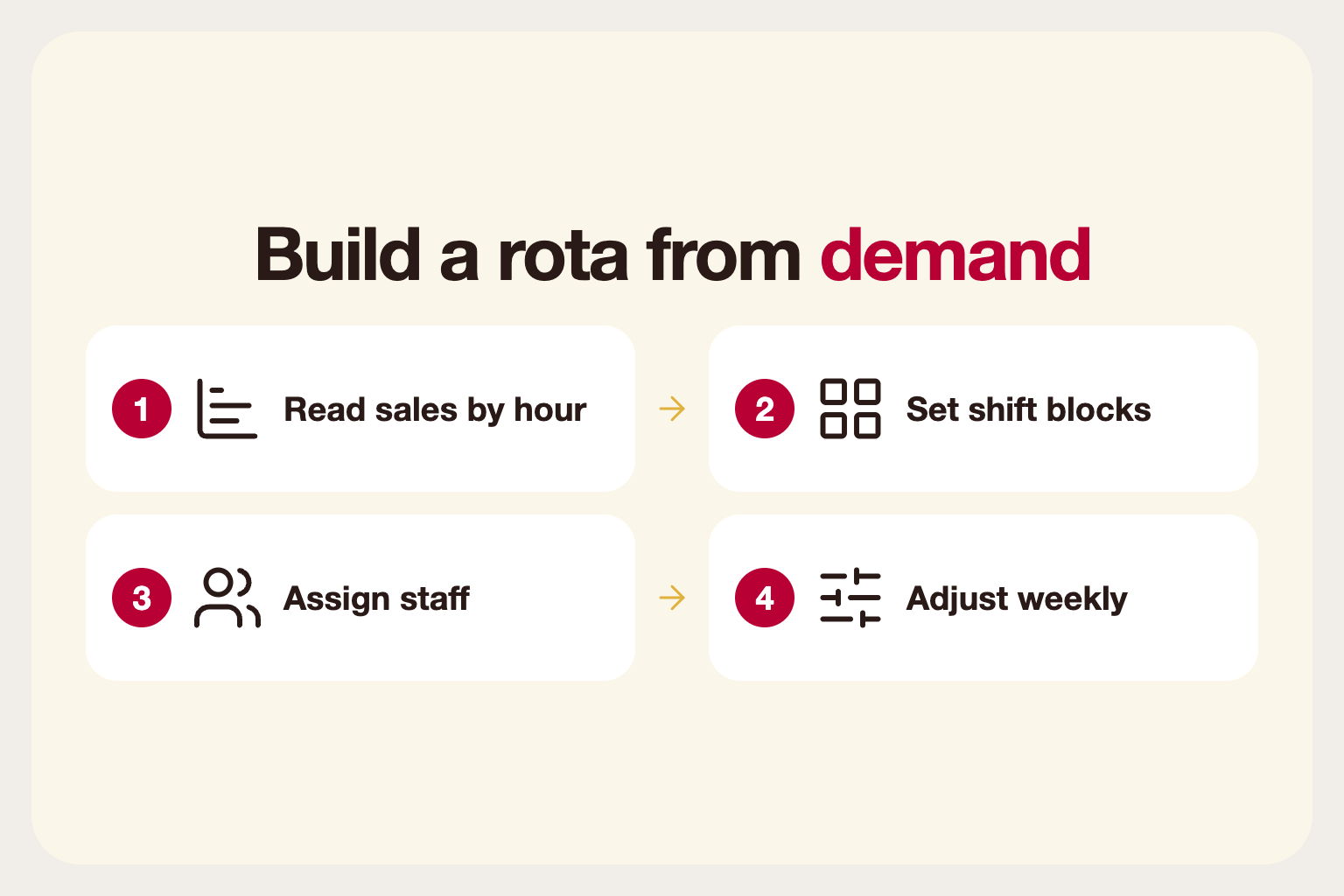
Many rotas are copied from last week out of habit. Instead, look at sales by hour and day, bookings and events, and build the schedule from that. A Tuesday afternoon needs a different team from a Friday night.
Plan in blocks: opening, lunch peak, afternoon lull, dinner peak and close. Each block gets the number of people it really needs.
Track labour as a percentage of sales
Labour cost as a percentage of sales is the simplest health check. Work it out weekly: total wages divided by total sales. If it creeps up, look at which days and shifts are running heavy.
Compare it across days rather than only as a weekly average. A good Saturday can hide a bad Monday, and the fix for each is different.
Use clear rules for shifts and breaks
Publish schedules in advance and stick to them. Staff plan their lives around shifts, and late changes cause no-shows and resentment. Follow the legal rules on hours and breaks where you operate, and apply them consistently.
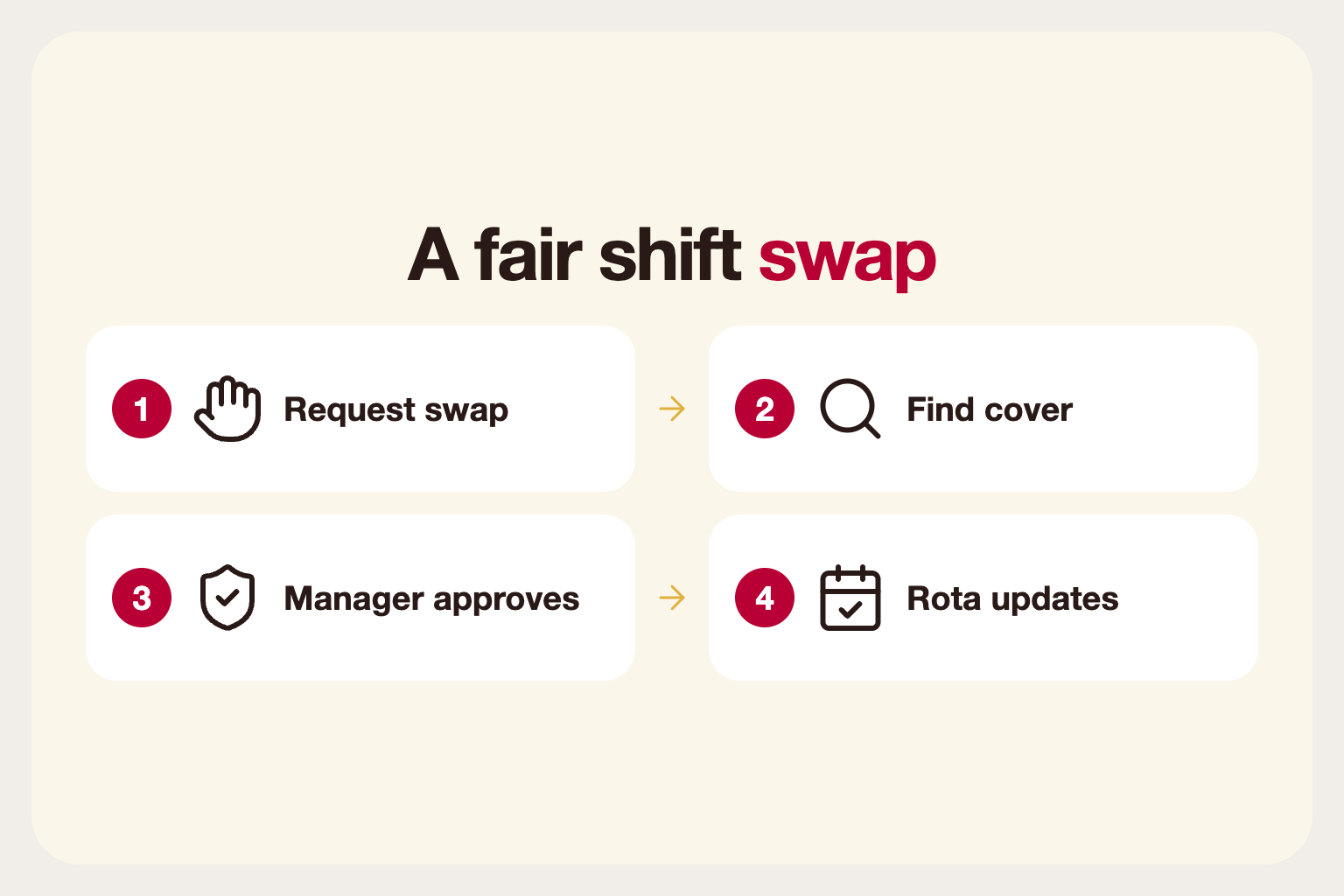
A fair process for swapping shifts, such as a simple approval from a manager, keeps things flexible without chaos.
Cross-train for flexibility
A team that can cover more than one role is easier to schedule. A server who can run the bar, or a cook who can cover prep, lets you flex around absences and unexpected rushes without calling in extra people.
Cross-training also helps morale. People enjoy learning new skills, and a varied job is easier to stay in.
Use data to spot overstaffing and understaffing
Signs of overstaffing include servers with few tables and idle time in the kitchen. Signs of understaffing include slow tickets, long waits and a stressed team. Both show up in your numbers if you look at orders per hour and ticket times.
Review a few weeks of data together with the team. They will often tell you exactly where the schedule pinches.
Keep the team in the loop
Explain why the schedule is the way it is. Staff who understand that shifts are built from demand are more accepting of changes. Ask for availability early and respect it where you can.
Fair, predictable scheduling is one of the most effective ways to keep good people, and turnover is expensive in training time and lost experience.
Plan for the unexpected
People get sick, shifts get missed and an unexpected rush arrives. Keep a short list of staff who are happy to pick up extra hours, and agree how you will contact them. A tidy backup plan turns a crisis into an inconvenience.
Build a small buffer into the busiest shifts and trim it on quiet ones, rather than running every shift with no slack at all.
Make time off and requests simple
Set a clear cut-off for requesting time off and a simple way to submit it. Decide fairly who gets popular days, such as holidays, and apply the rule to everyone, including managers.
Staff who can plan their lives are more reliable, and a team that feels respected is far likelier to stay.
Review and adjust every week
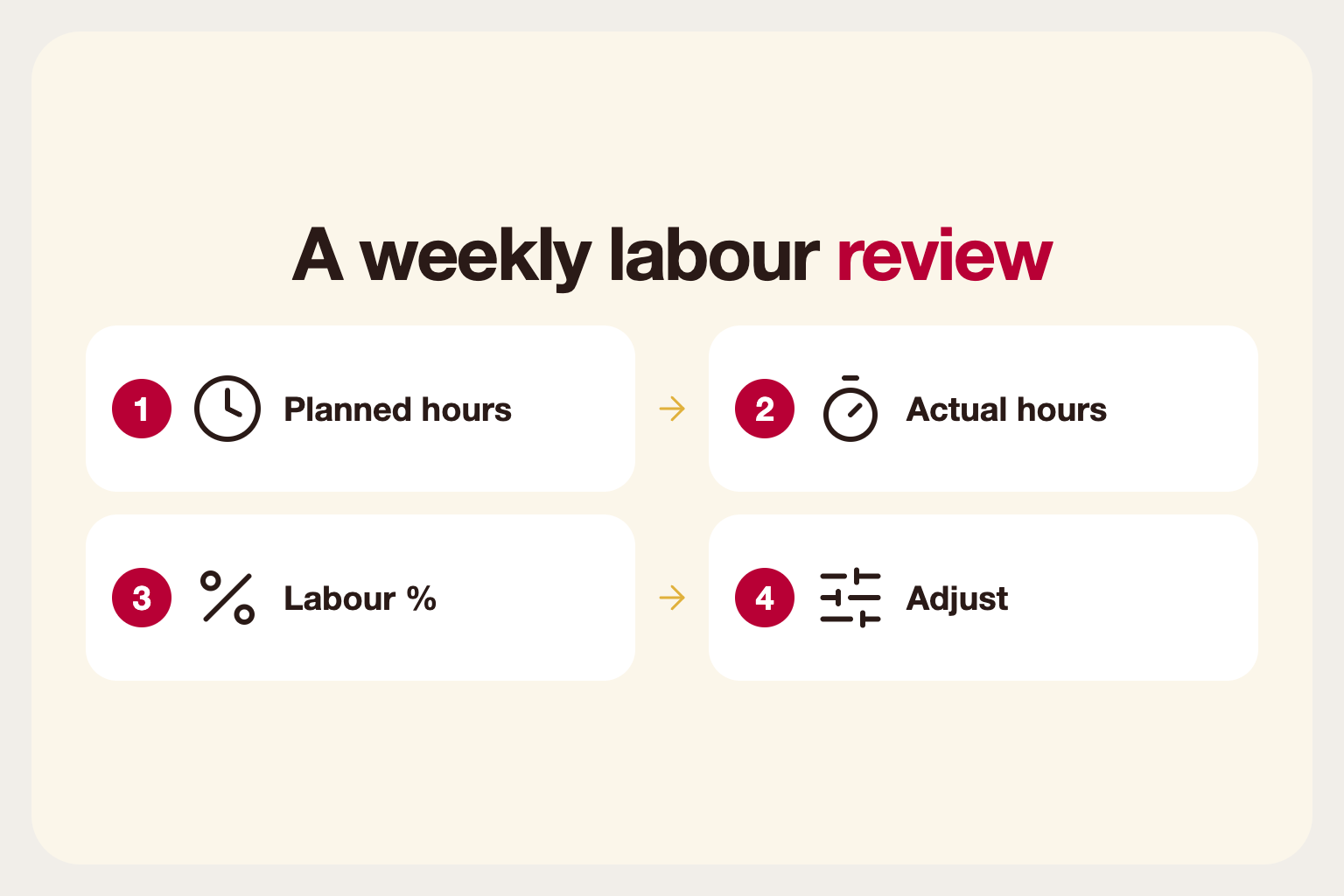
At the end of each week, compare planned and actual hours, labour percentage and service quality. Note what you would change and apply it to the next schedule. Small weekly corrections beat big occasional overhauls.
Over a few months you will build a reliable picture of how many people each shift really needs.